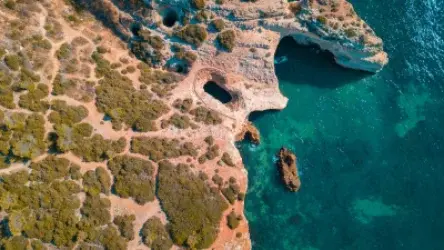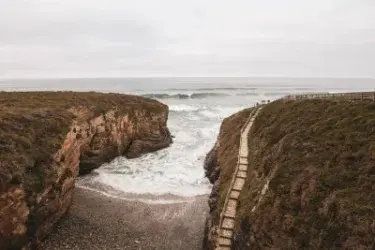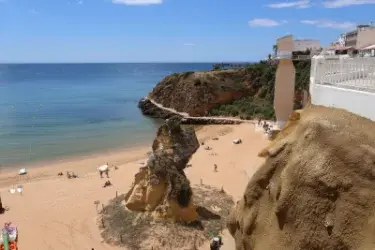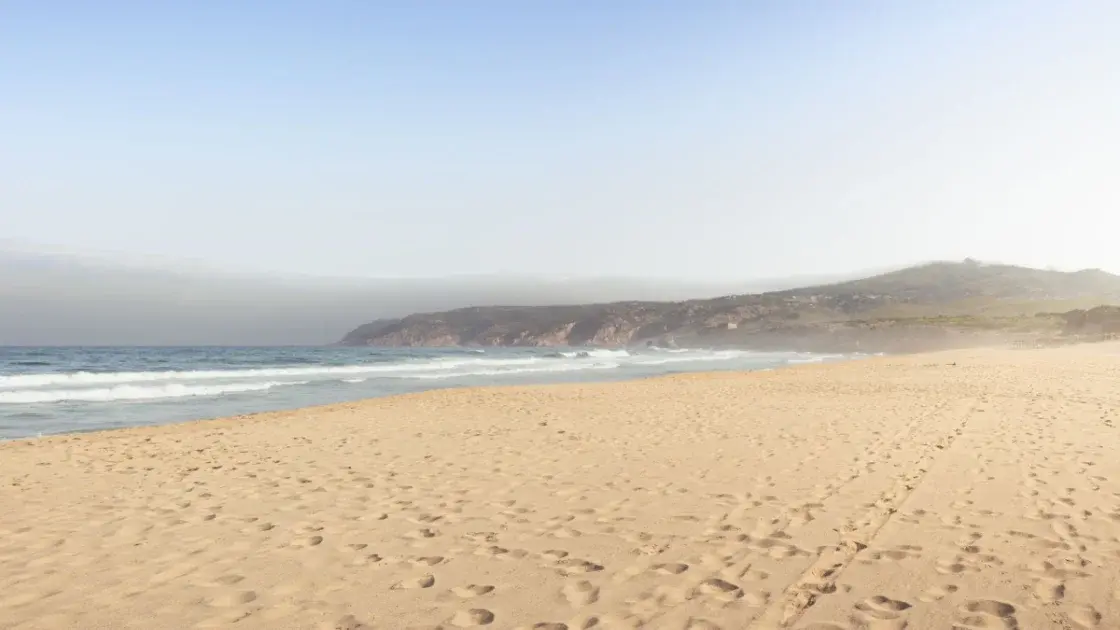
The Costa Vicentina extends for over 120 kilometers of wild Atlantic coast, from Sines, on the Alentejo coast, to Cape São Vicente, the southwesternmost point of continental Europe. Integrated into the Southwest Alentejo and Costa Vicentina Nature Park — a UNESCO Biosphere Reserve — it is considered the most intact and ecologically preserved coast in all of Western Europe.
Here there are no skyscrapers, no four-lane highways, no seafront shopping centers. What exists are black cliffs thousands of years old, dunes of fine sand that stretch endlessly, Atlantic winds that feed perfect waves, and a silence that is, in itself, a luxury. If you haven't yet discovered the Costa Vicentina, this guide will change that.
Quick summary: The Costa Vicentina offers Portugal's wildest beaches, some of Europe's best surf waves, and world-class hiking trails. It's the perfect antidote to the mass tourism of the Algarve.
What is the Costa Vicentina and Where is it Located
The Costa Vicentina spans two districts — Beja (Coastal Alentejo) and Faro (Algarve) — and three main municipalities: Odemira, Aljezur, and Vila do Bispo. The area is protected by the Southwest Alentejo and Costa Vicentina Nature Park, created in 1995, which covers approximately 110,000 hectares of land and sea.
The Costa Vicentina in the strict sense begins in Odeceixe (the border between Alentejo and Algarve) and ends at Cape São Vicente in Sagres. North of Odeceixe, as far as Sines, we speak of Costa Alentejana — equally wild and often included in guides to the region.
How to get there: From Lisbon, the southern zone of the Costa Vicentina (Aljezur/Sagres) is about 3 hours away via the A2 and EN120. To the north (Vila Nova de Milfontes/Odemira), it's about 2h30 via the A2. There is no direct train — a car or motorcycle is the most practical option.
The Best Beaches of the Costa Vicentina
Praia do Amado — the temple of surf
Praia do Amado, in Aljezur, is perhaps the most emblematic beach of the Costa Vicentina. With about 700 meters in length, it is oriented to the west and receives consistent waves throughout the year, making it one of the best surf spots in Portugal. It has beach facilities, ample parking, and several surf schools established. On summer days with northerly wind, its stretch of fine sand fills with surfers, bodyboarders, and families. It is also one of the best places in the region to watch the sunset over the Atlantic.
Best for: surfing, bodyboarding, sunset, families
Coordinates: 37.1677° N, 8.9117° W
Note: Beach without Blue Flag — nature park context; water quality is excellent
Praia da Bordeira — the beach of monumental dunes
Praia da Bordeira, also in Aljezur, is one of the most extensive and spectacular beaches in Portugal. With more than two kilometers in length, it is bordered to the north by monumental dunes through which the Ribeira de Bordeira flows before meeting the sea. This meeting of river and ocean — the estuary — creates a zone of calmer waters where children and those who cannot swim can enter safely. The main access is via a dirt road that can be difficult in rainy weather, but the landscape compensates for any difficulty.
Best for: families, kitesurfing, photography, surfing
Tip: visit in the late afternoon for the golden light on the dunes — one of the most photogenic landscapes in Portugal
Praia da Arrifana — the perfect cove
Praia da Arrifana, nestled between black slate cliffs, is the most protected in the area and therefore ideal for windier days. Its cove shape creates more consistent and accessible surf conditions for beginners. The village of Arrifana, right on top of the cliff, has restaurants with stunning views of the beach and the Atlantic Ocean. In summer, waiting lines to get down to the beach can be long — arrive early or choose to visit during the week.
Best for: beginner to intermediate surfing, restaurants with views, dramatic scenery
Access: paved road to the parking lot; then 200m on foot
Praia do Castelejo — for adventure lovers
Praia do Castelejo, in Vila do Bispo, is one of the most remote and wild beaches on the Costa Vicentina. Access is via a winding dirt road of about 3 km, which keeps casual visitors at a distance. The waves are powerful and the sea can be treacherous — it is not suitable for inexperienced swimmers. But the reward is one of the most impressive beaches in the country: black cliffs, dark sand, waves that seem endless, and a horizon you will never forget.
Best for: advanced surfing, photography, solitude
Warning: strong currents and waves — not recommended for small children or inexperienced swimmers
Praia de Odeceixe — where the river meets the sea
Praia de Odeceixe is, for many, the most perfect beach on the Costa Vicentina. It sits on the border between Alentejo and Algarve, where the Ribeira de Seixe meets the Atlantic. The river side of the beach has calm and shallow waters — ideal for families with small children — while the sea side offers waves for surfing. The village of Odeceixe, just a few kilometers away, is one of the most charming corners of the region: whitewashed streets, fresh fish restaurants, and an atmosphere that seems frozen in time.
Best for: families, surfing, romance
Tip: park in the village of Odeceixe and walk down (about 2 km) — avoid the queues and illegal parking near the beach
Praia de Carrapateira (Praia da Bordeira + Praia do Amado) — the ultimate surf destination
The village of Carrapateira is the gravitational center of surfing on the Costa Vicentina. It is located between Praia do Amado (to the south) and Praia da Bordeira (to the north), both easily accessible from the village. This dual location makes Carrapateira one of the best surf destinations in Portugal: when Amado is too windy or the sea too rough, you move to Bordeira, and vice versa. The village has surf camps, cafés with a relaxed atmosphere, and a community of international surfers who live here during the winter months.
Praia de Vila Nova de Milfontes — the town beach
At the northern tip of the Costa Vicentina (or southern tip of the Costa Alentejana, depending on perspective), Vila Nova de Milfontes is the most developed seaside town in the region. It has quality beaches — notably Praia das Furnas and Praia do Farol — with beach facilities, good restaurants, and accommodation for all tastes. It is the ideal entry point for those visiting the region for the first time and don't want to sacrifice comfort.
Best for: first visit to the region, families with children, those who prefer infrastructure
Surfing on the Costa Vicentina: What You Need to Know
The Costa Vicentina is a reference surf destination in Europe. Full exposure to the Atlantic, with no geographic barriers from North America, guarantees consistent waves for all 12 months of the year. In terms of wave quality, the coast is comparable to the Canary Islands or the Basque Country — but with far fewer people.
Best spots by level
- Beginners: Praia da Arrifana, mouth of Praia de Odeceixe (river side)
- Intermediate: Praia do Amado, Praia da Bordeira
- Advanced: Praia do Castelejo, Praia do Beliche (Sagres), Praia do Tonel (Sagres)
Best time to surf
Autumn and winter (September to March) bring the best waves, with North Atlantic swells that can reach 3 to 5 meters. Summer has smaller and more regular waves, ideal for learning. Surf schools operate mainly from April to October.
Recommended surf schools
There are dozens of surf schools along the coast. The most established are in Arrifana, Amado, and Carrapateira. Most offer lessons for beginners from €35/hour and week-long surf packages with accommodation.
Fisherman's Trail: The Best Hike on the Costa Vicentina
The Fisherman's Trail is one of Europe's most recognized hiking routes. It covers 226 km of coast from Santiago do Cacém to Cape São Vicente, mostly along historic paths used by local fishermen. It can be completed in several days (typically 9 to 12 stages) or in isolated sections.
The most spectacular sections are those crossing the Costa Vicentina, with permanent views over the Atlantic, passages through deserted beaches, and one black slate cliff after another. The section between Odeceixe and Aljezur is particularly impressive. To complete the full trail, there are local agencies that organize the logistics (baggage transport, accommodation bookings) for about €100 to €150 per person per day.
When to Visit the Costa Vicentina
The Costa Vicentina operates differently from the rest of the Portuguese coast. Summer — especially July and August — is the peak season, but the heat is moderated by the north wind (Nortada) that often blows. This wind is excellent for kitesurfing and windsurfing, but can make the beach uncomfortable for those who want to sunbathe peacefully.
- May and June: excellent — stable weather, calm sea on windless days, uncrowded beaches, prices below peak
- July and August: most crowded and hottest; reserve accommodation at least 2 to 3 months in advance
- September and October: best time for surfers and hikers; heat drops, waves improve, and beaches become quieter
- November to March: Atlantic winter with powerful waves; ideal for experienced surfers; many accommodations close or reduce capacity
Accommodation and Practical Tips
Accommodation on the Costa Vicentina ranges from wild camping (in authorized parks within the nature park), rural homes and rustic farms, surf camps, and some charming rural tourism units. There are no international chain hotels — and that is precisely what makes this coast special.
Where to stay by zone:
- Northern zone (Odemira/Milfontes): Vila Nova de Milfontes has the largest accommodation supply; camping in Longueira
- Central zone (Aljezur/Carrapateira): surf camps and rural homes; Aljezur has some apartments and B&Bs
- Southern zone (Vila do Bispo/Sagres): Sagres has the most varied supply; good base to explore the southern tip of the coast
Gastronomy: fish cataplana, barnacles, clams Bulhão Pato style, and grilled fresh fish are the must-try dishes. The Costa Vicentina has some of the best fish restaurants in the Algarve, especially in Sagres and Arrifana.
Other tips:
- Bring water-resistant sunscreen — the wind can mask the sun's effect
- Parking near the most popular beaches (Amado, Arrifana) fills up early in July and August — arrive before 9:30am
- Beaches in the nature park have no shops — bring water and snacks
- Mobile signal can be weak in some areas — download offline maps before leaving
- Respect the nature park limits: no camping outside designated areas, no fires, and no driving off-road
FAQ — Frequently Asked Questions about the Costa Vicentina
Is the Costa Vicentina suitable for families with small children?
Yes, but you need to choose your beach carefully. Praia de Odeceixe (river side) and Praia das Furnas in Milfontes are the best options for small children, with calmer waters. Beaches like Castelejo or Amado have currents and waves that require careful supervision.
Can I visit the Costa Vicentina without a car?
It's difficult, but not impossible. There is bus transport between the main towns (Aljezur, Sagres, Vila Nova de Milfontes), but frequency is low and beaches don't have direct transport. The bicycle is a popular alternative in the Milfontes area. For those without a car, consult our guide on how to reach beaches without a car.
What is the most beautiful beach on the Costa Vicentina?
The answer depends on individual taste. For dramatic scenery: Praia do Castelejo. For size and dunes: Praia da Bordeira. For a balance between beauty and accessibility: Praia de Odeceixe. For surfing and atmosphere: Praia do Amado.
Are there lifeguards on Costa Vicentina beaches?
Yes, but only at beaches with facilities and during the bathing season (usually June to September). More remote beaches like Castelejo may not have lifeguards. Always check the signage on site before entering the sea.
Can I surf on the Costa Vicentina without prior experience?
Yes. There are several surf schools in the region with certified instructors who teach from zero experience. Arrifana and Amado beaches have the best conditions for beginners. We recommend booking a lesson before your visit, especially in July and August.
Conclusion
The Costa Vicentina is one of the last places in Western Europe where you can still find a truly wild coast — no concrete, no neon lights, no crowds. If you're looking for authenticity, nature, and some of Europe's best waves, this is your destination.
Explore our interactive beach map to plan your visit to the Costa Vicentina in detail. Also check our article on the best surf beaches in Portugal and discover the best camping parks near the coast to sleep just meters from the Atlantic.