Ilha da Culatra is one of the Algarve's best-kept secrets: a car-free barrier island inhabited by a living fishing community, surrounded by the calm lagoon waters of the Ria Formosa and fronted by six kilometres of virtually deserted Atlantic beach. In years of exploring Portugal's coastline, we've found few experiences quite as striking as arriving by boat to this island, leaving mass tourism behind and stepping into a pace of life that seems frozen in time.
This complete guide covers how to reach Ilha da Culatra from Olhão and Faro, which beaches to visit, what to do, where to eat fresh fish, and what sets the two inhabited clusters apart — Culatra village and Farol. If you're planning to visit the Ria Formosa in 2026, this is your starting point.
What is Ilha da Culatra?
Ilha da Culatra is one of the five barrier islands that form the Ria Formosa Natural Park, the largest coastal lagoon system in Western Europe, with 18,000 hectares of salt pans, mudflats and tidal channels. Around six kilometres long and only 500 metres across at its narrowest, the island separates the lagoon from the Atlantic Ocean.
Its permanent population is around 1,000 people, spread across two nuclei: the village of Culatra, to the east — the larger and more authentic of the two — and the settlement of Farol, to the west, smaller and quieter, dominated by the iconic Farol da Ilha do Farol lighthouse (1852). There are no cars, no chain hotels, and no shopping centres — just fishing boats, nets drying in the sun, and the smell of freshly caught shellfish.
Ilha da Culatra vs Ilha do Farol: are they the same island?
Yes and no. Administratively it's the same barrier island, but the two settlements have different names, different characters and separate ferry stops. When locals say "a Culatra" they mean the eastern village; "o Farol" refers to the western end. The walk between them along the beach is about 3.5 km — roughly one hour on foot.
How to Get to Ilha da Culatra
The only way to reach the island is by boat. There are no bridges or roads. The main departure point is the Cais dos Barcos ferry terminal in Olhão, at the eastern end of Avenida 5 de Outubro, right next to Olhão's covered market.
Ferry from Olhão to Culatra and Farol
The passenger ferry service is operated by Transpormar and runs the route Olhão → Culatra → Farol (and return) year-round, with greater frequency in summer.
- Price: €2.30 per person (one way) · €4.60 return (adult)
- Children (4–10 years): €1.15 one way
- Journey time: ~30 minutes to Culatra · ~45 minutes to Farol
- Summer (June–September): approximately 8–10 departures per day, from 07:30 to 19:30
- Winter: reduced frequency (4–5 departures/day)
- Tickets: bought at the pier or on board
Note: schedules may change due to tidal conditions or bad weather. Always check transpormar.pt or call the Olhão pier before travelling.
Ferry from Faro to Culatra
It's also possible to depart from the Cais da Porta Nova in Faro with operator Animaris, which includes Culatra on its multi-island routes. The crossing takes around 40 minutes and prices are approximately €5–8 per person (one way). This option is practical for visitors arriving directly at Faro Airport (7 km from the city centre).
Getting to Olhão
- Train: Faro → Olhão in 8 minutes · €1.60 · CP.pt
- Car: A22 motorway · Faro–Olhão 8 km · 10 minutes · parking in Olhão town centre or pier car park
- Faro Airport (FAO): taxi ~€15–20 · 15 minutes · Vamus Algarve bus line 15 €2.30
- Lisbon: Alfa Pendular to Faro ~3 hours from €22 · car A2+A22 ~280 km ~2h30 €22–25 tolls
Beaches on Ilha da Culatra
The biggest surprise for first-time visitors is the size and quality of the island's ocean-facing beaches — six kilometres of fine white sand with not a single hotel in sight.
Praia da Culatra
Praia da Culatra lies on the southern, Atlantic-facing side of the island. From the village pier it's a 10–15 minute walk along a wooden boardwalk crossing the dunes. The beach offers:
- Lifeguard post from June to September (9h–19h)
- Sunlounger and parasol hire (€10–15/day)
- Beach bar with snacks and cold drinks
- Relatively warm water compared to western Algarve beaches: 22–24 °C in August (the lagoon dampens cold Atlantic upwelling currents)
The beach stretches eastward for kilometres of completely deserted sand. Walk 20–30 minutes beyond the lifeguard post and you'll find near-total solitude.
Praia do Farol
At the western end of the island, Praia do Farol sees more visitors from Faro in summer but remains human-scale. The 1852 lighthouse is visible from every point on this beach and makes it instantly recognisable in photographs. The water on the western side tends to have slightly larger waves — fine for those who enjoy some movement, but still safe for families.
The wild zone between the villages
Between and beyond the two settlements stretches a completely undeveloped beach strip with no facilities or signage. Hikers and wild campers (technically unauthorised but tolerated in low season) will find a level of solitude almost impossible to achieve elsewhere in the Algarve. Bring water and sunscreen — there is no shade or infrastructure.
Things to Do on Ilha da Culatra
Explore the fishing village
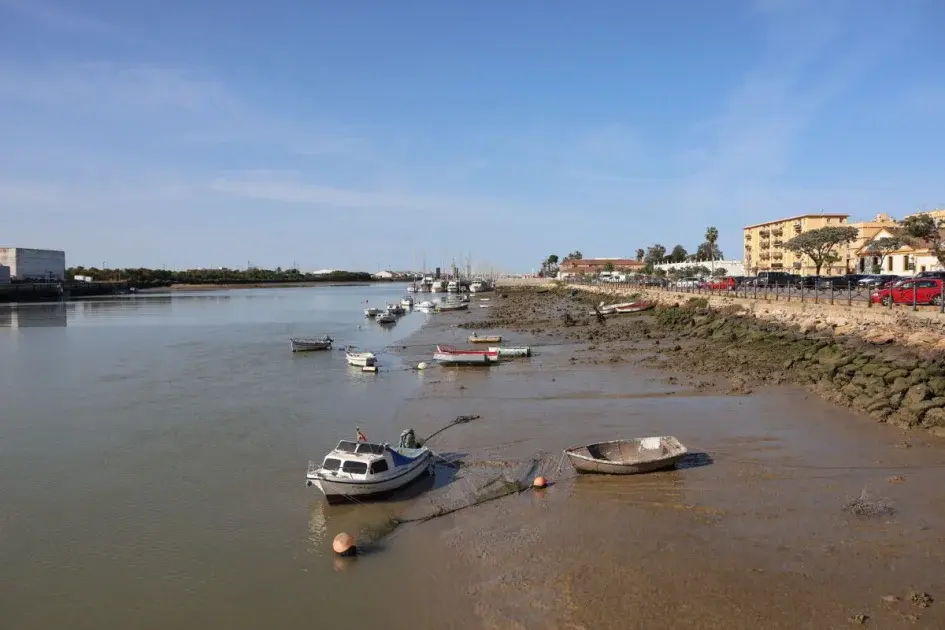
The village of Culatra is itself one of the most authentic experiences in the Algarve. Unpaved streets, whitewashed houses with flower pots, fishing nets drying in the sun, colourful boats moored along the lagoon quay — a scene that hasn't changed much in decades. No motor vehicles (except agricultural tractors); residents get around on foot or by bicycle. Allow time to simply wander without a plan.
Birdwatching in the Ria Formosa
The Ria Formosa is one of the most important bird breeding sites on the Iberian Peninsula. From the island you can spot:
- Black-winged stilt (Himantopus himantopus) — nests in the salt pans
- Greater flamingo (Phoenicopterus roseus) — flocks of 50–200 in winter
- Yellow-legged gull and common tern
- Great cormorant, grey heron and purple sandpiper
The best period for birdwatching is October to March, when migratory species are present. Bring binoculars.
Snorkelling and swimming
The water in the Ria Formosa (north side of the island, near the pier) reaches 26–28 °C in August and is calm and shallow — ideal for young children and those who prefer swimming without waves. On the southern (ocean) side, water temperature is 22–24 °C with 5–10 metres of visibility and occasional sandy-rocky seabeds — suitable for basic mask-and-snorkel snorkelling.
Kayak and SUP in the lagoon
Several operators based in Olhão and Faro organise kayak and SUP tours of the Ria Formosa that include a stop at Ilha da Culatra. There is no equipment hire directly on the island, but you can rent in Olhão (€15–25/hour) and paddle across to the island in 45–60 minutes. The lagoon route offers privileged views over the mudflats and allows access to channels and sandbanks unreachable any other way.
Visit the Farol lighthouse
The Farol da Ilha do Farol, built in 1852, is among the most photographed lighthouses in the Algarve. Although the interior is not regularly open to the public, the surroundings are photogenic at any time of day — at sunrise, the golden light on the red-and-white structure creates memorable images.
Where to Eat on Ilha da Culatra
The food is, without question, one of the best reasons to visit Culatra. Restaurants serve fish and shellfish caught within the last few hours — no long distribution chains, no extended cold storage.
Dishes not to miss
- Razor clams à bulhão pato — razor clams sautéed with garlic, olive oil and coriander: the most emblematic recipe of the Ria Formosa
- Razor clam rice (arroz de lingueirão) — soupy rice with fresh lagoon razor clams
- Caldeirada de peixe — traditional fish stew with potato, tomato and pepper
- Ria Formosa oysters — served fresh from the lagoon farms (€6–10 per dozen)
- Grilled tuna (July–September) — at peak fishing season
Restaurants and cafés
The dining offer on the island is modest but genuine. In Culatra village there are 4–6 restaurants and cafés along the lagoon quay, most with waterfront terraces. Don't expect elaborate menus — the offering is simple: the catch of the day, lagoon shellfish, and cold beer. Prices are accessible (full meal €12–20 per person). We recommend booking (when possible) on summer weekends in July and August, when demand exceeds capacity.
In Farol the offering is even more limited: one or two restaurants/snack bars near the pier. The alternative is to bring food from Olhão (several supermarkets and bakeries near the ferry terminal).
Comparison: Culatra vs Farol vs Armona vs Ilha Deserta
| Island / Settlement | Character | Beach | Dining | Ferry from Olhão | Best for |
|---|---|---|---|---|---|
| Culatra (village) | Fishing village, authentic | 6 km ocean + lagoon | 4–6 restaurants | 30 min, €2.30 | Authenticity, food, families |
| Farol (settlement) | Quiet, iconic lighthouse | 1–2 km ocean | 1–2 snack bars | 45 min, €2.30 | Photography, solitude, walks |
| Armona | Tourist, accessible | 4 km + lagoon | 3–4 restaurants | 20 min, €2.00 | Families, first-timers |
| Ilha Deserta / Barreta | Wild, partial naturist | 9 km deserted | 1 restaurant (Estamine) | Ferry from Faro, €5–10 | Total isolation, photography |
When to Visit: Season and Climate
Ilha da Culatra can be visited year-round, but the experience varies significantly by season:
- June and September: the best months — pleasant temperatures (25–28 °C), warm sea, manageable crowds, abundant fish. Our personal recommendation.
- July and August: peak season — fuller ferries, restaurants packed on weekends, but the sea is at its best (22–24 °C ocean, 26–28 °C lagoon)
- October to May: low season — island almost empty, village at its own pace, fewer ferry departures, many restaurants closed. Ideal for birdwatching and photography.
- Winter (December–February): Culatra reveals its most authentic face — only residents, fishing boats and silence. Temperature 14–17 °C. Not suitable for swimming but extraordinary for those who love places outside of time.
Practical Tips
- Arrive early: morning ferries (7:30–9:00) are the least crowded. In August, the 10:00–12:00 boats may have queues.
- Bring cash: many restaurants and stalls on the island don't accept card payment.
- Sunscreen and water: there are no pharmacies or supermarkets on the island. Stock up in Olhão.
- Appropriate footwear: sandals or light trainers — the path from the village to the beach is through sand.
- No cars: leave your car in Olhão (free parking 10 minutes from the pier) or take the train.
- Mobile phone: network coverage available (NOS/MEO/Vodafone) but can be unstable at remote points of the island.
- Last boat: don't miss the last return ferry. In low season it may leave at 18:30 — always confirm the schedule before you depart.
Combining with Other Destinations
Ilha da Culatra pairs naturally with a visit to Olhão, where the 1916 covered markets (fish and local produce, Tuesday to Sunday from 7h to 13h) are a destination in their own right. A morning at the markets followed by lunch on Culatra is one of the best days you can spend in the Algarve.
For a broader tour of the Ria Formosa, see our complete Faro and Ria Formosa islands guide, covering Ilha Deserta, Faro ferry routes and birdwatching in the natural park.
Those exploring the eastern Algarve (Sotavento) can complete the itinerary with Tavira and Ilha de Tavira (35 km east) and the Monte Gordo, Manta Rota and Cacela Velha coast — the warmest seawater on mainland Portugal.
Frequently Asked Questions about Ilha da Culatra
How long does the ferry from Olhão to Ilha da Culatra take?
Approximately 30 minutes to Culatra village and around 45 minutes to the Farol settlement. The service calls at both stops on the same journey.
How much does the ferry to Ilha da Culatra cost?
€2.30 per person one way, €4.60 return (adult). Children aged 4 to 10 pay half price. Under 4s travel free.
Is there anywhere to stay on Ilha da Culatra?
There are no hotels on the island. A small number of local accommodation options (rooms and small houses) can be rented from the community — search on Airbnb or Booking with the filter "Ilha da Culatra". Most visits are done as a day trip from Olhão or Faro.
Is Ilha da Culatra suitable for families with children?
Yes. The lagoon side (near the village pier) has calm, shallow water ideal for young children. The ocean beach has a lifeguard post in summer. The absence of motor traffic makes the island particularly safe for children.
What is the difference between Ilha da Culatra and Ilha da Armona?
Armona (20 min ferry, €2.00) is closer to Olhão and more geared toward standard beach tourism. Culatra is more authentic, with a thriving fishing village, more genuine restaurants and less-visited beaches. Those seeking authenticity choose Culatra; those wanting convenience and more beach services choose Armona.
Ilha da Culatra is, for us, one of the Algarve's best-kept secrets — and, paradoxically, it's only 30 minutes by boat from Olhão. If you want to discover the Algarve that the Portuguese keep for themselves, this is the place.