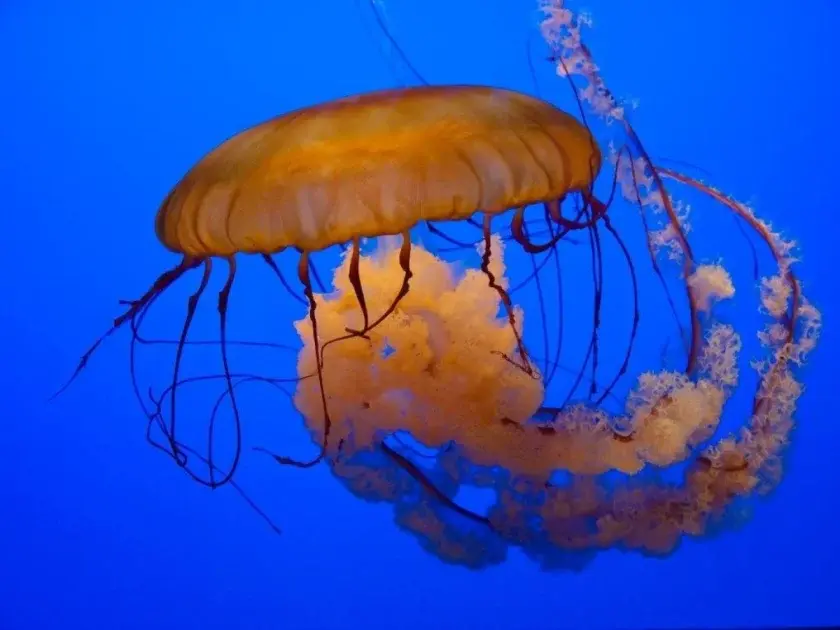
Jellyfish on Portugal Beaches in 2026: Complete Safety Guide
If you've been following Portuguese beach news lately, you may have noticed a recurring topic: rising jellyfish and Portuguese man o' war sightings along stretches of coast from Costa da Caparica to Cascais. This isn't scare-mongering — it's a real seasonal phenomenon, intensified this year by above-average sea temperatures and currents pushing these animals closer to shore, and it's been officially flagged by Portugal's National Maritime Authority and several coastal councils.
At Praias de Portugal, we track official alerts from IPMA, the Maritime Authority and the health authorities whenever something has a direct impact on the bathing season, just as we did with the recent heatwave and the invasive algae affecting the Algarve. This guide combines that official information with clear, practical advice: how to identify the species most commonly found in Portugal, what to do (and not do) if you're stung, and where to check real-time sightings before you pack your beach bag.
Portugal on Alert: Where Jellyfish and Portuguese Man o' War Have Been Spotted in 2026
The most frequently reported sightings in July 2026 are concentrated around greater Lisbon, particularly Costa da Caparica, São Pedro do Estoril and Carcavelos, where the National Maritime Authority has already urged bathers to avoid contact with these animals. The phenomenon isn't limited to these beaches: similar reports have emerged in the Algarve and along the Costa Vicentina, and the surge of sightings on nearby Spanish beaches suggests the trend could keep spreading through the summer.
This increase is linked to a combination of factors that recur every summer but have combined with unusual intensity this year: warmer water, which favours the reproduction of certain jellyfish species, and surface winds and currents that push swarms toward the coastline, especially after days of persistent southerly or westerly wind.
No reason to cancel your beach day
It's worth keeping perspective: the presence of jellyfish doesn't make a beach dangerous, it just calls for a bit more attention. The vast majority of stings in Portugal result in temporary discomfort rather than medical emergencies. Still, it pays to know how to identify the species and respond correctly if a sting happens, especially if you're travelling with children.
Jellyfish or Portuguese Man o' War? How to Identify the Most Common Species in Portugal
Not all stings are equal, and the species involved makes a real difference to symptom severity and the right treatment. Along the Portuguese coast, three species account for the vast majority of cases:
| Species | Appearance | Sting severity |
|---|---|---|
| Mauve stinger (Pelagia noctiluca) | Pinkish-brown bell, around 10 cm, long trailing tentacles | Moderate — pain and redness lasting a few hours |
| Portuguese man o' war (Physalia physalis) | Floating blue/purple sail-shaped bladder, tentacles that can exceed 10 metres | High — sharp, immediate pain and risk of allergic reaction |
| Moon jellyfish (Aurelia aurita) | Translucent bell with four visible rings in the centre | Very low — barely noticeable sting for most people |
The Portuguese man o' war deserves special attention: despite looking like a jellyfish, it's actually a colony of organisms rather than a single animal, and its sting is significantly more painful and potentially more dangerous. Even after washing up on the sand and appearing "dead," it can keep stinging for hours or days — so never touch one, no matter how harmless it looks.
What to Do If You're Stung by a Jellyfish or Portuguese Man o' War
There are plenty of myths about treating jellyfish stings, and some of them can actually make things worse. These recommendations follow health-authority guidance for cnidarian stings:
- Leave the water calmly and move away from the area where contact happened, to avoid further stings.
- Rinse the affected area with seawater — never fresh water, which can trigger any remaining stinging cells and worsen the pain.
- Remove visible tentacles with tweezers, a card, or a gloved hand, never directly with bare fingers.
- Apply heat — immersing the area in water as hot as can be tolerated (around 40-45ºC / 104-113ºF) for 20 to 45 minutes tends to relieve pain more effectively than ice.
- Avoid unproven home remedies such as urine, fabric softener, alcohol or hot sand — none has proven effectiveness, and some can worsen the reaction.
- Seek medical help immediately if you notice difficulty breathing, facial swelling, palpitations, dizziness or a widespread allergic reaction — especially in young children, older adults or people with a history of allergies.
On most staffed beaches in Portugal, lifeguards are trained to provide first aid for stings — don't hesitate to find one as soon as symptoms start.
How to Prevent Stings: Tips Before You Get in the Water
Prevention remains the most effective strategy, especially during a period of more frequent sightings. Before entering the water, it's worth following these tips:
- Ask the lifeguard about recent sightings in the area — they're often the most up-to-date source of information, even more so than fixed signage.
- Never touch jellyfish or man o' war washed up on the sand, even if they look motionless or "dried out": tentacles can remain active for a long time out of water.
- Be extra cautious after days of persistent southerly or westerly wind, which tends to push swarms toward the coast.
- Wear a swimsuit or rash guard that covers more skin if swimming or doing water sports in an area with recent sightings.
- Talk to children beforehand and explain they should never touch anything that looks like a "clear bag" or "blue balloon" on the sand.
Gelavista and MedusApp: the Official Tools for Real-Time Sightings
One of the most reliable ways to plan a safe beach day is to check Gelavista, the platform run by Portugal's Institute for Sea and Atmosphere (IPMA) dedicated to logging and mapping jellyfish and other gelatinous species sightings along the Portuguese coast, available at gelavista.ipma.pt. The tool lets you check recent sightings by area and even submit new reports, contributing to a collaborative map maintained by both the scientific community and the public.
There are also apps such as MedusApp, popularised in Spain and also used by beachgoers in Portugal, which work like a "Waze for jellyfish" identification. Combining these tools with information posted at staffed beaches and advice from lifeguards is currently the most complete way to reduce the risk of an unexpected sting.
Portugal's Most Affected Beaches in 2026: Where to Be Extra Careful
Based on the most recent alerts from the National Maritime Authority, the following areas have recorded the highest concentration of sightings in July 2026:
- Costa da Caparica — one of the beaches with the most reported sightings this summer, particularly near the access channel to the Tagus estuary. See our complete Costa da Caparica guide to plan your visit with all the practical details.
- São Pedro do Estoril and Carcavelos — along the Cascais coastline, also under alert from the Maritime Authority, especially after periods of southerly wind. Check our complete Cascais guide for nearby beaches with lower reported activity.
- Parts of the Algarve and Costa Vicentina — with occasional but growing reports, mirroring the trend already seen on nearby Spanish beaches.
This isn't the first time our team has flagged a marine phenomenon affecting the 2026 bathing season — we recently covered the invasive seaweed affecting Algarve and Cascais beaches. We recommend always checking current conditions before choosing a beach, especially if you're travelling with young children.
Frequently Asked Questions
Is it safe to go to the beach with jellyfish warnings in Portugal?
Yes, in most cases. Warnings are meant to increase awareness, not to keep you off the beach. Follow the lifeguard's guidance, avoid touching stranded animals on the sand, and check the IPMA's Gelavista tool before choosing your beach.
What should I do immediately after a jellyfish sting?
Leave the water, rinse the area with seawater (never fresh water), remove visible tentacles with tweezers or a card, and apply hot water (40-45ºC) for 20 to 45 minutes. Find a lifeguard or seek medical help if severe symptoms appear.
Does urine really help relieve a jellyfish sting?
No. It's a popular myth with no proven effectiveness, and in some cases it can worsen the irritation. Seawater and controlled heat are the best-supported recommendations.
Is the Portuguese man o' war more dangerous than a common jellyfish?
Yes. The Portuguese man o' war causes more painful stings with a higher risk of allergic reaction than most common jellyfish in Portugal, and it can keep stinging even after washing up and appearing "dead" on the sand.
Where can I check jellyfish sightings before going to the beach?
IPMA's Gelavista (gelavista.ipma.pt) is Portugal's official tool for checking and logging jellyfish and other gelatinous species sightings by coastal area, updated with contributions from both the scientific community and the public.
Conclusion
The rise in jellyfish and Portuguese man o' war sightings on Portugal's beaches in 2026 is a real phenomenon, but a perfectly manageable one with the right information and a few simple precautions: check Gelavista before you leave home, ask the lifeguard, never touch stranded animals on the sand, and know how to respond if you're stung. Keep exploring our complete beach safety guide and our article on the 2026 heatwave to plan your next beach days with everything you need to know.