Aljezur, Portugal: Complete Guide to the Costa Vicentina's Surf Beaches (2026)
Every summer we get the same question from travellers planning a trip to the west coast of the Algarve: "is Aljezur worth choosing as a base, or should I stay closer to Lagos?" Having explored this area repeatedly across different seasons — from near-empty May mornings to Arrifana's car park overflowing on August afternoons — our answer is almost always the same: yes, it's worth it, as long as you know what you're getting into. Aljezur isn't a resort town or a nightlife hub; it's a former fishing and farming village, crowned by a Moorish hilltop castle, that acts as the gateway to one of the best-preserved coastlines in Europe. This guide covers everything you need to plan a 2026 visit: how to get there, what sets each of the municipality's seven beaches apart, when to go, where to stay and eat, and how to combine beach days with the Rota Vicentina hiking trail.
Where Aljezur Is and How to Get There
Aljezur sits at the northwestern tip of the Algarve, right on the administrative border with the Alentejo region, inside the Southwest Alentejo and Vicentine Coast Natural Park (Parque Natural do Sudoeste Alentejano e Costa Vicentina). It's about 260 km from Lisbon (roughly 2h45–3h by car via the A2 motorway and then the N120/IC4), 100 km from Faro (around 1h15), and only 40 km from Lagos (35–40 minutes on the N120) — close enough to work as a base even if you're flying into Faro Airport and don't want to stray too far from the rest of the Algarve.
By Car
The N120 road is the backbone of the region, connecting Aljezur to Lagos in the south and to Odeceixe and Zambujeira do Mar to the north, already in Alentejo territory. A car is essentially non-negotiable here: public transport to the beaches is sparse, and the whole point of the area — seven distinct beaches spread across 20 km of coastline — only really opens up with your own wheels.
By Public Transport
Long-distance coaches (Rede Expressos and regional operators) connect Lisbon, Lagos and Aljezur, but the onward service to the actual beaches is limited and seasonal, with only a handful of daily departures even in August. If you don't have a car, consider a taxi, renting an e-bike (a few local operators offer this in town), or walking sections of the Rota Vicentina trail to reach Monte Clérigo and Amoreira, both within a reasonable hike of the village.
Praia da Arrifana — the Costa Vicentina's Postcard Beach
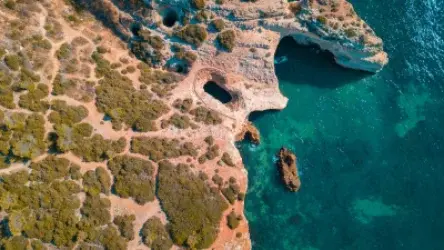
About 10 km from Aljezur (a 15-minute drive), Praia da Arrifana is probably the most photographed spot in the municipality: a semicircular bay enclosed by dark cliffs, with the ruins of the Fortaleza da Arrifana — a 17th-century fort built over an even older hermit convent — perched on the southern headland. It has more infrastructure than its neighbours: sea-view restaurants, an established surf school, and a lifeguard on duty during the official bathing season.
For surfers, Arrifana offers a left-hand point break that works well on northwest swells, drawing everyone from beginners on smaller days to experienced surfers when the swell picks up. GPS: 37.2897° N, 8.8615° W.
Praia de Monte Clérigo and Praia da Amoreira — Surf and Family Beaches, Side by Side
About 8 km from Aljezur, Praia de Monte Clérigo was voted Europe's Best Beach 2026 by European Best Destinations — a distinction we cover in full detail in our dedicated Monte Clérigo guide, which we'd recommend if you want the complete picture of this beach specifically. GPS: 37.3408° N, 8.8531° W.
A short walk away (about 15 minutes along the Rota Vicentina trail, following clifftops and dunes) is Praia da Amoreira, the municipality's best pick for families with young children: where the Ribeira de Aljezur river meets the sea, it creates a shallow, warmer, wave-sheltered lagoon on the river side, while the ocean side keeps the typical Costa Vicentina surf for those who want it. It's also the closest beach to the village itself, making it the easy choice for a short afternoon without much planning.
Praia da Bordeira and Praia do Amado — Carrapateira's Giant Dunes
Near the village of Carrapateira, about 18 km from Aljezur (a 20–25 minute drive), are two beaches that tend to surprise first-time visitors with their sheer scale. Praia da Bordeira stretches for more than 2 km along one of the best-preserved dune systems in the Algarve, where the Ribeira da Carrapateira river meets the ocean — almost no infrastructure, a partly unpaved access road, and powerful waves that draw surfers from across the country on good swell days. Approximate GPS: 37.1912° N, 8.9041° W.
Separated by a small rocky headland to the north is Praia do Amado, considered one of the best surf beaches on the Costa Vicentina and a regular host of national and international surf competitions. It's also where most of the region's surf schools are based, thanks to multiple breaks that suit different skill levels.
Vale Figueiras and Praia de Odeceixe — Escaping the Crowds
Between Arrifana and Carrapateira, Praia de Vale Figueiras is the pick for travellers who want the truly untouched Costa Vicentina experience: small, unguarded, with no restaurants and a final stretch of dirt-track access, it's usually the first choice of local surfers when the better-known beaches fill up in August. There's no support infrastructure, so bring your own water, food and sun protection.
At the northern edge of the municipality, right on the symbolic border between the Algarve and the Alentejo, sits Praia de Odeceixe: a Costa Vicentina classic where the Ribeira de Seixe river splits the sand in two, creating a calm, warmer lagoon (26–28°C in August) on the river side and consistent surf and bodyboard waves on the ocean side. It's the only beach in Portugal that sits simultaneously in the Algarve (south bank of the river) and the Alentejo (north bank). GPS: 37.4282° N, 8.7920° W.
| Beach | Distance from Aljezur | Best For | Lifeguard |
|---|---|---|---|
| Arrifana | ~10 km / 15 min | Surfing, photography, sunsets | Yes (bathing season) |
| Monte Clérigo | ~8 km / 12 min | Surfing, authentic atmosphere | Yes (bathing season) |
| Amoreira | ~9 km / 12 min | Families with young children | Yes (bathing season) |
| Bordeira / Carrapateira | ~18 km / 22 min | Space, dunes, advanced surf | Yes (bathing season) |
| Amado | ~19 km / 23 min | Surf lessons, all levels | Yes (bathing season) |
| Vale Figueiras | ~14 km / 18 min | Solitude, experienced surfers | No |
| Odeceixe | ~18 km / 20 min | Families, river and ocean together | Yes (bathing season) |
When to Go: Bathing Season, Wind and Water Temperature
Lifeguard coverage at the municipality's supervised beaches typically runs from mid-June to mid-September — always check the exact dates for the current year in our 2026 bathing season guide. Outside that window, even on a sunny day, you swim at your own risk.
The Costa Vicentina is one of the windiest stretches of mainland Portugal, especially in the afternoon, due to the "nortada" — Portugal's dominant summer north wind, which strengthens as the inland heats up. If you want a calmer beach day, go in the morning; if you're into windsurfing or kitesurfing, afternoons are usually better. We explain the phenomenon in more detail in our guide to Portugal's nortada wind.
Sea temperatures around Aljezur are famously cold by Algarve standards — between 16°C and 19°C (61–66°F) even at the height of August — because of coastal upwelling, which pulls deep, cold water to the surface. A 3/2mm wetsuit is a sensible choice for surfing or spending extended time in the water, even in midsummer.
Where to Stay and Eat in Aljezur
The hilltop town of Aljezur, overlooking the Ribeira de Aljezur river and crowned by the ruins of a 10th-century Moorish castle, is the most central and generally most affordable base in the region, with guesthouses, rural tourism properties and a handful of small hotels — typically cheaper than Lagos or the more touristic Algarve coastline. Alternatives right by the sea, for travellers who want to wake up close to the waves, include small beachside clusters at Monte Clérigo and Arrifana, with a smaller, pricier selection in August.
On Wednesday mornings the town hosts its traditional Aljezur market, with local produce — the region is known for Aljezur sweet potato (a Protected Geographical Indication product), honey, goat cheese and fresh fish from Arrifana. Restaurants in Arrifana and Monte Clérigo lean toward grilled fish and seafood, while the town itself offers more traditional Alentejo- and Algarve-style cooking at more moderate prices.
Trails and Nature: the Rota Vicentina
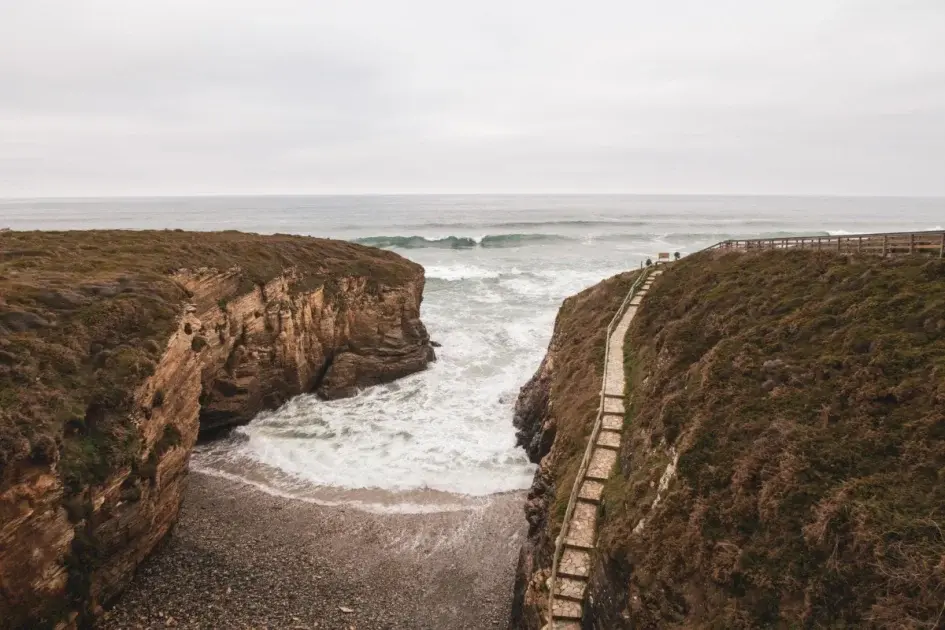
The entire municipality lies within the Southwest Alentejo and Vicentine Coast Natural Park, managed by ICNF (Portugal's nature conservation institute), which explains the almost complete absence of coastal development — one of the main reasons this coastline still feels so different from the rest of the Algarve. The Fishermen's Trail (Trilho dos Pescadores), part of the Rota Vicentina network, follows the coastline and links several of the beaches above on foot: Amoreira to Monte Clérigo in about 15 minutes, and Monte Clérigo to Arrifana on a longer clifftop stretch of 60 to 90 minutes. For hikers, it's one of the best ways to see the region without a car. We've rounded up similar routes across the country in our guide to Portugal's best coastal trails.
Frequently Asked Questions
Which Aljezur beach is best for surfing beginners? Praia do Amado, near Carrapateira, is generally the top recommendation for beginners: it has several breaks (peaks) and hosts most of the region's surf schools. Monte Clérigo and Arrifana also offer good beginner conditions on smaller swell days.
Do I need a car to visit the beaches around Aljezur? Strongly recommended. Public transport to the beaches is limited and seasonal, and the distance between the municipality's seven beaches — spread across 20 km of coastline — is far easier to cover with your own car, though Amoreira and Monte Clérigo are reachable on foot or by bike from town.
Which beach is best for families with young children? Praia da Amoreira, thanks to the shallow, warmer lagoon where the river meets the sea, sheltered from direct ocean swell. Praia de Odeceixe, further north, offers a similar calm-river-plus-ocean combination.
Why is the sea so cold around Aljezur, even in summer? Because of coastal upwelling: the north wind typical of Algarve summers pushes surface water offshore, and it's replaced by deeper, colder water rising to the surface. The effect is more pronounced on the Costa Vicentina than in the rest of the Algarve.
Is Aljezur a good base if I don't surf? Yes. Beyond the beaches, the municipality offers hiking on the Rota Vicentina, birdwatching and wild landscapes, a Moorish hilltop castle and historic town centre, and a distinct local food scene built around Aljezur sweet potato and fresh fish. It's a quieter, less touristic base than the central Algarve.
Conclusion
Aljezur doesn't try to compete with the resort-driven side of the Algarve — and that's exactly why it's worth choosing as a base. Seven beaches with very different personalities, dunes and cliffs kept nearly untouched thanks to natural park protection, and a town that still moves at its own pace, with a Moorish castle, a weekly market and a sweet potato with its own protected name. Come prepared for cold water, afternoon wind, and the need for a car — and pack a wetsuit even for August.
To keep planning your trip, see our full guide to the Costa Vicentina, our dedicated guide to Praia de Monte Clérigo, voted Europe's Best Beach 2026, and our guide to learning to surf in Portugal before booking your first lesson. Before you go, also check the general rules in our guide to beach fines in Portugal.