Anyone planning a holiday in the Algarve will sooner or later face a choice that seems simple but makes all the difference: go to the Barlavento (the western side) or the Sotavento (the eastern side)? The answer changes depending on the traveller's profile — and the difference between the two sides is greater than most people imagine when they look at a map. After many years travelling the Algarve from Sagres to Vila Real de Santo António, we found that tourists who end up on the "wrong" side for their profile are often surprised — sometimes pleasantly, quite often less so.
This guide compares both sides of the Algarve in detail: landscape, beach type, water temperature, waves, family offer, gastronomy, nightlife and prices. The goal is straightforward: to help you make the right decision before booking your accommodation.
The Geographical Division: What Are the Barlavento and Sotavento?
The terms "Barlavento" and "Sotavento" have nautical origins: barlavento means the windward side, and sotavento the leeward side. In the context of the Algarve, the division is essentially geographic and administrative.
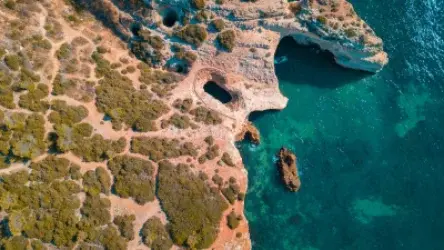
The Barlavento Algarvio covers the western municipalities: Vila do Bispo (home of Sagres and Cape St Vincent), Lagos, Portimão, Lagoa (home of Praia da Marinha and Carvoeiro), Silves, Albufeira, Monchique and Aljezur. It is the internationally best-known part of the Algarve, with the iconic orange and ochre cliffs that dominate postcard photographs.
The Sotavento Algarvio covers the eastern municipalities: Loulé (with the beaches of Quarteira and Vale do Lobo), Faro, Olhão, Tavira, Castro Marim, Vila Real de Santo António and Alcoutim. This zone is dominated by the Ria Formosa, one of Portugal's most important natural parks — a network of lagoons, salt marshes and barrier islands stretching over 60 km of coastline.
The Dividing Line
The informal boundary between the two sides is usually drawn around Faro — the Algarve's capital — or more precisely in the zone between Quarteira and Faro. East of Faro, the Algarve changes character abruptly: the cliffs disappear, the coastline flattens, and the unique landscape of the Ria Formosa emerges.
Landscape and Beach Type: The Most Visible Difference
Barlavento: Cliffs, Caves and Hidden Bays
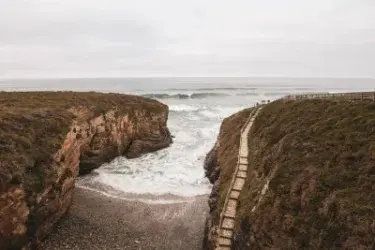
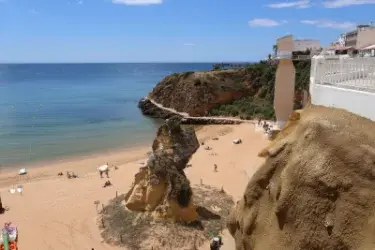
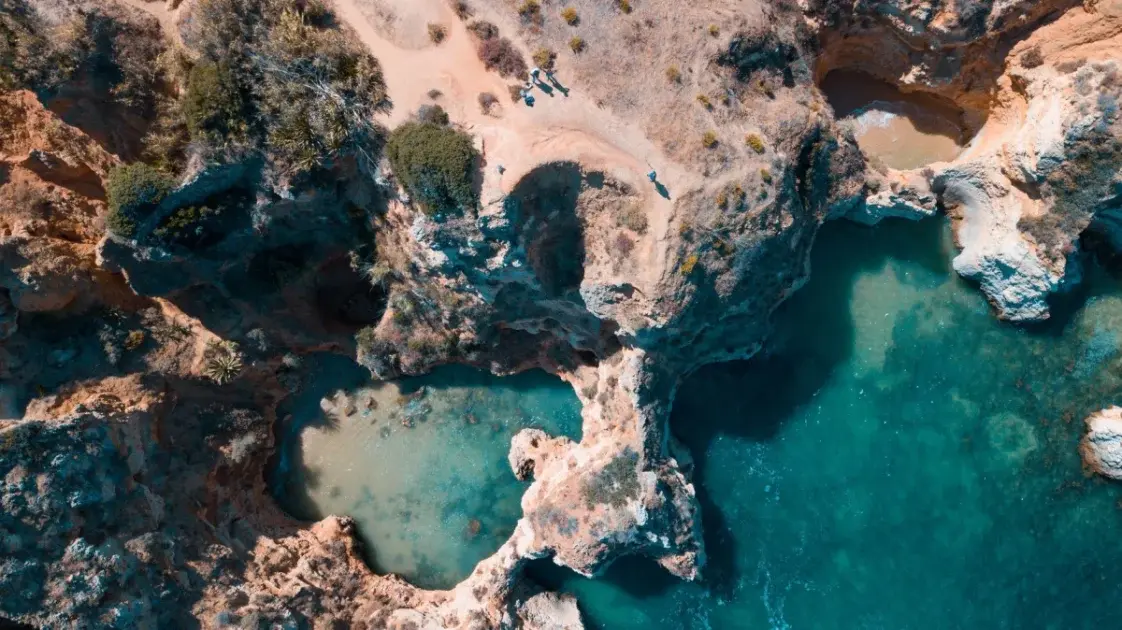
The Barlavento landscape is dominated by limestone and sandstone cliffs, sculpted over millennia by Atlantic erosion. These formations create a coastline of enormous visual variety: sheltered coves, rock arches, sea caves accessible by boat or by swimming, and beaches reached only by steps cut into the rock or via dirt paths.
Barlavento beaches are generally smaller and more intimate than those of the Sotavento — their size is limited by the surrounding cliffs. This creates a more sheltered atmosphere but also more competition in the summer months, when the most famous beaches such as Praia da Marinha, Praia do Camilo in Lagos, or Praia de Dona Ana fill up quickly.
Benagil Cave, in Lagoa, is perhaps the most recognisable symbol of this side of the Algarve: a cave accessible by boat or by swimming (experienced swimmers only), with a circular opening in the roof that projects light onto a tiny interior beach. It is one of the most photographed spots in Portugal.
Sotavento: Lagoons, Islands and Endless Sands
The Sotavento has a radically different landscape. The coast is low, sandy, and frequently separated from the mainland by a system of lagoons and channels — the Ria Formosa. The barrier island beaches (Ilha de Tavira, Ilha de Armona, Ilha da Culatra, Ilha de Faro) are accessible only by ferry, which gives them a wilder, less crowded character even in the height of August.
The Sotavento's sandy stretches are considerably larger — in some cases, continuous beach for several kilometres, with low dunes covered in low-lying vegetation. The scale is completely different: where the Barlavento has beaches of 100–300 metres, the Sotavento has beaches of 2–10 km.
Tavira, with its Moorish-influenced historic centre, white bell towers and the river that runs through it, is one of the most beautiful towns in the Algarve and an ideal base for exploring the beaches of the island of the same name — see our complete guide to Tavira and the Ria Formosa to plan this part of your visit.
Water Temperature and Swimming Conditions
For many tourists, this is the most practical difference between the two sides — and one of the least known.
Barlavento: Pure Atlantic, Cooler Water
The Barlavento is directly exposed to the Atlantic Ocean, especially on the westernmost beaches (Sagres, Costa Vicentina). Atlantic currents bring colder water from the north, and the coastal upwelling phenomenon — the rise of cold deep water — is particularly intense along the western coast. The result is that Barlavento beaches, even in the height of summer, have water that rarely exceeds 20–22°C. On the Vicentine coast, north of Sagres, the water can stay below 18°C even in August.
This has an important practical consequence: visitors to Sagres or the Costa Vicentina beaches expecting to swim comfortably may be surprised. The water is invigorating — but cold. Many surfers wear wetsuits even in summer.
Sotavento: Warm, Calm Water, Ideal for Families
The Sotavento benefits from a unique "lagoon warming" effect: the Ria Formosa, with its shallow waters, heats up considerably during the day and maintains significantly higher temperatures than the open sea. On the barrier island beaches, the water on the lagoon side (facing the mainland) can reach 26–28°C in July and August — a temperature rarely found on European Atlantic beaches.
Even the Sotavento beaches that face the open sea directly (such as those at Monte Gordo or Manta Rota) have warmer water than the Barlavento, because lower exposure to the open Atlantic and the influence of the Mediterranean current rising through the Gulf of Cádiz creates milder conditions.
| Month | Barlavento (Lagos/Albufeira) | Sotavento (Tavira/Monte Gordo) |
|---|---|---|
| June | 19–21°C (66–70°F) | 21–23°C (70–73°F) |
| July | 20–22°C (68–72°F) | 23–25°C (73–77°F) |
| August | 21–23°C (70–73°F) | 24–26°C (75–79°F) — lagoon side up to 28°C |
| September | 21–23°C (70–73°F) | 23–25°C (73–77°F) |
| October | 19–21°C (66–70°F) | 21–23°C (70–73°F) |
Waves, Surf and Water Sports
Barlavento: Atlantic Surfing Paradise
The Barlavento, especially its western extremity (Costa Vicentina, Sagres, Lagos), is one of Europe's most important surf destinations. Waves generated in the North Atlantic arrive at this coast at full force, with nothing to interrupt them since the British Isles, creating consistent conditions for surfing, bodyboarding, windsurfing and kitesurfing throughout the year.
Praia do Tonel and Praia da Beliche, near Sagres, are particularly valued by surfers for their consistent peaks. Praia da Bordeira, on the Costa Vicentina, is a monumental dune beach with waves that regularly reach 2–3 metres. Meia Praia, near Lagos, is better suited for beginners and has several surf schools. For a full guide to this coast, see our Costa Vicentina guide.
Sotavento: Kayaking, Sailing and Calm-Water Sports
The Sotavento is not surf territory — the wind conditions and the protection of the Ria Formosa create ideal waters for calm-water sports. Kayaking, SUP (stand-up paddle), summer wind windsurfing, sailing and boat trips through the lagoon are the dominant activities. The Ria Formosa is one of southern Europe's best destinations for leisure kayaking, with routes between channels, sandbanks and islets that can be explored for hours.
For Families with Children: Which Side Is Right?
This is the most frequently asked question and, in this case, the answer is clear: the Sotavento has significant advantages for families with young children.
The reasons are objective:
- Warmer water: The 2–4°C difference between the two sides is very significant for young children, who have less tolerance for cold water.
- Smaller waves: Sotavento beaches, especially the lagoon-side beaches on the barrier islands, have almost no swell. The barrier island beaches at Tavira and Olhão are essentially a giant natural pool.
- Fewer currents: The Atlantic exposure of the Barlavento creates lateral currents and rip currents that can be dangerous. The Sotavento has safer conditions for children without sea experience.
- Wider sands: The extensive Sotavento sands give more space to play.
That said, the Barlavento is not unsuitable for families — beaches like Meia Praia (Lagos), Praia de Alvor or Praia da Rocha (Portimão) have very reasonable conditions for children, especially on calm days. Our guide to the best beaches in the Algarve has a dedicated section on the best family beaches on both sides.
Nightlife, Mass Tourism and Quieter Alternatives
Barlavento: More Nightlife, More International Tourism
The Barlavento concentrates most of the Algarve's international tourism. Albufeira is the most dynamic pole — and also the most crowded, with an intense nightlife on the "Rua Direita" (the famous "Strip") and beaches reaching very high density in July and August. Lagos, Portimão and Vilamoura have a more balanced profile, with good infrastructure and moderate nightlife.
For those who want the Barlavento but avoid mass tourism, the Costa Vicentina — technically part of the Barlavento, but within the Southwest Alentejo and Vicentine Coast Natural Park — offers harder-to-reach beaches with almost no tourist infrastructure. It is a radically different Algarve from Albufeira, just 60 km away.
Sotavento: More Authentic, More Portuguese
The Sotavento has a more authentic and less internationalised character. Tavira, considered by many the most beautiful town in the Algarve, has a remarkable historic centre and a rhythm of life completely different from Albufeira. Olhão is a genuine fishing city, without major tourist infrastructure but with a seafood gastronomy that rivals anywhere in the country. Vila Real de Santo António, on the Spanish border, has an intact Pombaline historic centre and fine sand beaches with easy access.
If your goal is a quieter, cheaper Algarve closer to real Portuguese life, the Sotavento is clearly the better choice.
Gastronomy: Differences Between the Two Sides
Both sides of the Algarve have excellent gastronomy, but with different emphases:
The Barlavento is cataplana territory — the typical Algarve copper pot used to steam fish and seafood with vegetables, tomato and white wine. Lagos, Portimão, Silves and Lagoa have some of the finest cataplanas in the country. Fresh tuna from Sagres, grilled octopus and grilled sardines are other dominant specialities on this side.
The Sotavento is the territory of Ria Formosa shellfish: oysters, clams, cockles, carpet shells, razor clams — all coming directly from the lagoon beds. Olhão and Tavira are the two great centres of this unique gastronomic world. The razor clam rice of Olhão, clams à bulhão pato and oysters opened fresh at Olhão market are experiences with no equivalent in the Barlavento.
Prices and Accommodation: Barlavento vs Sotavento
The Barlavento, especially Albufeira, Lagos and Vilamoura, tends to be more expensive than the Sotavento — reflecting greater international demand. In August, accommodation prices in Albufeira and the Vilamoura area can be 30–50% higher than equivalent prices in Tavira or Olhão.
The Sotavento offers notably better value for money, especially in Tavira, Olhão and Monte Gordo. It is possible to find reasonable-quality accommodation for €80–€120/night in the height of the season — figures that would be hard to find in the most popular parts of the Barlavento.
Quick Selection Guide: Which Side Is Right for You?
| Your profile | Recommended choice | Specific zone |
|---|---|---|
| Family with young children | Sotavento | Tavira, Monte Gordo, Ilha de Armona |
| Surfer or bodyboarder | Barlavento | Sagres, Costa Vicentina, Lagos |
| Photographer / content creator | Barlavento | Lagos, Lagoa (Marinha, Benagil), Sagres |
| Seafood gastronomy lover | Sotavento | Olhão, Tavira, Faro |
| Romantic couple | Barlavento | Lagos, Carvoeiro, Ferragudo |
| Budget-conscious traveller | Sotavento | Tavira, Olhão, Monte Gordo |
| Deserted beaches and wild nature | Barlavento | Costa Vicentina (Aljezur, Vila do Bispo) |
| Kayaker / SUP / sailor | Sotavento | Ria Formosa (Olhão, Faro, Tavira) |
| Cultural and historical tourism | Sotavento | Tavira, Castro Marim, Faro |
| Nightlife | Barlavento | Albufeira, Lagos, Portimão |
Is It Worth Seeing Both Sides?
The honest answer is yes — but you need enough time. The Algarve has 150 km of coastline, and driving from Sagres to Vila Real de Santo António takes just over two hours. For those with 7–10 days, it is entirely feasible to split the stay between both sides, using Faro or Lagos as central base points for each half.
A strategy that works well: spend the first 3–4 days in the Barlavento (Lagos as a base, with day trips to Sagres and Benagil Cave), and the final 3–4 days in the Sotavento (Tavira as a base, with visits to Olhão and the barrier islands). This combination offers the best of both worlds and the genuine feeling of having truly traversed the Algarve, not just a fraction of it.
For more inspiration on the best beaches on each side, see our guide to the best beaches in the Algarve and our complete Algarve beach directory.
FAQ — Barlavento vs Sotavento Algarve
What is the main difference between the Barlavento and Sotavento of the Algarve?
The Barlavento (western side) is characterised by limestone cliffs, beaches set between rocks, sea caves, stronger Atlantic waves and slightly cooler water. The Sotavento (eastern side) is dominated by the Ria Formosa, with barrier islands, lagoons, extensive sands, warmer and calmer water, and a more authentic, less crowded character.
Does the Sotavento have beaches as beautiful as the Barlavento?
They are beautiful in very different ways. The Barlavento has more dramatic, photogenic beauty — the cliffs at Lagos or Benagil Cave are iconic. The Sotavento has a softer, more spacious beauty — the endless sands of Ilha de Tavira or sunsets over the Ria Formosa are equally memorable, but of a different kind. It depends on what you look for in a beach landscape.
Which is the best side of the Algarve to visit in September?
September is an excellent month for the entire Algarve. In the Barlavento, September is often the best month of the year — August crowds have dissipated, the sea is still warm (21–23°C) and sunshine is practically guaranteed. In the Sotavento, September is also excellent, with water still warm (23–25°C) and a noticeably calmer pace than August. For flexible travellers, September in the Sotavento may be the best combination of good weather, warm water and fewer tourists.
Is it cheaper to stay in the Sotavento than the Barlavento?
Generally, yes. The Sotavento — especially Tavira, Olhão, Monte Gordo and Castro Marim — tends to offer accommodation 20–40% cheaper than equivalent Barlavento areas such as Albufeira, Lagos or Vilamoura during the high season. Restaurants are also generally more affordable. The exception is the Vale do Lobo and Quinta do Lago resorts, which are in the Sotavento but at luxury price levels.
Can I surf in the Sotavento?
Not meaningfully. Sotavento beaches, sheltered by the Ria Formosa and with less Atlantic exposure, do not have waves suitable for surfing. Algarve surfing is concentrated in the Barlavento, especially Sagres, Lagos, Portimão and the Costa Vicentina. If surfing is a priority, the Barlavento is the only choice.
Conclusion
The Algarve is not a single destination — it is two destinations in one, separated by a few dozen kilometres but with very distinct personalities. The Barlavento is the Algarve of visual grandeur, the cliffs that appear on every calendar, waves for surfers and international nightlife. The Sotavento is the Algarve of authenticity, lagoons, fresh shellfish and a pace of life that recalls how this country was before mass tourism.
The right choice depends on you — what you seek, who you travel with and for how long. What we can guarantee is that whichever side you choose, the Algarve will not disappoint. Explore our Algarve beach directory to discover the beaches in each zone and plan your visit in detail.