Editorial note: We have personally visited all beaches in this guide over several summer seasons, including 2025. Prices and schedules reflect information available in June 2026 — we recommend confirming before your visit.
Portugal's Northernmost Corner: Why the Alto Minho Always Surprises
When most visitors think of Portugal's beach destinations, the Algarve or Costa de Prata come to mind instantly. The Alto Minho is frequently overlooked — and that is precisely what makes it so special. Less than 25 kilometres from the Galician border, the municipality of Caminha shelters some of the wildest, cleanest, and most photogenic beaches on the entire Portuguese coastline.
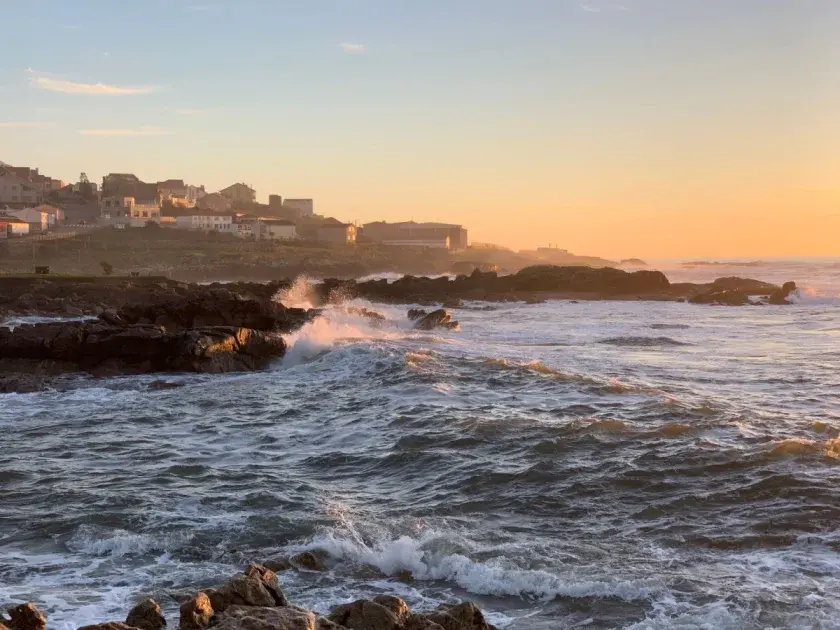
Here the Atlantic still blows with genuine force. The waves are consistent, the sands are wide and white, the water is clear — and on the horizon, the silhouette of Galicia provides a permanent backdrop. Between the mouth of the Minho river estuary, the Ínsua Fortress emerging from the sea like a medieval mirage, and the historic town of Caminha with its Gothic monuments, this corner of Portugal offers one of the most complete and least crowded beach experiences in the country.
In this complete guide you will discover the five main beaches along the Caminha–Vila Praia de Âncora corridor, the best kitesurfing and surf spots, how to cross the Minho into Galicia, what to visit in Caminha's historic centre, how to get there from Porto or Lisbon, and the best seafood restaurants in the area. We are in June 2026: the perfect moment to plan your visit.
Praia do Camarido · Praia de Moledo (Blue Flag) · Praia de Caminha/Foz do Minho (Blue Flag) · Praia de Vila Praia de Âncora · Praia do Forte do Cão (Blue Flag) · Coastal Ecovia path · Ínsua Fortress offshore · Ferry to A Guarda (Spain) · Portuguese Coastal Way to Santiago de Compostela
Praia do Camarido — Portugal's Northernmost Maritime Beach
Praia do Camarido holds a title that few people know but everyone should celebrate: it is the northernmost maritime beach in mainland Portugal. Stretching more than one kilometre of fine white sand alongside the mouth of the Minho river, it offers a direct view across to Galicia on the Spanish bank. GPS coordinates: 41.8643, -8.8646.
What makes Camarido unique is its dual personality: on one side the open Atlantic with rolling waves, on the other the calmer, slightly warmer estuary waters of the Minho. Across the dunes stretches the Mata Nacional do Camarido, a protected century-old pine forest with marked walking and cycling trails — ideal for a shaded stroll before or after a swim.
The beach has free parking on the seafront, a support bar, changing facilities, showers, and lifeguards from 15 June to 15 September (10:00–19:00). It does not currently hold an active Blue Flag, but water quality is rated "Good" by the Portuguese Environment Agency in 2025. Sea temperature in July and August ranges between 17–19°C — cooler than the Algarve, but perfectly refreshing after a walk through the forest.
From the sand you can see Ínsua Island with its fortress floating on the horizon — a particularly dramatic spectacle at sunset when golden light bathes the granite walls.
Praia de Moledo — Kitesurfing, Surf and the Ínsua Fortress
Praia de Moledo is the most coveted gem of the municipality. Blue Flag 2026, consistent westerly and northerly waves, winds reaching 20 to 25 knots on most days from May to October — kitesurfers from across Europe know Moledo even if they have never set foot in Portugal. GPS: 41.8495, -8.8667.
The surf break at Moledo runs the full length of the beach: waves of 1 to 2 metres in summer, up to 3–4 metres in autumn, on a safe sandy bottom. For beginner surfers, the southern section near the river mouth offers gentler, more forgiving waves. For kitesurfers, Kite Control Portugal (kitecontrolportugal.com) operates directly on Moledo beach with lessons from €75/session and weekly camps with all equipment included.
The great visual attraction is the Ínsua Fortress — a 16th-century star-shaped fortification built on Ínsua Island, just 300 metres offshore. The island is state-owned and visits are by boat from Caminha pier (consult local operators, approximately €15–20 return per person in groups, subject to weather and tidal conditions). In winter and early spring, when the estuary is fuller, the fortress reflected in the water creates one of the most photogenic views on the northern coastline.
Beach facilities: paid car park (€2/day in high season), bar/restaurant, changing rooms, showers, amphibious wheelchairs, beach sports area. Lifeguard 15 Jun–15 Sep 10:00–19:30.
Praia de Caminha / Foz do Minho — A View of Two Countries
Praia de Caminha, also known as Praia da Foz do Minho, is the most singular beach along the corridor: it sits precisely at the mouth of the Minho river, with the Spanish bank of Galicia (A Guarda) visible to the naked eye less than 500 metres away. GPS: 41.8685, -8.8442. Blue Flag 2026.
This is a calmer beach than Moledo or Camarido, with mixed river-and-sea water that makes bathing more tranquil and slightly warmer in summer (19–22°C in August in the estuary zone). It is popular with families and with pilgrims on the Caminho Português da Costa who complete the Portuguese stage here before crossing into Galicia.
Walking access from Caminha's historic centre takes just 10 minutes along the riverside promenade beside the Minho — one of the most pleasant walks in the region, with benches, a cycling lane, and direct views across to Spain. By car there are free car parks along the esplanade.
Facilities: beach bar, WC, showers, lifeguard, sun lounger and umbrella hire (€8+€5/day). Air temperature in July–August is 23–28°C, with cool evenings of 15–17°C that make Caminha very comfortable even at the height of summer.
Ferry to A Guarda, Spain
One of the most unique experiences of the Alto Minho is the crossing of the Minho river from Portugal into Galicia. The service is operated by Xacobeo Transfer (xacobeotransfer.com) between Caminha and A Guarda — the crossing takes approximately 10 minutes. For 2026, a new 50-person boat is planned to begin service, significantly increasing frequency and availability. The service runs April to October; advance booking is strongly recommended in high season. Check the official website for up-to-date schedules and prices before travelling.
On the Spanish side, A Guarda is a Galician fishing town with excellent seafood (barnacles, spider crab, mussels) and Monte de Santa Trega with its well-preserved Celtic hill fort offering panoramic views over the Minho estuary — a highly rewarding half-day excursion.
Praia de Vila Praia de Âncora — Fishing, Surf and a 17th-Century Fortress
Vila Praia de Âncora is the largest seaside settlement in the municipality, with an extensive beach stretching from the fishing harbour to the mouth of the Âncora river. GPS: 41.8167, -8.8583. Although it does not currently hold an active Blue Flag (management issues of the coastal strip are in the process of being resolved), water quality is good and the beach is fully equipped.
The beach is wide — more than one kilometre of exposed sand — with moderate to strong sea conditions, ideal for surf and bodyboard. The northern section near the Âncora river mouth is more sheltered and suitable for families with young children. A wooden boardwalk crosses the dunes and leads to the Mata da Gelfa, a coastal woodland of oaks and pines with well-marked nature trails.
The Forte da Lagarteira (or Forte de Âncora), built in the 17th century by D. Pedro II during the Portuguese Restoration War, is visible from the beach and can be visited from the exterior — it is integrated into the fabric of the village, alongside the fishing port. Its granite silhouette against the Atlantic sky is one of the most shared photographic compositions in the region.
Vila Praia de Âncora has a solid gastronomic offering: seafood restaurants around the harbour, local pastry shops, and a small regional produce market on Saturday mornings. The village centre is pleasant for an evening stroll.
Praia do Forte do Cão — The Quiet Choice
The least well-known of the municipality's beaches, Praia do Forte do Cão lies between Moledo and Vila Praia de Âncora, GPS 41.7998, -8.8713, and holds Blue Flag 2026. It is a medium-sized beach, more sheltered from the northerly wind, with slightly calmer waters than Moledo — an excellent choice for those wanting to avoid the August crowds at Moledo without sacrificing quality certification.
Basic facilities: car park, WC, showers, lifeguard during bathing season. No permanent beach bar — bring your own provisions.
Alto Minho Ecovia — The Coast on Foot or by Bicycle
One of the great recent developments on this coastline is the Alto Minho Ecovia, a cycling and walking path linking Moledo to Vila Praia de Âncora via Forte do Cão. The total route is approximately 8 kilometres on tarmac and wooden boardwalk, walkable in 2 hours or cyclable in 40 minutes (bicycles available for hire in Vila Praia de Âncora, approximately €10–15/day).
This path forms part of the Caminho Português da Costa — the coastal branch of the Camino to Santiago — which follows the entire Portuguese coastline from Lisbon to Caminha before entering Galicia. In high season (June–September) it is common to meet pilgrims with backpacks along this stretch, which gives the area a very special atmosphere of cultural exchange and international encounter.
Caminha Historic Centre — Gothic and Renaissance Art
Visitors to the Caminha coastline should not miss the historic town centre, just 2–3 kilometres from the beaches. Caminha is one of the best-preserved towns in the Alto Minho, with a monumental ensemble classified as Public Interest.
The essential stops:
- Igreja Matriz de Caminha — Construction began in 1428; it is one of the finest examples of Northern Portuguese Gothic. The chestnut-wood ceiling of the three naves is considered one of the most beautiful works of artistic carpentry in the country. Free entry. GPS: 41.8728, -8.8364.
- Torre do Relógio — The only surviving tower of Caminha's medieval walls, with its clock placed in 1673. Houses the Historic Centre Museological Nucleus (Mon/Tue/Wed/Fri 09:00–12:30 and 14:00–17:30). Free or nominal entry.
- Paços do Concelho — 18th-century town hall with the Tourism Interactive Shop inside. The 1551 Terreiro fountain stands in the square.
- Igreja da Misericórdia — 16th century (1559), Renaissance style, with exceptional decorative details on the façade. Free entry.
The historic centre is compact and walkable in 1–1.5 hours. Praça do Conselho is the heart of the town and an ideal starting point for exploration.
Alto Minho Gastronomy — Seafood, Lamprey and Vinho Verde
The gastronomy of the Alto Minho is one of its greatest assets, split across two distinct seasons. In summer, seafood dominates: barnacles, clams, mussels, spider crab and lobster caught in the Atlantic and in the Minho estuary. In winter (January–March), lamprey is the undisputed star — Caminha and Vila Praia de Âncora have several restaurants that prepare it à Bordaleza (with blood rice) or in the more contemporary à Caminhense style.
Restaurant suggestions:
- Restaurante Solar do Pescador (Caminha) — fresh seafood, local barnacles, Minho river views. Average price €25–35/person.
- Restaurante O Caminhense (Caminha) — regional specialities, lamprey in season, seafood rice. €20–30/person.
- Restaurante Âncora Mar (Vila Praia de Âncora) — seafront, catch of the day on the grill, local port seafood. €25–35/person.
To accompany your meal, Vinho Verde from any sub-region of the Minho is the obligatory choice. Labels from the Monção-Melgaço sub-region (produced just a few kilometres away) are considered among the finest in Portugal — always ask for the house recommendation.
How to Get to the Caminha Area
The municipality of Caminha is located in the extreme northwest of Portugal, 110 km from Porto and 390 km from Lisbon.
- By car from Porto: Take the A28 North towards Viana do Castelo, continue via A28/IP1 to Caminha. Estimated time: 1h05–1h20. Toll approximately €7–9 via Portagens.pt. Free parking at Moledo and Camarido beaches outside high season; paid (€2/day) in July–August.
- By car from Viana do Castelo: A28 North, 25 km, approximately 20 minutes. No toll.
- Train — Minho Line (CP): Porto Campanhã → Viana do Castelo → Caminha (station 2 km from the centre). Journey: 1h45–2h from Porto. Ticket approximately €8–11. Check schedules at cp.pt. Note: the Minho Line has reduced frequency — verify the timetable before travelling.
- Coach: Rede Expressos from Lisbon Sete Rios with a stop in Viana do Castelo (3h15–3h30, approximately €18–22); from Viana, AVM/Arriva to Caminha (approximately 30 min, ~€3).
For those wishing to explore several beaches in the same day, a car is strongly recommended — the distances between Camarido, Moledo and Vila Praia de Âncora (8 km) are easy to cover, and public transport between the beaches is limited.
When to Visit — Season Table
| Month | Air Temp | Water Temp | Waves/Wind | Best for |
|---|---|---|---|---|
| June | 20–25°C | 16–18°C | Moderate | Surf, kitesurfing, sightseeing |
| July | 22–28°C | 17–19°C | Moderate | Beaches, hiking, gastronomy |
| August | 23–30°C | 18–21°C | Moderate | Families, swimming, local festivals |
| September | 20–26°C | 18–20°C | Building | Best month: quieter, warm water |
| October | 16–21°C | 17–19°C | Strong | Advanced surf, birdwatching |
| Jan–Mar | 8–14°C | 13–15°C | Large | Lamprey, Camino, low season |
Best month for beach visits: September — water still warm, quieter beaches, lower accommodation prices.
2-Day Itinerary Along the Caminha Coast
Day 1: Arrive mid-morning. Lunch in Caminha (barnacles or seafood rice). Afternoon: Praia do Camarido to explore the Mata and catch the sunset over the estuary. Dinner in the historic centre. Evening stroll to the Torre do Relógio and Igreja Matriz.
Day 2: Morning: Ferry to A Guarda (Spain) — explore Monte de Santa Trega, Galician seafood lunch, return to Caminha. Afternoon: Praia de Moledo for surf or kitesurfing (or simply admire the Ínsua Fortress). Ecovia cycle/walk to Vila Praia de Âncora for the late afternoon. Dinner of catch-of-the-day by the fishing port.
FAQ — Frequently Asked Questions about Caminha and Alto Minho Beaches
Which is the most beautiful beach in Caminha?
It depends on what you are looking for. For wild landscape and historic distinction, Praia do Camarido (Portugal's northernmost beach) is unforgettable. For certified quality and surf, Blue Flag 2026 Praia de Moledo with views of the Ínsua Fortress is the favourite for most visitors. For a calm, family-friendly atmosphere, Praia de Caminha/Foz do Minho is the right choice.
Is there a ferry from Caminha to Spain in 2026?
Yes. Xacobeo Transfer (xacobeotransfer.com) operates crossings between Caminha and A Guarda (Galicia) from April to October. The crossing takes approximately 10 minutes. For 2026 a new 50-person boat is planned. Advance booking is strongly recommended in high season. Confirm up-to-date schedules and prices on the official website.
Do Caminha's beaches have a Blue Flag in 2026?
Yes. The municipality of Caminha has four Blue Flag 2026 beaches: Praia de Moledo, Praia de Caminha/Foz do Minho, Praia do Forte do Cão, and Praia das Azenhas (Vilar de Mouros, river beach). Praia de Vila Praia de Âncora does not hold a Blue Flag in 2026, but water quality is rated Good by the Portuguese Environment Agency.
Can you kitesurf in Moledo all year round?
The kitesurfing season in Moledo runs from May to October, with the peak wind period in July–August (20–25 knots). Outside this period conditions can be inconsistent. Kite Control Portugal operates a school directly on Moledo beach. For surfing, the best waves arrive from September to March.
How do you visit the Ínsua Fortress?
The Ínsua Fortress stands on Ínsua Island, just off the Moledo coastline. Visits are made by boat from Caminha pier, typically in organised groups arranged by local operators (approximately €15–20 per person return, subject to sea and tidal conditions). There is no independent access — consult Caminha Town Hall (cm-caminha.pt) or the local tourism office for authorised operators in 2026.
Conclusion — The Alto Minho Deserves More Than a Passing Visit
The coastline of Caminha, Moledo and Vila Praia de Âncora is one of those destinations that rewards the traveller who takes the step away from the usual circuits. Certified-quality beaches, a medieval fortress suspended above the sea, the possibility of lunching in Portugal and dining in Spain on the same day, centuries of Gothic and Renaissance art a stone's throw from the sand — there is far more to this corner of Portugal than travel posters can convey.
June, July, August and September are all good months to visit, but we reserve our strongest recommendation for September: water still warm, quieter beaches, more accessible accommodation prices, and the particular atmosphere of a summer that refuses to end on Portugal's greenest coastline.
For more inspiration on the beaches of Northern Portugal, see our guide to the best beaches near Porto, the complete Viana do Castelo guide and the Esposende, Ofir and Fão guide.