Lost Child at the Beach in Portugal 2026: Prevention and Safety Protocol
It only takes a phone call, a queue at the kiosk, or a moment spent laying out a towel for a child to vanish from sight on a crowded Portuguese beach. It's more common than most parents realize: during peak season, beach rescue posts across Portugal field dozens of missing-child reports every single day, most often between 2pm and 5pm, when beaches are busiest and the strongest sun pushes families under near-identical rows of parasols.
This guide brings together what Portuguese authorities — the Public Security Police (PSP), the National Maritime Rescue Institute (Instituto de Socorros a Náufragos, ISN) and lifeguards — recommend doing before, during and after a child goes missing at the beach, based on child-safety programs active in 2026 and the real response protocols used by beach rescue teams. Nothing here replaces an actual emergency response: when in doubt, always call 112.
Why It's So Easy to Lose Sight of a Child at the Beach
Portugal's busiest beaches — Costa da Caparica, Carcavelos, the central Algarve coast, Espinho or Póvoa de Varzim on a hot day — can pack tens of thousands of bathers onto a single stretch of sand. Three factors make it especially easy to lose sight of a child there: visual repetition (parasols, towels and hats that all look alike), constant movement along the shoreline, where small children wade further than they realize, and adult distraction, often split between several children at once, conversations, phones or preparing food.
The good news is that the vast majority of cases resolve within minutes, especially when families arrive prepared and the beach has lifeguard coverage. Prevention and a fast response in the first few minutes are exactly what separates a brief scare from a genuinely distressing situation.
Prevention: What to Do Before You Lay Out the Towel
Most lost-child incidents at the beach are preventable with simple habits that take less than five minutes to put in place as soon as the family arrives on the sand.
Pick a fixed, visible landmark
As soon as you arrive, point out the lifeguard post or the nearest beach flag to your child and agree that if they get separated, they should always head there. It's a tall, colourful, easily recognizable landmark present on virtually every patrolled beach — far easier to spot than "our towel."
Dress your child in bright, solid colours
Strong, solid colours — orange, yellow, bright pink, lime green — stand out far more in a crowd than stripes or pastel tones that blend into towels and parasols. A matching hat reinforces identification from a distance, including for lifeguards scanning the beach with binoculars.
Take a photo on arrival and go over the basics
A photo taken on your phone as soon as you reach the beach captures exactly what your child is wearing that day — essential for describing them to police or a lifeguard within seconds, without hesitation. It's also a good moment to remind your child of their parents' full names and, if they're old enough, a phone number.
Consider an ID wristband
Besides the free PSP program described below, waterproof ID wristbands with space to write a phone number are sold at pharmacies and beach shops. Any option works — what matters is that your child always carries a quick way to be identified by an adult or the police.
The PSP's "Estou Aqui! Crianças" Wristband Program: How to Join for Free
Since 2017, Portugal's Public Security Police (PSP), in partnership with the MEO Foundation and other organizations, has been giving out free ID wristbands through the "Estou Aqui! Crianças" (I'm Here! Kids) program. Each wristband is made of water-resistant fabric and carries a unique alphanumeric code with no personal data printed on it — an important privacy safeguard, since the wristband stays visible all day at the beach.
Joining is simple: parents register their child with PSP officers, typically present at mobile stands on busier beaches during summer, or through official PSP channels, linking the wristband's code to the guardians' contact details. If a child wearing the wristband is found lost, any adult or police officer can call 112, provide the code printed on the wristband and the exact location, and the authorities handle identifying the child and contacting the family immediately — no need for the child to have memorized a phone number.
The program has grown steadily: according to PSP figures released in July 2026, more than 58,000 children were registered and over 70,000 free wristbands were handed out nationwide in just the first six months of the year, a direct reflection of rising demand during beach season. It's worth asking the local tourist office or the on-duty lifeguard whether wristbands are being distributed at the beach you're visiting — many municipalities run one-off drives during the summer months.
The First Few Minutes: A Step-by-Step Protocol
If, despite prevention, your child does go missing, how fast you act in the first few minutes matters most. Portuguese authorities and water-rescue organizations recommend the following sequence:
| Time | Action | Who Acts |
|---|---|---|
| 0-1 minute | Stop, stay calm, and immediately check the last spot you saw your child (water, towel, kiosk) | Parent or guardian |
| 1-2 minutes | Go to the nearest lifeguard post or beach flag and report the child missing | Parent or guardian |
| 2-5 minutes | Triggers internal protocol: radio alert to neighbouring posts, visual sweep of the sand and water, alert to police if needed | Lifeguard (ISN) |
| Beach with no lifeguard | Call 112 immediately, give the exact location (beach name, GPS reference if possible), and describe your child using the photo taken on arrival | Parent or guardian |
| If your child has an "Estou Aqui!" wristband | Immediately give the wristband's alphanumeric code to the lifeguard or police to speed up identification | Parent or guardian |
One important detail: if you're supervising more than one child, never leave the others unattended to go searching yourself — ask another trusted adult or the lifeguard to help, and stay in one fixed, visible spot to make it easier to reunite.
The Role of Lifeguards, Police and 112
In Portugal, beach lifeguard services fall under the National Maritime Rescue Institute (ISN), which trains and coordinates the lifeguards stationed on beaches with official patrol concessions during the official bathing season. These professionals are trained specifically to handle missing-child situations, including fast communication protocols between neighbouring posts and a direct line to police when a case doesn't resolve within a few minutes.
The PSP has jurisdiction over urban beaches and the GNR (National Republican Guard) covers rural and coastal areas outside town centres — but in practice, that distinction doesn't matter to you: the number to dial is always 112, which automatically routes your call to the correct police force and rescue resources based on your location. The 112 operator will ask for the exact location, a description of the child (age, height, clothing, hair colour), and can deploy additional resources, including GNR/PSP patrols and, for longer searches, Civil Protection support.
On patrolled beaches, your first move should always be the rescue post — lifeguards are physically closer, have direct radio contact along the whole shoreline, and in most cases resolve the situation within minutes without needing to involve 112 at all.
Special Cases: Unpatrolled Beaches, River Beaches and the Islands
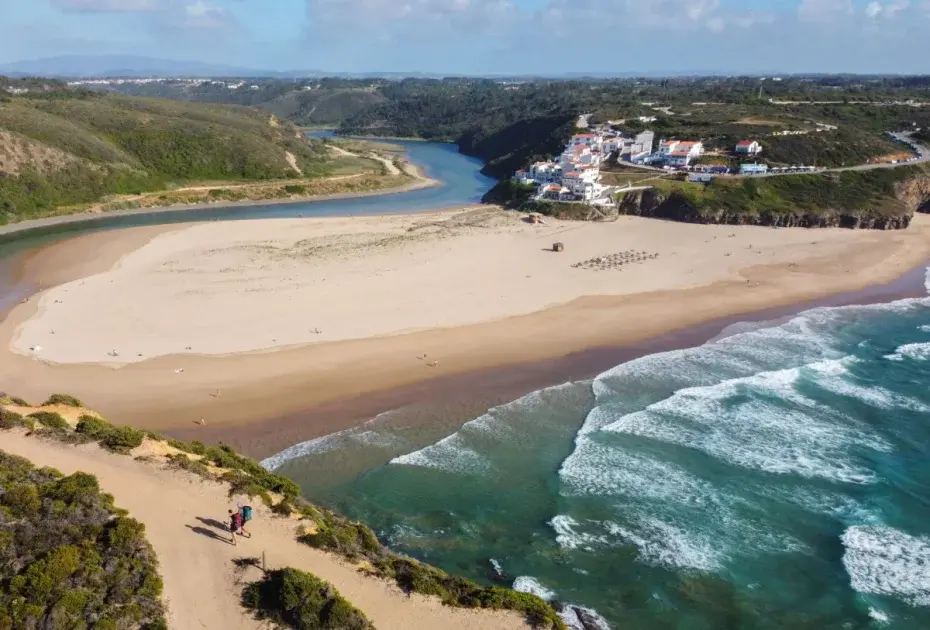
Not every Portuguese beach has a lifeguard, especially outside the official bathing season (typically 15 June to 15 September on the mainland, with local variations) or at more isolated river beaches and coves in the Alentejo, the Costa Vicentina, or inland Portugal. At these spots, 112 is always your first and only line of contact — there's no rescue post to head to, which makes calling quickly and giving a precise location even more important.
In the Azores and Madeira, the emergency system works the same way through 112, but the geographic spread of the islands and, in some cases, harder access to certain beaches (hiking trails, staircases, or boat-only access) make it even more important to agree on a clear meeting point on arrival and make sure children know how to recognize it. At inland river beaches — Gerês, the Alva, the Mondego or the Douro, for example — lower crowd density usually makes it easier to spot a missing child quickly, but dense riverside vegetation and the distance to emergency services make prevention (a wristband, a meeting point, a photo) just as important as on a busy urban beach.
Frequently Asked Questions
What should I do if my child goes missing at the beach?
First check the last spot you saw them for 1-2 minutes without panicking. If you can't find them, go straight to the nearest lifeguard post — they have specific protocols and communication with the whole beach. On unpatrolled beaches, call 112 without delay and describe your child using a recent photo.
How does the PSP's "Estou Aqui! Crianças" wristband work and how do I get one?
It's a free fabric wristband with a unique alphanumeric code and no visible personal data. You register with PSP officers, often present at one-off beach events during summer, linking the code to your contact details. If your child goes missing, simply give the code to police or a lifeguard to speed up the reunion.
Do unpatrolled beaches have any protocol for missing children?
There's no rescue post or local protocol at those beaches — your only course of action is to call 112 immediately, which dispatches the PSP, GNR or Civil Protection depending on your location. That's why prevention (a meeting point, bright clothing, a photo) matters even more at these beaches.
What should my child wear so I can spot them more easily at the beach?
Choose bright, solid colours — orange, yellow or bright pink — instead of patterns or pale tones that blend into towels and parasols. A matching hat helps with identification from a distance too.
Should I really take a photo of my child before heading to the beach?
Yes. A photo taken that same day shows exactly what your child is wearing and looks like in that moment, letting you describe them accurately to police or a lifeguard without hesitation — a simple step that can meaningfully speed up a search.
Conclusion
Losing sight of a child for a few moments is one of the most distressing things a family can experience at the beach — but it's also one of the most preventable, and one of the fastest to resolve when you know how to act. Choose a visible meeting point on arrival, dress your child in bright colours, take a photo, and consider signing up for the PSP's free "Estou Aqui! Crianças" wristband. If the worst happens, the lifeguard post or 112 is always your first step. To round out this guide, see our articles on beach safety, flags and rip currents, beach first aid essentials, and our picks for the best family beaches with children and the best family beaches in the Algarve.