Jet Ski in Portugal: Rules, Prices and the Best Beaches in 2026
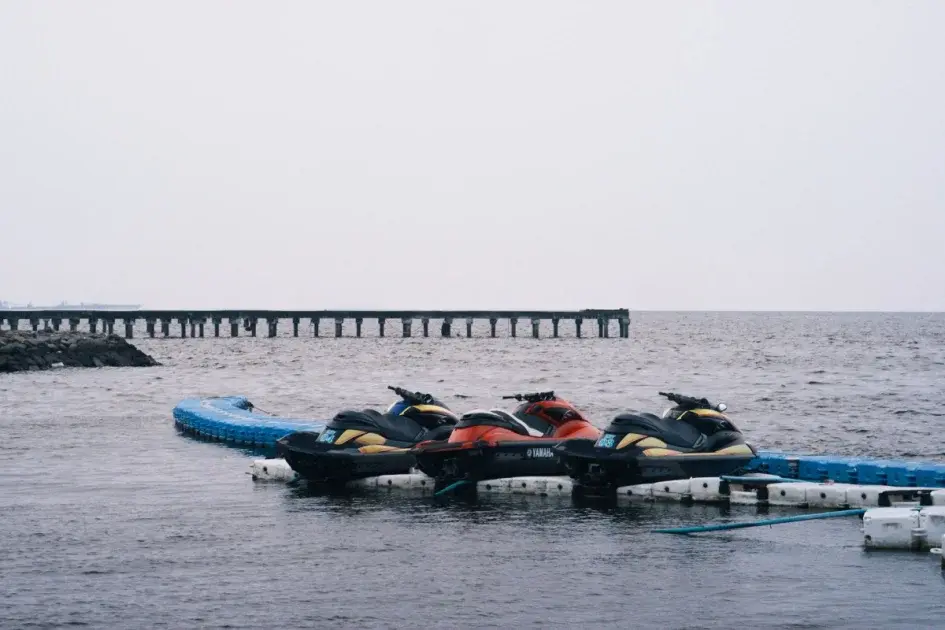
Walk along Vilamoura marina or Praia da Oura in August and it's obvious how popular jet skiing has become in Portugal: queues of tourists waiting for life jackets, rows of watercraft lined up on the sand, and operators explaining the rules in half a dozen languages. Behind the fun, though, sits a specific legal framework that determines exactly where you can ride, how far you must stay from swimmers, and whether you need a licence to operate one at all.
This guide covers everything you need to know before booking or renting a jet ski on a Portuguese beach in 2026: the relevant legislation, licence requirements, average prices by region, the best beaches and marinas for the sport, and the safety rules that keep you clear of both fines and accidents.
Is Jet Skiing Legal on Portugal's Beaches?
Yes, but only under specific conditions. Jet skis fall under the category of motorised recreational watercraft and are governed by the Edital de Praia, an ordinance published every year by the Maritime Authority (Autoridade Marítima Nacional) through Portugal's harbour offices — the same document that regulates umbrellas, access lanes and water-sports zones on every Portuguese beach.
In practice, this means a jet ski can never enter the swimming zone reserved for bathers. To get in and out of the water, riders must use the marked access lanes — perpendicular corridors flagged with yellow buoys and set aside specifically for motorised craft and boards. Only once you're clear of the bathing area, typically at a minimum distance in the region of 300 metres from the swimming zone depending on the beach and local signage, is free navigation allowed.
Beaches Where Jet Skiing Is Off Limits
Some heavily used bathing beaches, environmentally protected areas (such as parts of the Ria Formosa or the Sapal Nature Reserve) and stretches classified as part of the World Surfing Reserve don't permit jet skiing under any circumstances, regardless of distance from shore. Local signage, lifeguard posts and the information provided by licensed operators are always the most reliable reference before heading out.
Do I Need a Licence to Rent a Jet Ski in Portugal?
This is the question most visitors ask, and the answer depends on how you rent.
Guided Tours With an Instructor
On most tourist tours sold from marinas in Vilamoura, Albufeira or Armação de Pêra, you don't ride fully independently: you follow an instructor on their own jet ski, or ride alongside a support boat, under the licensed operator's legal responsibility. In these cases, you typically don't need your own licence — just a minimum age (usually 16 to 18, with a responsible adult for minors) and a short safety briefing before entering the water.
Tourist Navigator's Licence vs. Recreational Navigator's Licence
If you want to rent a jet ski unsupervised, without an instructor, Portuguese law requires proper qualification. For watercraft up to 40 kW, the Carta de Navegador Turístico (Tourist Navigator's Licence) — obtained through a simplified theory exam via the Maritime Authority or a certified nautical school — is usually enough. Above that power threshold, the fuller Carta de Navegador de Recreio (Recreational Navigator's Licence), with a more demanding theory and practical exam, is required. Always confirm with the operator or the local Capitania which qualification is accepted before booking, since requirements can vary by bathing zone and craft type.
Mandatory Insurance
Regardless of the rental arrangement, all jet ski activity in Portugal requires valid third-party liability insurance, which licensed operators normally build into the rental price. It's worth confirming in writing that this cover is active before signing any informal rental agreement.
How Much Does It Cost to Rent a Jet Ski in Portugal in 2026?
Prices vary by duration, region and season, but stay fairly consistent across Portugal's main coastal destinations.
| Duration | Average Price (2 people) |
|---|---|
| 15 minutes | €45 to €55 |
| 20 to 30 minutes | €60 to €90 |
| 1 hour (guided tour) | €120 to €180 |
| Half day (unsupervised, with licence) | On request, typically above €250 |
In August, peak demand season, prices tend to sit at the upper end of this range, and booking ahead is recommended, especially in Vilamoura and Albufeira. Most tourist rental jet skis are two-seaters, so the cost can be split between two riders.
The Best Beaches and Marinas in Portugal for Jet Skiing
Not every Portuguese beach has the conditions — or the licensing — for motorised water sports. The country's most established and best-equipped spots include:
- Vilamoura (Algarve) — the country's best-equipped marina for motorised water sports, with several licensed operators side by side.
- Praia da Oura and Praia dos Pescadores (Albufeira) — calm water and proximity to the town centre make this one of the busiest jet ski spots in the Algarve.
- Armação de Pêra — a long beach with a clearly marked access lane and several rental points right on the sand.
- Praia de Alvor — combines jet skiing with other water sports and benefits from the natural shelter of the Alvor estuary. See our complete Alvor guide to plan your visit.
- Tróia — on the southern bank of the Sado estuary, with more sheltered water and good odds of spotting dolphins offshore. Check our guide to Tróia, Comporta and Melides for more on the area.
- Praia da Conceição (Cascais) and Costa da Caparica — the closest options to Lisbon, with certified operators right along the coastline.
Before booking, always check whether your chosen beach has an active marked lane for motorised craft that day — signage can shift depending on sea conditions and how busy the beach is.
Water Safety Rules: Distances, Access Lanes and What to Avoid
Jet ski safety comes down mostly to a handful of simple rules that first-timers often overlook:
- Always wear a life jacket, even on short rides in calm weather — it's a legal requirement and your main protection if you fall off.
- Stick to the marked access lanes when entering or leaving the water; straying from the marked route inside the bathing zone can lead to a fine and puts swimmers at risk.
- Never operate under the influence of alcohol. Portugal treats operating a motorised watercraft while under the influence the same way it treats drink-driving, with the same legal consequences.
- Keep your distance from other craft, swimmers, and surfers or bodyboarders, especially on beaches shared with non-motorised water sports.
- Check the weather and sea state before heading out — strong wind or swell can make jet skiing dangerous even outside the bathing zone.
Guided Rental vs. Riding Your Own: Which to Choose
For most visitors, a guided rental with an instructor is the simplest option: no licence required, insurance and equipment included, and a professional guiding the whole route safely to the best stretches of coastline. It's also the better choice for anyone trying the sport for the first time.
Riders with prior experience who want more freedom — to explore a wider stretch of coast, or to ride several times over the course of a holiday — may find it worthwhile to obtain a Tourist Navigator's Licence before travelling, through a certified nautical school in Portugal or in their home country, provided it's recognised by the Portuguese Maritime Authority.
Frequently Asked Questions
Do I need a licence to ride a jet ski in Portugal?
It depends on the setup. On guided tours with an instructor, you typically don't need your own licence. To rent and ride unsupervised, you need a Tourist Navigator's Licence (craft up to 40 kW) or a Recreational Navigator's Licence (above that threshold).
Can I ride a jet ski close to the beach in Portugal?
No. Jet skis must use marked access lanes to enter and leave the water and can only navigate freely once clear of the bathing zone reserved for swimmers, at a safety distance set out in each coastal zone's Edital de Praia.
What's the minimum age to ride a jet ski in Portugal?
It varies by operator, but most require riders to be at least 16, with a responsible adult accompanying minors. To obtain a Tourist or Recreational Navigator's Licence, you generally need to be 18.
How much does it cost to rent a jet ski per hour in Portugal?
A roughly one-hour guided tour typically costs between €120 and €180 for two people, with higher prices in August and at the Algarve's busiest marinas.
Do I need insurance to ride a jet ski?
Yes. All jet ski activity requires valid third-party liability insurance, normally included in the price charged by licensed operators — it's worth confirming this before agreeing to any informal rental.
Conclusion
Jet skiing remains one of the most popular water sports on Portugal's beaches in 2026, but riding safely and fine-free means knowing the rules: marked access lanes, distance from bathing zones, mandatory insurance and, if you plan to ride solo, the right navigator's licence for your craft's power. Choose a licensed operator, always check the day's conditions, and make the most of marinas like Vilamoura, Alvor or Tróia to explore the coast safely. To round out your beach day planning, see our guides on beach safety, flags and rip currents, on other water sports in Portugal, and on 2026 beach fines, which also apply to anyone driving motorised vehicles along the coast.