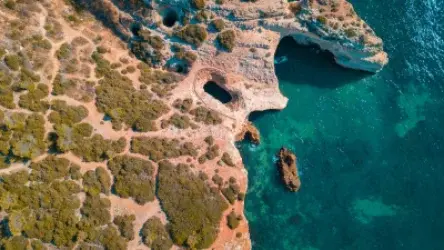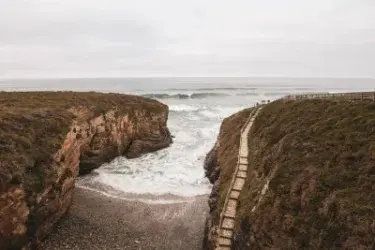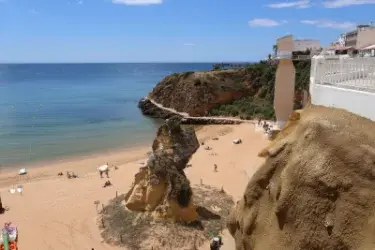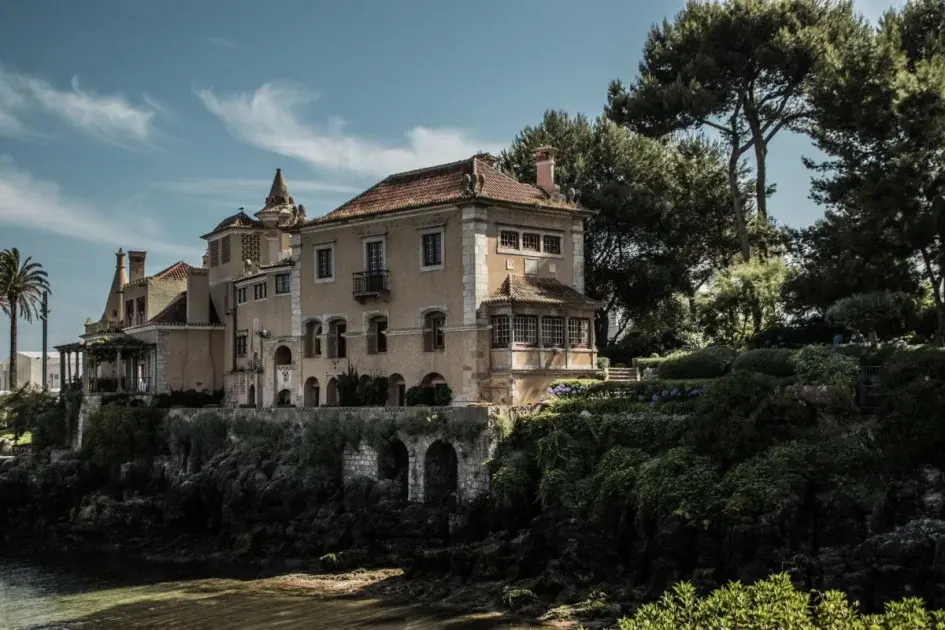
Just 30 to 40 minutes by train from central Lisbon, the Cascais Coast unfolds along one of the most varied and accessible stretches of shoreline in the Lisbon Metropolitan Area. Over little more than 30 kilometres, this coastal strip brings together urban beaches with calm waters, internationally renowned surf beaches and one of the wildest, windiest beaches in the country, tucked against the Sintra-Cascais Natural Park.
Having explored the Portuguese coast extensively over many years, we find the Cascais coastline is consistently underestimated by visitors to Lisbon: most tourists stop at Praia de Carcavelos or head straight for the famous Praia do Guincho, bypassing a series of quiet, characterful beaches with their own history and personality between the two. This guide sets that right — from Carcavelos to Guincho, beach by beach.
Praia de Carcavelos: The Ultimate Urban Beach
Stretching for more than a kilometre of fine golden sand, Praia de Carcavelos is the largest beach between Lisbon and Cascais and one of the most visited in the entire country. Its size is an asset: even at the height of summer, space can always be found. Its south-south-westerly orientation shelters it from the dominant northerly winds, making the water relatively calm — ideal for families with children.
Surfing at Carcavelos
Despite its calm appearance, Carcavelos has consistent waves that have made it one of the surf centres of the Lisbon area. Several surf schools operate on the beach, making it ideal for beginners. The beach has hosted national and international surf and bodyboard championships and remains one of the most democratic surf spots in Portugal: reachable by train, with showers, a car park and restaurants.
How to Get to Carcavelos
- Train: Cascais Line from Cais do Sodre — Carcavelos station (26 min, €2.45). Trains every 20 minutes.
- Car: A2/IC15 or N6 (Marginal coastal road); paid parking near the beach.
- Bicycle: Cycle path along the Marginal from Oeiras.
Cascais bathing season 2026: 1 May to 30 September — one of the longest official bathing seasons in mainland Portugal.
Praia de São João do Estoril and Praia do Tamariz (Estoril)
Estoril has a historical relationship with the sea that few Portuguese towns can match. Praia do Tamariz, right below the famous railway line and just a few hundred metres from the Casino do Estoril, is a beach with understated glamour: fine sand, turquoise water on sunny days, and a lively atmosphere guaranteed by the beach bars that open from May.
Praia de São João do Estoril, east of Tamariz, is slightly calmer and frequented by local families. Direct access from São João do Estoril station — just two minutes on foot — makes it one of the most practical beaches on the line. The water is generally calmer than at Carcavelos, ideal for young children.
Insider Tip
In the late afternoon, with the sun lowering over the ocean and the train passing in the background at Tamariz, the beach takes on a cinematic atmosphere that is worth experiencing even outside the bathing season. The terrace stays open for much of the year.
Cascais Town Beaches: Rainha, Conceição and Duquesa
The town of Cascais has three beaches at its historic core, each with a distinct character but all within walking distance of Cascais train station (the line terminus).
Praia da Rainha
Considered the most beautiful of Cascais's central beaches, Praia da Rainha was for decades the private beach of the Portuguese royal family — and the name has stayed as a historical legacy. Set between rocky outcrops, with golden sand and generally calm water thanks to its sheltered orientation, it is small but picturesque. Perfect for photography and quiet swimming; less suited to those looking for space and buzz.
Praia da Conceição and Praia da Duquesa
Linked by a seafront promenade, the Conceição and Duquesa beaches form the bathing heart of Cascais town. They offer calm waters, full beach facilities, restaurants and easy access to the town centre — making them perfect for a day that combines a morning at the beach with an afternoon exploring historic Cascais.
Praia do Guincho: The Wild Beach of the Natural Park
About nine kilometres north of Cascais town, already inside the Sintra-Cascais Natural Park, Praia do Guincho is a completely different reality from the beaches on the train line. One kilometre of white, fine sand, stabilised dunes with protected dune vegetation, and the full force of the Atlantic — constant winds, powerful swell and a landscape of breathtaking beauty with no equivalent in the Lisbon Metropolitan Area.
Surfing and Water Sports at Guincho
Guincho was named winner of the "7 Wonders — Beaches of Portugal" competition in the Water Sports category, and the recognition is well deserved. The consistent northerly wind makes it one of the best windsurfing and kitesurfing spots in Europe; it has hosted the Windsurfing World Championship. For surfers, the waves are consistent but demanding — recommended for experienced riders only. For swimmers, the currents and swell demand respect and attention to the flag signals.
How to Get to Guincho Without a Car
The absence of a train station near Guincho is the main logistical challenge. The options are:
- Bus: Scotturb lines 405 and 415 from Cascais terminal (they depart at alternating times, frequency ~30 min). Journey: 15-20 minutes.
- Bicycle: Cycle path/coastal route from Cascais — approximately 20-25 minutes of flat riding with stunning views.
- Taxi/Ridesharing: ~10 minutes from Cascais town centre.
Parking: Paid car park at the beach; in summer it fills before 10:00. We strongly recommend the train + bus or bicycle combination instead.
Other Beaches Worth Visiting on the Cascais Coast
Praia de Abano and Praia de Santa Marta
Between Cascais and Guincho there are small rocky beaches, some accessible only via walking trails, that reward the effort of getting there with solitude and crystal-clear water. Praia de Abano is known for its rock formations that create natural pools at low tide — a find for those who enjoy snorkelling in an Atlantic setting.
Carcavelos North (Surf Zone)
The northern part of Carcavelos, near the Forte de São Julião da Barra, has more powerful waves than the centre of the beach and is frequented by intermediate and advanced surfers. The view of the fort — one of Portugal's largest maritime fortresses, dating from the 16th century — adds a unique historical dimension to a surf session.
Quick Comparison: Cascais Beaches at a Glance
To make your choice easier, here is a summary of the key characteristics of each beach:
- Carcavelos: Best for families, beginner surfing, full beach days. Train accessible. Crowded in summer.
- Tamariz (Estoril): Best for combining beach with an Estoril stroll. Calm water, sophisticated atmosphere.
- São João do Estoril: Best for families with young children. Calm, practical, few crowds.
- Praia da Rainha (Cascais): Best for photography and quiet swimming. Small and picturesque.
- Conceição/Duquesa (Cascais): Best for beach + town in one day. Calm water, good facilities.
- Guincho: Best for windsurfing, kitesurfing, experienced surfing and wild scenery. Respect the currents.
Practical Tips for Visiting Cascais Beaches
Best Time to Visit
The official bathing season in Cascais municipality runs from 1 May to 30 September 2026, with lifeguards on duty at managed beaches. June and September are the ideal months: pleasant water temperature (18-21°C), fewer crowds than July and August, and more affordable accommodation prices. Outside the bathing season, the Cascais coast remains a worthwhile destination for coastal walks, photography and day trips.
Transport from Lisbon: Train is Best
The Cascais Line is operated by CP (national rail) and departs from Cais do Sodre every 20 minutes. A single ticket Lisbon–Cascais costs €2.45 (even cheaper with the Lisboa Viva card). The full journey takes 40 minutes to Cascais, with stops near all the beaches on the line. For more details on getting to the beach without a car, see our guide to Portuguese beaches without a car.
Water Quality
All beaches on the Cascais coast have an "Excellent" or "Good" water quality rating from the Portuguese Environment Agency. Ocean temperature on the Cascais coast ranges from around 16°C in January to 21°C in August — cooler than the Algarve, but refreshing on hot summer days. For information on water quality and Blue Flag beaches, see our Blue Flag Portugal guide.
Where to Eat Near Cascais Beaches
Cascais town has a remarkable food scene for its size. Near Praia da Rainha and Conceição, several fresh fish and seafood restaurants are well worth a visit. At Guincho, the Restaurant do Guincho (within the Natural Park setting) is a reference for seafood and grilled fish with ocean views. At Carcavelos, the offer is more informal but varied, with beach bars and restaurants serving Portuguese and international cuisine.
FAQ — Cascais Beaches
Which Cascais beach is best for families with children?
For families with young children, we recommend Praia de São João do Estoril or the central Cascais beaches (Conceição and Duquesa). They generally have calmer water, easy train access and full facilities. Praia de Carcavelos is also excellent for its size — there is always room for children to run and play — but the surf can be more intense. Avoid Guincho with young children due to the currents and wind.
How do I get from Lisbon to Cascais beaches by train?
The Cascais Line departs from Cais do Sodre station (central Lisbon) every 20 minutes. The journey to Cascais takes 40 minutes and a single ticket costs €2.45. Carcavelos, São João do Estoril, Estoril and Cascais stations are all just a short walk from their respective beaches. It is by far the most practical and affordable way to get to the beach without a car.
Is Praia do Guincho dangerous for swimming?
Guincho has currents and swell that demand respect. It is not recommended for children, inexperienced swimmers or anyone unfamiliar with Atlantic surf beaches. On yellow or red flag days, conditions can be particularly challenging. The beach has lifeguards during the official bathing season (May to September), but supervision does not eliminate the inherent risk. For calmer swimming in the area, opt for the central Cascais or Estoril beaches.
Is there free parking at Cascais beaches?
Most beaches in Cascais municipality have paid parking during the bathing season. Free parking near the most popular beaches (Carcavelos and Guincho) is scarce, and in July and August car parks fill before 10:00. We strongly recommend using the train (Cascais Line) as a more practical and affordable alternative. Cascais town has several paid car parks with reasonable hourly rates.
Which Cascais beaches have Blue Flag status in 2026?
Historically, the beaches of Carcavelos, Estoril (Tamariz), Conceição, Duquesa and Rainha receive the Blue Flag distinction annually, which certifies water quality, environmental management and safety infrastructure. The official 2026 list is published by ABAE (Blue Flag Europe) in May, before the start of the bathing season. See our dedicated page on Blue Flag beaches in Portugal for the updated list.
Conclusion
The Cascais Line is one of the best-kept secrets — and at the same time the most obvious one — for those who live in or visit Lisbon. Within 40 minutes by train from the centre of the capital, it is possible to find everything from lively urban beaches to wild, cinematically beautiful stretches of coast, via historic coves and internationally recognised surf spots. Whatever kind of beach day you are looking for, the Cascais coast has something for you.
Before you go, explore our Lisbon region beach directory to find the right beach for your day. And if you are planning to go further south, do not miss our complete guide to the best beaches in the Algarve.