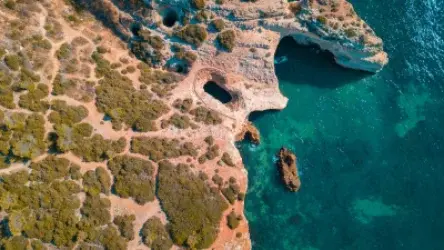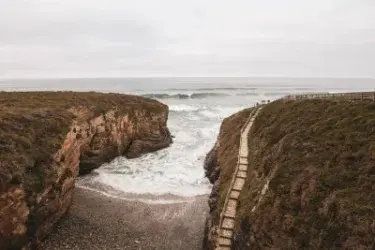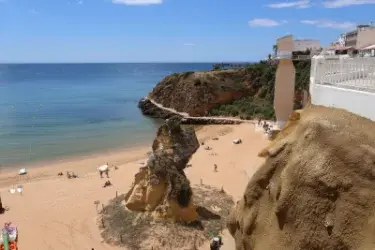
Just 80 kilometres north of Lisbon, there exists an almost perfect combination for a day trip: an intact medieval walled village dating back to the 12th century, and a sheltered Atlantic lagoon with calm waters and a Blue Flag beach less than 15 minutes away by car. Óbidos and the Lagoa de Óbidos are two destinations that complement each other naturally — and together they make one of the most complete and rewarding day trips on Portugal's Silver Coast.
Over many years exploring the Portuguese coastline, we've found that Óbidos is frequently underestimated. Most visitors pass through the village in the morning and head back to Lisbon by the afternoon, never making it to the lagoon. This guide shows you how to get the most out of a single day — or two, if you prefer a slower pace.
Óbidos: The Medieval Village Frozen in Time
Óbidos is one of the best-preserved medieval villages in Portugal — and indeed in the entire Iberian Peninsula. Its limestone walls, originally built by the Moors and reconstructed by Portuguese kings between the 12th and 14th centuries, enclose a labyrinth of cobbled alleyways, whitewashed houses trimmed in yellow and blue, and an atmosphere that transports you straight back to the Middle Ages.
The village was given as a wedding gift for the first time in 1282, when King Dinis presented it to Queen Isabel of Aragon — a tradition repeated for centuries. That royal legacy is tangible at every corner: in the castle converted into a luxury pousada, in the Manueline churches, and in the 17th-century azulejo tilework.
The Castle and the Walls
The highest point of Óbidos is the Castle, of Moorish origin and rebuilt by the Afonsine kings. Today it operates as a Pousada de Portugal luxury hotel — if budget allows, a night here is an unforgettable experience. Even without staying, you can walk the medieval walls (free entry via the Porta da Vila gate or the rampart path) and complete the nearly 1.5 km circuit along the battlements, with panoramic views over vineyards, the lagoon in the distance, and the coastal plain below.
Walking the walls is free but requires some care: there are no guardrails along the entire length, and in wet weather the stone can be slippery. Children must be supervised at all times.
- GPS Óbidos Castle: 39.3622, -9.1567
- Wall entry: Free
- Time needed: The full circuit takes approximately 40 minutes
Rua Direita and the Historic Centre
The main artery of the village is Rua Direita, running north to south from the Porta da Vila gate to the Castle. This is where most of the local commerce is concentrated — craft shops, art galleries, pastry shops, and the inevitable rows of ginja de Óbidos (sour cherry liqueur) stores. Ginja is the village's most emblematic product, traditionally served in small edible chocolate cups.
It's worth detouring off Rua Direita into the side streets, where the tourist crowds thin out and the authenticity increases. Look for Igreja de Santa Maria (where King Afonso V married his cousin Isabel in 1444, at just 10 years old), with its interior covered in stunning blue azulejo tiles from the 17th century — considered among the finest in Portugal. Entry is free.
The Bookshop in a Church
The former Igreja de Santiago, converted into a bookshop — the Livraria de Óbidos — is one of the most beautiful bookshops in Europe. Books share space with gilded altarpieces and medieval tombstones. It's worth visiting even if you're not planning to buy anything. It's located on Praça de Santa Maria, next to the statue of King Afonso II.
Where to Eat in Óbidos
The dining options inside the walls tend towards the touristy and the expensive. For quality food at more reasonable prices, we recommend:
- Tasca do Castelo — Inside the walls, near the castle. Traditional Portuguese cuisine, good value. Booking recommended in summer.
- Il Valentino — On Rua Direita, a quick lunch option with pasta and petiscos.
- Restaurante 1 de Dezembro — Slightly outside the walls, frequented by locals. Daily specials from €8–10. The best option for escaping the tourist circuit.
A picnic is always a great idea in Óbidos — pick up cheese, cured meats, and the obligatory ginja copinho from a shop on Rua Direita and climb the walls for lunch with a view.
Lagoa de Óbidos and Foz do Arelho: Beach and Nature 14 km Away
After exploring the medieval village, the Lagoa de Óbidos is just 14 kilometres away — about 15 minutes by car on the EN114. It is the largest coastal lagoon in Portugal, approximately 7 km long and up to 4 km wide, classified as a Special Protection Zone (SPZ) and part of the Natura 2000 network.
The lagoon offers two completely different environments: the Praia da Foz do Arelho, facing the Atlantic with waves and fine sand; and the inner lagoon shore, with calm, warm (24–26°C in August) and shallow waters — ideal for children and for kayaking or stand-up paddleboarding.
Praia da Foz do Arelho (Atlantic Side)
Praia da Foz do Arelho holds a Blue Flag 2026 designation and has lifeguards on duty during the bathing season (15 June to 15 September, 9am–7pm). The beach is wide, the sand is fine and golden, and the Atlantic waves make this a popular spot for surfing and bodyboarding. On days with a strong northerly wind — common on this coast in summer — the beach can get breezy; on those days, the lagoon side is the better alternative.
- GPS: 39.4360, -9.2177
- Blue Flag 2026: Yes
- Lifeguards: 15 Jun – 15 Sep, 9am–7pm
- Parking: Free near the beach (arrive early in August — full by 10:30am)
- Accessibility: Boardwalk access; amphibious wheelchairs available during the bathing season
Lagoon Beach (Inner Side)
The southern shore of the lagoon, at Bom Sucesso and at the river beaches along the EN114, offers a completely different experience: calm, clear water with no waves, perfect for young children and for those who prefer to swim without any swell. The lagoon water temperature easily reaches 24–26°C in July and August — considerably warmer than the Atlantic water on this coast (17–19°C in midsummer, due to coastal upwelling).
There are several access points to the lagoon with informal parking. The most organised is the access at Amoreira (GPS 39.4195, -9.2061), with a small sandy area and picnic zones.
Kitesurfing, Kayaking and SUP on the Lagoon
The Lagoa de Óbidos is one of the best flatwater kitesurfing spots in Portugal, valued by kite enthusiasts for its lack of currents and obstacles. It is authorised between 15 September and 15 June (outside the main bathing season) to protect swimmers. The main schools are Pássaro Kite, Kite Control and Kitesurf Soul, with courses ranging from €280 to €380.
For a summer afternoon with the family, kayaking and SUP are the best options: you can hire equipment for €10–15/hour at various points along the lagoon shore. The canoe route between Foz do Arelho and Amoreira (~5 km) is flat, sheltered from the wind, and passes through marsh vegetation rich in waterbirds — herons, mallards, seagulls, and with luck, kingfishers.
Read our dedicated guide to the Lagoa de Óbidos: kitesurfing, kayaking and oysters for full details on water sports and schools.
Oysters and Seafood from the Lagoon
The Lagoa de Óbidos is also a production area for clams and Atlantic oysters, enjoyed at local restaurants. Távola Lagoa (on the lagoon shore near Foz do Arelho) and Restaurante Europa serve fresh lagoon seafood with a direct view of the water — one of the most authentic gastronomic experiences on this stretch of coast.
How to Get to Óbidos and the Lagoa de Óbidos
From Lisbon by Car
The fastest route from Lisbon is via the A8 motorway (Autoestrada do Oeste), exiting at Caldas da Rainha / Óbidos. It is 80 km, covered in 50–60 minutes outside peak hours, with a toll of approximately €5.40. There is no parking inside the walls; free car parks are located immediately outside the medieval gates.
For the Lagoon / Foz do Arelho, continue on the EN114 from Óbidos — an additional 14 km (about 15 minutes).
From Lisbon by Public Transport
Rodoviária do Oeste operates direct coaches from Lisbon (Campo Grande) to Óbidos with several daily departures. The journey takes between 1h30 and 2h and costs approximately €9–11. Check timetables at rodoestebus.pt.
From Óbidos bus station to Foz do Arelho, there is a local bus service with Rodoviária do Oeste (Caldas da Rainha – Foz do Arelho line), but frequency is limited at weekends. Alternatively, a taxi or rideshare between Óbidos and Foz do Arelho costs approximately €12–15.
From Caldas da Rainha
If travelling by train, the nearest station is Caldas da Rainha (CP Lisbon–Figueira da Foz line, ~1h30 from Lisbon for €9–14). From Caldas, a taxi to Óbidos costs around €8–10 (6 km), and to the Lagoon / Foz do Arelho around €10–14 (12 km).
Suggested Itinerary: A Full Day
This is the itinerary we recommend to get the most out of Óbidos and the Lagoon in a single day, departing from Lisbon:
| Time | Activity |
|---|---|
| 07:30 | Depart Lisbon (A8). Arrive in Óbidos around 08:30. |
| 08:30–10:00 | Early morning exploration: walls, Rua Direita, Igreja de Santa Maria, Livraria de Óbidos. Breakfast at one of the village bakeries. |
| 10:00–11:30 | Full wall circuit and Castle viewpoint. Buy ginja and local crafts. |
| 11:30–12:00 | Drive to Foz do Arelho / Lagoa de Óbidos (14 km, ~15 min). |
| 12:00–13:30 | Lunch at Távola Lagoa or Restaurante Europa overlooking the lagoon. |
| 13:30–17:00 | Afternoon at Praia da Foz do Arelho (Atlantic) or on the inner lagoon shore. Optional kayak or SUP hire (€10–15/h). |
| 17:00 | Return to Lisbon (A8, ~55 min outside peak hours). |
When to Visit: Season Guide
Óbidos is worth visiting year-round, but each season has its own character:
| Season | Highlight | Notes |
|---|---|---|
| February | Chocolate Festival (Óbidos Choco Late) | Village gets crowded; book ahead. Lagoon too cold for swimming. |
| March–May | Quiet spring, wildflowers, greenery | Village much quieter. Kitesurfing active on the lagoon. Mild weather. |
| June–September | Full bathing season | Best for combining village + beach. August very busy; arrive early. |
| July (2nd half) | International Chocolate Festival | Evening entertainment, markets. Village busier than usual. |
| Oct–December | Medieval Market (October), Christmas (December) | Óbidos in festive mood. Lagoon cold but surf active. Fewer tourists. |
Practical Tips for Visiting Óbidos and the Lagoon
- Parking: Free car parks are signposted outside the walls. In August, parking near Praia da Foz do Arelho fills up before 10:30am — arrive early or use the alternative parking area in Amoreira (~1 km walk to the lagoon).
- Ginja de Óbidos: The chocolate cups that come with it vary enormously in quality. Favour shops that make their cups by hand over those selling industrial versions.
- Medieval Market: If your visit coincides with the Medieval Market (usually in July), expect queues at the village entrance and higher restaurant prices inside the walls.
- Small children at the lagoon: The inner lagoon shore at Amoreira or Bom Sucesso is considerably safer for young children than the Atlantic beach, thanks to the absence of waves and the warmer water temperature.
- Useful apps: Download Wikiloc for the wall circuit route, and check the updated Rodoviária do Oeste timetable at rodoestebus.pt before you leave.
Óbidos and Surroundings: What Else to See Nearby
If you stay longer than a day — and the region deserves it — there are several complementary destinations within 30 minutes:
- Caldas da Rainha (6 km): famous for its ceramics museum and fruit and vegetable market; historic 15th-century thermal baths.
- Praia d'El Rey and North Lagoon Shore (20 km): golf resort with access to a 3 km beach virtually deserted outside peak season.
- Peniche (35 km): Portugal's surf capital, with the famous Supertubos waves and Berlenga Island. Read our complete Peniche guide.
- Nazaré (45 km): the world's biggest waves and a fishing village with a very distinct identity. Read our complete Nazaré guide.
For more information on beaches along Portugal's central coast, see our Central Portugal beaches guide.
Frequently Asked Questions about Óbidos and Lagoa de Óbidos
Is Óbidos worth visiting for just one day?
Absolutely. Two to three hours are enough to walk the village, climb the walls and try the ginja. If you combine it with the Lagoa de Óbidos in the afternoon, you'll have a very well-rounded day. To see everything at a relaxed pace, a two-day visit is ideal.
Can you swim in the Lagoa de Óbidos in summer?
Yes. Praia da Foz do Arelho (the Atlantic side) has lifeguards from 15 June to 15 September. Swimming is also permitted on the inner lagoon side, which is particularly suited to young children thanks to its calm, warm water (24–26°C in August).
Is there direct public transport from Lisbon to the Lagoa de Óbidos?
There is no direct connection from Lisbon to Foz do Arelho. The best option is to take a coach from Lisbon (Campo Grande) to Óbidos and then a taxi or local bus to the lagoon. By car it is far more convenient: A8 to Óbidos (~55 min) and a further 15 minutes to the lagoon.
When is the Óbidos Medieval Market in 2026?
The Óbidos Medieval Market is typically held in the second or third week of July. Exact dates for 2026 will be confirmed by the municipality of Óbidos (check at cm-obidos.pt). During the event the village is significantly busier; booking restaurants and accommodation in advance is strongly recommended.
Is the Óbidos wall walk suitable for children?
Partly. Most of the rampart walk has no guardrails, so young children must always be supervised and kept close. It is not suitable for pushchairs. For a visit with babies or toddlers, stick to Rua Direita and Praça de Santa Maria at street level.