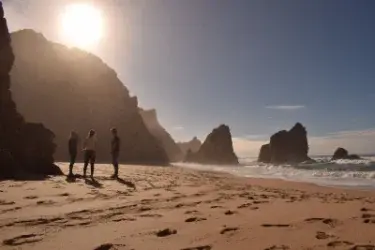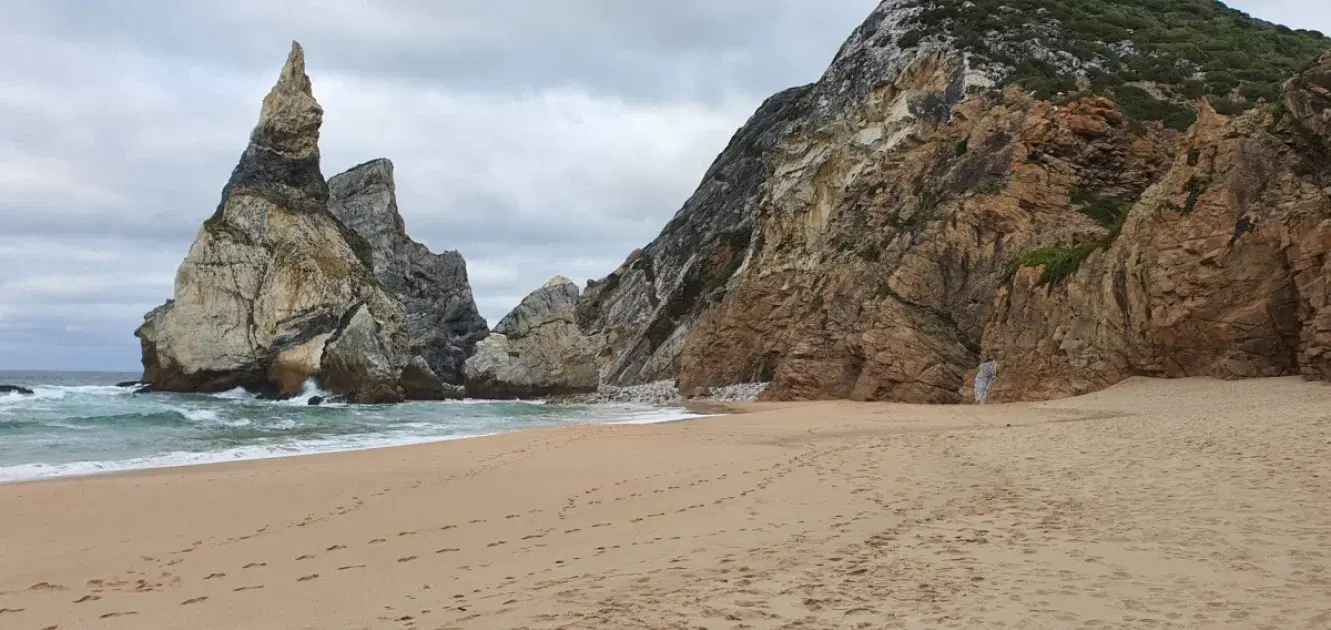
Can You Take Sand or Shells From a Portuguese Beach? Rules and Fines 2026
We get this question every summer, in the comments and in reader emails: "can I take a little sand home from this beach?" or "surely one pretty shell won't hurt?" The question has come up even more often since the story went round Europe of a French tourist fined roughly €1,000 in Sardinia for carrying two kilos of sand in a plastic bottle, and of a 69-year-old woman caught with 40 kg of sand, pebbles and shells in her luggage.
The good news is that Portugal has no publicised case quite like Sardinia's, at least not as of 2026. The less good news is that the legal basis for fining someone who does it here already exists, and it's older than most visitors assume. This guide breaks down what Portuguese law actually says about removing natural material from a beach, where the rules get noticeably stricter, what fines are realistically on the table, and how to bring home a memory without breaking any of it.
Why Sand and Shells Aren't a Free Souvenir
The starting point is something most tourists never think about: in Portugal, the sand strip, the dunes, the rocks and the water's edge of a maritime beach belong to the state's public water domain, governed by Law 54/2005 (ownership of water resources) and Law 58/2005 (the Water Law). In plain terms, nobody "owns" the sand — not visitors, and not even the operators running a beach bar concession, who only hold a licence to run a service there, never a right to dispose of the ground itself.
What the Water Resources Framework Actually Says
Decree-Law 226-A/2007 sets out the rules for using water resources, and Articles 19 and 23 specifically state that any private use of the public water domain — which includes extracting sand, gravel or similar material — requires a usage title (a licence or concession) issued by the Portuguese Environment Agency (APA). Scooping a bucket of sand into the car boot is, technically, unlicensed private use. In practice, enforcement doesn't chase the tourist who fills a small jar for a keepsake bottle, but the legal framework that allows a fine for doing it on a larger scale has been in force since 2007, not something invented for headlines.
River Beaches Follow the Same Logic
The same reasoning extends to the river beaches scattered across Trás-os-Montes, the Beiras and inland Alentejo: riverbeds and banks are also part of the public water domain, so pebbles and sand taken from a river beach fall under the same general rules — even if, in practice, enforcement there tends to be lighter than on the coast.
Where the Rules Get Much Stricter: Dunes and Protected Areas
General water-domain law is one thing. The rules inside classified conservation areas are a different, considerably tougher story. Several of Portugal's best-known beaches sit inside natural parks, nature reserves or Natura 2000 sites — Ria Formosa, Arrábida, Costa Vicentina, the Northern Littoral Natural Park and the São Jacinto dunes near Aveiro are the clearest examples. In these zones, Decree-Law 142/2008, which sets the legal regime for nature and biodiversity conservation, together with each area's own management plan, explicitly bans collecting any specimen — wildlife, plants, minerals, shells or sand — without prior ICNF authorisation.
Why Dunes Are So Fragile
This isn't red tape for its own sake. Portugal's coastal dunes are finely balanced systems: sand that looks like it's "just sitting there" on a dune is actually the beach's main natural defence against coastal erosion and storm overwash. Removing sand or trampling dune vegetation such as sea holly or marram grass speeds up the breakdown of a system already under growing pressure from sea-level rise. Shells aren't just pretty litter either — many decompose slowly, returning calcium carbonate to the ecosystem, sheltering small invertebrates and even serving as nesting material for some shorebirds.
Who Actually Enforces This
Inside classified areas, enforcement falls to ICNF nature wardens working alongside GNR-SEPNA (the nature and environment protection branch of the Portuguese national guard), both empowered to issue environmental offence notices. Outside protected zones, general oversight of the public maritime domain typically sits with the Polícia Marítima (Maritime Police), the same body behind many of the other rules we've covered in our guide to beach fines in Portugal.
How Much Could It Actually Cost You?
Unlike some beach infractions with a fixed published amount (an umbrella pitched outside a licensed zone, for instance), removing natural material is treated as an environmental offence whose exact value depends on severity, the quantity taken, and whether the beach sits inside a protected area. Over the last few summers, various Portuguese outlets have reported reference ranges from €250 to €1,000 for standard cases, rising above €2,500 for aggravated ones — significant volumes removed from inside a nature reserve, or removal for commercial resale, for example.
| Situation | Legal basis | Reference fine |
|---|---|---|
| A single shell or pebble, outside a protected area | Technically unlicensed, but not enforcement-relevant | Normally no action |
| A bucket, bottle or bag of sand/shells, outside a protected area | Unlicensed private use of the water domain (DL 226-A/2007) | €250 – €1,000 |
| Any collection inside a natural park/reserve (Ria Formosa, Arrábida, Costa Vicentina, São Jacinto dunes) | Nature conservation regime (DL 142/2008) | €500 – €2,500 |
| Large-scale or commercial removal | Aggravated environmental offence | Up to €2,500 (individuals); higher for companies |
Sardinia's Lesson for Everyone Travelling in Europe
It's worth looking beyond Portugal to see the scale of the problem. Sardinia's 2017 regional law became internationally famous after a French tourist was fined around €1,000 for two kilos of sand found in an airport bottle check, and a 69-year-old woman was caught with 40 kg of sand, pebbles and shells in her suitcase, facing a fine that can reach €3,000. Portugal has no equally publicised case to date — but the legal basis that would make one possible already exists here too. The real difference so far is enforcement intensity, not an absence of law.
What If You Find Something More Than Sand? Fossils and Archaeological Finds
A shell or a pebble is one thing. A fossil, an old coin, or a piece of pottery washed up by the tide is another matter entirely — and here Portuguese law is much clearer. Under Law 107/2001 (the Cultural Heritage Framework Law), any chance find of archaeological value, including on a beach, must be reported to the DGPC (Directorate-General for Cultural Heritage) or the police within 48 hours, and must not be removed from the site without authorisation. This is the same framework we detailed in our article on metal detecting on Portuguese beaches, where finds located with a detector follow exactly the same mandatory-reporting logic.
In practice, that means picking up a nice-looking stone for a windowsill is one thing; pocketing something that looks like it could be historically significant — old pottery, glass, shipwreck debris — without reporting it is a considerably more serious offence than removing ordinary sand or shells, precisely because it involves irreplaceable shared heritage rather than an unlimited natural resource.
Good Practice: Enjoying the Beach Without Breaking the Rules
The golden rule used on beaches and in nature parks worldwide applies just as well here: "take only photographs, leave only footprints." In practice that boils down to a handful of simple habits any visitor can follow without effort.
Sustainable Alternatives to a Shell in Your Suitcase
If the goal is a physical memory of the trip, there are options that don't involve removing anything from nature: photograph the shell or piece of sea glass on the spot before putting it back, buy local craftwork made from farmed shells (common in Algarve coastal towns), or pick up a souvenir bought in a shop rather than lifted from the sand. On beaches inside protected areas like Ria Formosa or Arrábida, ICNF's guidance is straightforward: nothing should know you were there except your footprints — and not even the litter you brought in with you should be left behind.
It's also worth remembering that the same "leave it as you found it" logic already applies, through separate rules, to other beach activities we've covered before — from pitching an umbrella outside a licensed concession zone to running a metal detector without prior DGPC clearance.
Frequently Asked Questions
Can I take one small shell home as a keepsake?
On most beaches outside protected areas, picking up one or two shells or pebbles as a personal memento rarely triggers any enforcement action. The legal risk rises with the quantity taken, and is significantly higher inside natural parks and classified reserves, where even a single shell is technically subject to a collection ban.
Do Portuguese airports really search luggage for this?
No documented airport screening programme of this kind exists in Portugal as of 2026, unlike Sardinia's well-publicised checks. Enforcement in Portugal happens on the ground, through the Maritime Police, ICNF and GNR-SEPNA, not at airport baggage control.
What if I find a fossil or something that looks old?
You should report it to the DGPC or the police within 48 hours and not remove it from the site without authorisation, under Law 107/2001. Failing to do so is treated as a cultural heritage offence, distinct from and generally more serious than simply removing ordinary sand or shells.
Do the rules also apply to inland river beaches?
Yes. Riverbeds and banks are also part of the public water domain, so the same general legal framework applies to river beaches in regions like Trás-os-Montes, the Beiras or Alentejo — though in practice enforcement there tends to be lighter than along the coast.
Who actually enforces this in Portugal?
Outside protected areas, general oversight of the public maritime domain mainly falls to the Maritime Police. Inside natural parks and classified reserves such as Ria Formosa, Arrábida or Costa Vicentina, it's ICNF's nature wardens, working alongside GNR-SEPNA, who hold enforcement authority.
Conclusion
Sand and shells from a Portuguese beach aren't a consequence-free souvenir — they're part of a public domain protected by law since 2005, with even stricter rules inside classified areas like Ria Formosa or Arrábida. A single pebble picked up by a child is unlikely to cause any trouble; filling a bucket, especially inside a natural park, can realistically cost between €250 and €2,500. The best souvenir is still a photograph — and the certainty that the beach will look exactly the same for whoever visits after you.
Curious what other rules can land you a fine on a Portuguese beach? Check our full guide to beach fines in Portugal 2026, learn the rules on metal detecting, or explore the protected dunes of the Costa Vicentina and the Aveiro Ria and Costa Nova, right by the São Jacinto dunes.