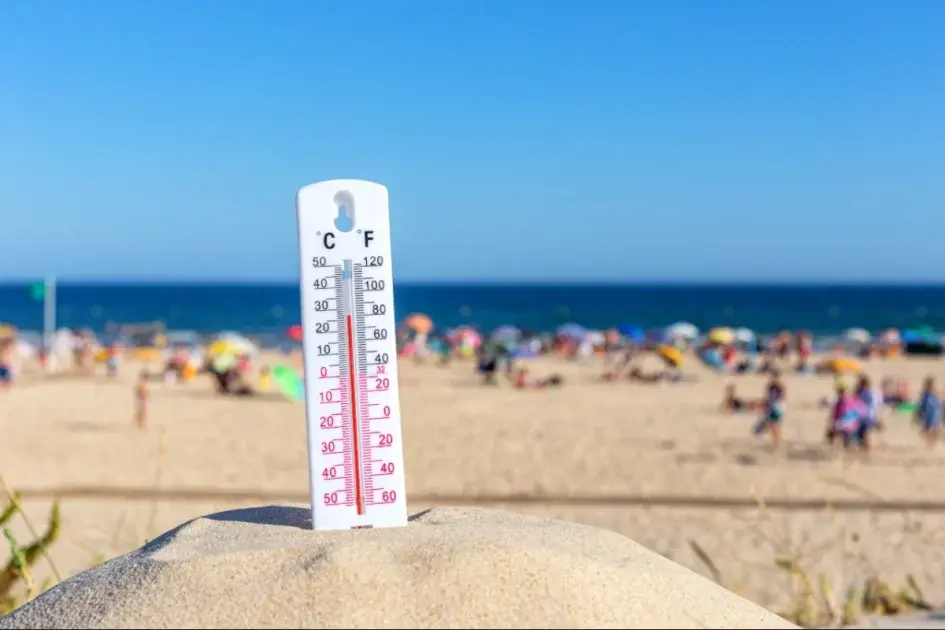
One of the most common questions from anyone planning a beach holiday in Portugal is an entirely reasonable one: is the water warm? The answer depends — quite heavily — on which region you choose and which month you travel. Portugal's mainland coast stretches over 850 kilometres of Atlantic shoreline, and the sea temperature difference between the north and the Algarve can reach 6 or 7 degrees Celsius on the very same summer day. Add to that the wholly different oceanic dynamics of Madeira and the Azores, and you have a genuinely complex picture that most travel guides fail to address in detail.
Having spent many years exploring Portuguese beaches from north to south, we have swum in waters of every character — from the bracing Atlantic currents off the Minho coast to the glass-clear warm shallows of the Ria Formosa. This guide brings all of that experience together in a practical format: monthly temperature tables by region, an explanation of the oceanographic forces at work, and honest recommendations about when the water is genuinely good for swimming.
- North (Porto, Viana): 13–19 °C — coldest coast, best in July–August
- Centre (Nazaré, Peniche, Figueira): 14–19 °C — refreshing, ideal for surfing
- Lisbon & Setúbal (Cascais, Arrábida): 15–21 °C — well-balanced, good June–October
- Alentejo Coast (Comporta, Vila Nova de Milfontes): 15–21 °C — similar to Lisbon
- Algarve (Lagos, Albufeira, Tavira): 16–23 °C — warmest on the mainland, good June–November
- Madeira & Porto Santo: 18–24 °C — mild waters year-round
- Azores: 17–23 °C — stable, never very cold, never very hot
Why Does Sea Temperature Vary So Much in Portugal?
To understand sea temperatures in Portugal, it helps to know two oceanographic phenomena that dominate the Portuguese Atlantic coast: the North Atlantic Current and coastal upwelling.
The North Atlantic Current
Portugal's mainland is bathed by the Atlantic Ocean, which is intrinsically cooler than the Mediterranean Sea. The dominant current transports water from higher latitudes southward along the western Iberian coast, keeping Portuguese waters noticeably cooler than many European visitors expect when they first arrive in the Algarve hoping for Mediterranean warmth.
Upwelling — The Phenomenon That Chills the North
Coastal upwelling is the principal reason why northern and central Portugal have such cold waters even in the height of summer. The prevailing north winds in summer push surface water away from the shore, drawing cold, deep water up to the surface — sometimes 4 to 6 degrees below what you would otherwise expect. This phenomenon is most intense between May and September, precisely when everyone wants to be at the beach.
This is why in Viana do Castelo or Figueira da Foz the air temperature may be 32 °C while the sea is only 15 °C — a thermal shock that, it must be said, surfers and dedicated swimmers often actively seek out.
The Eastern Algarve — The Warm Exception
The southern Algarve coast (especially the Sotavento, between Faro and Vila Real de Santo António) is partially sheltered from northern winds and colder Atlantic currents. The Ria Formosa, a system of shallow lagoons, heats up rapidly in the summer sun and can reach 25–27 °C on the island beaches — the warmest seawater in mainland Portugal.
Water Temperature in Northern Portugal (Porto, Viana do Castelo, Minho)
The northern beaches are the coldest in mainland Portugal. Upwelling is intense in this zone, and the influence of higher-latitude Atlantic waters is felt year-round. That said, those who know these beaches understand that the cold water is more than compensated by the wild, dramatic scenery, the quality of the surf, and the authenticity of the destinations.
| Month | Average Temp (°C) | Suitable for Swimming? |
|---|---|---|
| January | 13–14 °C | Wetsuit only |
| February | 13–14 °C | Wetsuit only |
| March | 13–15 °C | Wetsuit only |
| April | 14–15 °C | Very cold |
| May | 14–16 °C | Cold — brave souls only |
| June | 15–17 °C | Cool — short dips |
| July | 16–18 °C | Manageable |
| August | 17–19 °C | Best month — still brisk |
| September | 17–19 °C | Good |
| October | 16–17 °C | Cool |
| November | 14–16 °C | Very cold |
| December | 13–15 °C | Wetsuit only |
Practical note: August and September are the prime months for swimming in the north. On more exposed beaches such as Moledo or Âncora, upwelling can drop the temperature 3–4 degrees overnight — always check conditions at the IPMA website before travelling.
Water Temperature in Central Portugal (Peniche, Nazaré, Figueira da Foz)
Central Portugal's coast includes some of the country's most famous beaches — Nazaré (home to the world's biggest rideable waves), Peniche (Portugal's surf capital) and the vast Figueira da Foz. Temperatures are marginally higher than in the north, but upwelling remains a decisive factor in summer.
| Month | Average Temp (°C) | Suitable for Swimming? |
|---|---|---|
| January | 14–15 °C | Wetsuit only |
| February | 13–15 °C | Wetsuit only |
| March | 14–15 °C | Very cold |
| April | 14–16 °C | Very cold |
| May | 15–17 °C | Cold |
| June | 16–18 °C | Cool — short dips |
| July | 16–19 °C | Manageable |
| August | 17–19 °C | Good |
| September | 18–20 °C | Very good |
| October | 17–18 °C | Good |
| November | 15–17 °C | Cool |
| December | 14–16 °C | Very cold |
September is frequently the best month for swimming along the central coast — the water retains summer warmth, crowds thin out noticeably, and swells build for consistent surf. For those specifically visiting Peniche or Nazaré to surf, autumn (October–November) brings the best waves even if the water is already cooling.
Water Temperature in Lisbon and Setúbal (Cascais, Costa da Caparica, Arrábida)
The Lisbon region benefits from a more favourable microclimate. The Arrábida, in particular, is partially sheltered from northern winds and cold currents, making its beaches some of the warmest on the mainland below the Algarve. Costa da Caparica and the Cascais coast run a degree or two cooler, but still significantly milder than the beaches of central Portugal.
| Month | Caparica / Cascais (°C) | Arrábida (°C) |
|---|---|---|
| January–March | 14–16 | 15–17 |
| April–May | 15–17 | 16–18 |
| June | 17–19 | 18–20 |
| July–August | 18–21 | 19–22 |
| September–October | 19–21 | 20–22 |
| November–December | 16–18 | 17–19 |
September and October are often the finest months for swimming in the Lisbon region — the sea has accumulated maximum thermal energy after a long summer, and beaches are considerably quieter than in August. The Arrábida in September is, for many visitors, the most complete beach experience in Portugal: near-Mediterranean water clarity and warmth, turquoise colour, and near-silence. See our complete Arrábida guide for the warmest individual beaches within the natural park.
Water Temperature in the Algarve (Lagos, Albufeira, Portimão, Tavira)
The Algarve is Portugal's most popular beach destination — and sea temperature is a significant part of the reason. The Algarvian coast, oriented predominantly southward, receives more sunshine hours and is better sheltered from cold northern Atlantic currents. The result is the warmest seawater on the Portuguese mainland.
There is, however, a meaningful difference between the Barlavento (the western coast, from Sagres to Albufeira) and the Sotavento (the southern and eastern coast, from Faro to Vila Real de Santo António). The Barlavento receives some Atlantic influence from its west-facing stretches; the Sotavento, particularly the Ria Formosa island beaches, has the warmest waters of mainland Portugal.
| Month | Barlavento (Lagos, Albufeira) °C | Sotavento (Tavira, Ria Formosa) °C |
|---|---|---|
| January | 15–16 | 16–17 |
| February | 15–16 | 16–17 |
| March | 15–17 | 16–18 |
| April | 16–18 | 17–19 |
| May | 17–19 | 18–20 |
| June | 18–20 | 19–21 |
| July | 20–22 | 21–24 |
| August | 21–23 | 22–25 |
| September | 21–23 | 22–25 |
| October | 19–21 | 20–22 |
| November | 17–19 | 18–20 |
| December | 16–17 | 17–18 |
The July to October window is the Algarve's golden period for sea temperature — particularly September and October, when the water is still warm but the beaches have shed the August crowds. For families seeking warm water and uncrowded beaches, September in the Sotavento is hard to beat. Find out more in our Tavira and Ria Formosa beach guide.
Water Temperature in Madeira and Porto Santo
Madeira and Porto Santo enjoy one of Portugal's great climatic advantages: the ocean currents surrounding them are influenced by the Canary Current and subtropical flows, maintaining unusually stable and mild temperatures year-round — never very cold, never uncomfortably hot.
| Season | Madeira (°C) | Porto Santo (°C) |
|---|---|---|
| Winter (Dec–Feb) | 18–19 | 18–20 |
| Spring (Mar–May) | 18–20 | 19–21 |
| Summer (Jun–Aug) | 21–23 | 22–24 |
| Autumn (Sep–Nov) | 22–24 | 23–25 |
Porto Santo stands out for having the longest golden-sand beach in the Madeiran archipelago — and some of the warmest autumn waters in the whole of Portugal. September and October are the thermal peak, with sea temperatures reaching 23–25 °C, making it an excellent escape from the closing of the swimming season on the mainland.
Water Temperature in the Azores
The Azores are the westernmost archipelago in Europe, and their deeply oceanic character gives them unusually stable water temperatures for their latitude. The Gulf Stream exerts a positive warming influence on the islands, keeping the sea in a comfortable range for much of the year — especially on the central group (Faial, Pico, São Jorge) and eastern group (Terceira, São Miguel) islands.
| Season | São Miguel / Terceira (°C) | Faial / Pico (°C) |
|---|---|---|
| Winter (Dec–Feb) | 17–18 | 17–18 |
| Spring (Mar–May) | 17–19 | 17–19 |
| Summer (Jun–Aug) | 21–23 | 20–22 |
| Autumn (Sep–Nov) | 22–23 | 21–23 |
Autumn is, perhaps surprisingly, the best season for swimming in the Azores — the sea has reached its annual thermal maximum and the weather remains relatively stable. The basalt natural pools (such as the famous Biscoitos pools on Terceira) run slightly warmer than the open ocean as they are sheltered from wave action.
Which Month Has the Warmest Water in Portugal?
The answer varies by region, but in general:
- Mainland North and Centre: August–September
- Mainland Lisbon and Setúbal: September–October
- Algarve mainland: August–October
- Ria Formosa islands (Sotavento): August–September (up to 25 °C)
- Madeira and Porto Santo: September–October
- Azores: September–October
If the only criterion is the warmest possible water, the undisputed winner in Portugal is the eastern Algarve (Sotavento) in August or September, followed closely by Porto Santo in autumn.
Practical Guide: Wetsuits and When to Use Them
For surfers, bodyboarders, divers or anyone wanting to extend their swimming season beyond summer, a wetsuit can be a worthwhile investment in Portugal. As a general guide:
- Below 16 °C — Full 4/3 mm or 5/3 mm suit recommended (North and Centre in winter/spring)
- 16–18 °C — Shorty or 3/2 mm comfortable (Centre in early summer; North in August)
- 18–20 °C — Optional; acclimatised swimmers can go without, surfers often prefer 2/2 mm
- Above 20 °C — No wetsuit needed for normal swimming (Algarve summer–autumn; Madeira summer)
Frequently Asked Questions about Sea Temperature in Portugal
What month is the sea warmest in the Algarve?
August and September are the warmest months in the Algarve, with averages between 21 and 23 °C in the Barlavento and 22 to 25 °C in the Sotavento (Ria Formosa beaches). September has the additional advantage of noticeably quieter beaches at nearly identical temperatures to August.
Is the sea in northern Portugal very cold in summer?
Compared to the Algarve, yes. In August — the warmest month — the northern beaches (Porto, Viana do Castelo) have temperatures of 17–19 °C. The upwelling phenomenon can drop temperatures 4–5 degrees from one day to the next. For extended swimming, most people prefer a wetsuit outside of July and August.
Can you swim in the sea in the Azores year-round?
Technically yes — the Azores rarely drop below 17 °C even in winter. However, sea state and weather conditions are often more limiting than temperature. The sheltered natural rock pools are the safest option during winter months.
Which beach in Portugal has the warmest water?
The barrier island beaches of the Ria Formosa — such as Ilha de Tavira, Ilha da Culatra and Praia de Faro — record the highest temperatures on the Portuguese mainland, reaching 25–27 °C in August in the shallow lagoon water. The basalt natural pools in the Azores and Madeira can occasionally exceed those values in enclosed basins.
When is the best time to visit Portugal for warm water and quiet beaches?
September strikes the best balance across almost every region: the sea has reached its annual thermal maximum, beaches progressively quieten down, and accommodation prices drop compared to August. In the Algarve, October still offers comfortable swimming (19–22 °C) with near-empty beaches.
Conclusion
Sea water temperature in Portugal varies more than most people expect — from the 13 °C winter waters of the northern coast, driven by vigorous Atlantic currents, to the warm Sotavento lagoons that surpass 25 °C in August. Understanding these differences before planning your trip makes the difference between arriving with the right expectations and being caught off guard.
If warm water is the priority, target the Algarve or Madeira in September. If you appreciate wild beaches and don't mind the bracing Atlantic chill, the north coast or Costa Vicentina offers unforgettable experiences even in cooler waters. And if you want the perfect balance of warm water, spectacular scenery and value, the Arrábida in September or October rarely disappoints.
Explore our month-by-month Portugal beach guide to combine water temperature data with weather, crowd levels and the best activities for each time of year. Also see our guide to the best Algarve beaches to choose the warmest beaches on the southern coast.