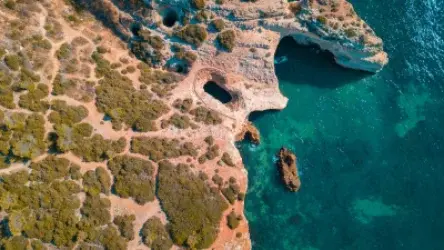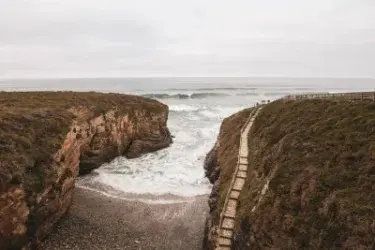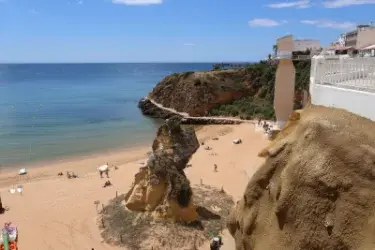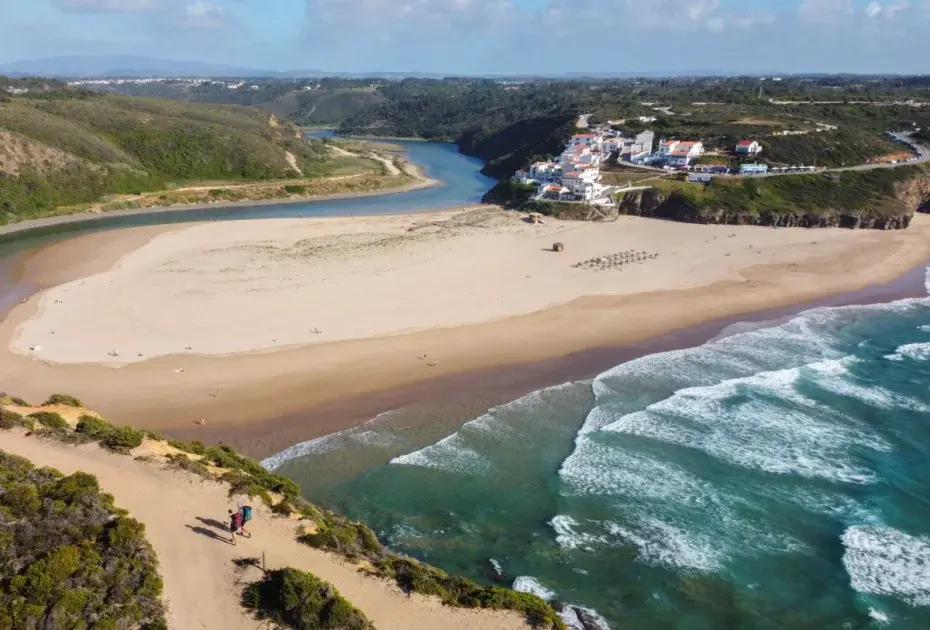
Portugal has over 1,800 km of Atlantic coastline — and some of Europe's most spectacular walking trails run right along that shore. Hiking Portugal's coastal trails is one of the best ways to discover hidden beaches only reachable on foot, clifftop viewpoints above orange limestone cliffs, sea caves, and turquoise coves that no car park can reach. Over several years walking the Portuguese coastline — from the Minho to the Algarve and across to the islands — we have identified the routes most worth the effort, for occasional walkers and multi-day trekkers alike.
This guide covers the best coastal hiking trails in Portugal in 2026, organised by region, with distances, difficulty ratings, beaches accessible on each route, the best season to hike each trail, and the practical information you need before lacing up your boots.
Algarve Coastal Trails
The Algarve concentrates some of the most photographed coastal walking routes in Europe. The golden limestone cliffs, caves and natural arches create scenery that surprises even those who know the region well. The mild climate from October to April makes this the most recommended season for walking — temperatures stay between 15°C and 20°C and the beaches are virtually deserted.
Seven Hanging Valleys Trail (PR1 LGA) — Lagoa
- Distance: 5.7 km (one way) | 11.4 km (return)
- Difficulty: Easy to moderate
- Duration: 2 to 3 hours (one way)
- Beaches on route: Praia da Marinha, Praia de Benagil, Praia do Carvalho, Praia Vale de Centeanes
- Best season: October to May
The Seven Hanging Valleys Trail is the most popular coastal trail in Portugal and one of the most celebrated in Europe. The name refers to seven hanging valleys above the sea — ancient watercourses that once flowed directly into the Atlantic and have been transformed by erosion into spectacular natural viewpoints. The trail begins at Praia da Marinha, considered one of the most beautiful beaches in Europe, and ends at Praia Vale de Centeanes, passing the famous Praia de Benagil — departure point for visiting the Benagil Cave, voted one of the ten most beautiful sea caves in the world.
The trail is mostly flat, with some short climbs and descents at the valleys. The terrain is compacted earth and limestone — we recommend hiking footwear with good grip, especially if the ground is damp. There is little shade, so carry sufficient water and avoid midday in July and August.
Headlands Trail — Ferragudo to Carvoeiro
- Distance: 6 km (one way)
- Difficulty: Easy to moderate
- Duration: 2 hours
- Beaches on route: Praia dos Caneiros, Praia do Pintadinho, Praia de Carvoeiro
- Best season: Year-round
Less well-known than the Seven Hanging Valleys Trail, the Headlands Trail offers equally stunning scenery with far fewer visitors. The route runs along the clifftop between Ferragudo and Carvoeiro, passing unique rock formations, sandy beaches nestled between headlands and ocean views that are rarely found so easily accessible. An excellent alternative for those who want to avoid the crowds on the most popular routes.
Fishermen's Trail and Rota Vicentina — Vicentine Coast and Alentejo
The Fishermen's Trail is, for many walking experts, the most beautiful coastal trail in Europe. Part of the Rota Vicentina network, it covers 226 km along the wild southwest coast of Portugal, from São Torpes (Sines) to Lagos. It is a multi-day trail divided into 13 stages — but it is perfectly feasible to walk just one or two stages as day hikes, choosing the most impressive sections.
Recommended Stages of the Fishermen's Trail
- Porto Covo → Vila Nova de Milfontes (21 km, difficult): Considered the wildest and most beautiful stage of the entire route. Black cliffs above the Atlantic, deserted white-sand beaches and passages at the edge of the precipice. Beaches on route: Praia de Almograve, Praia das Furnas, Praia de Malhão.
- Odeceixe → Aljezur (14 km, moderate): The entry into the Algarve with the famous Praia de Odeceixe — where a freshwater river meets the Atlantic — as a starting point. The route continues along the Vicentine Coast with views of Praia de Monte Clérigo and Praia de Amoreira.
- Aljezur → Carrapateira (16 km, moderate-difficult): The heart of the Vicentine Coast, passing Praia do Amado — one of Portugal's best surf beaches — and Praia da Bordeira, with its dunes and lagoon.
The Vicentine Coast is protected territory within the Southwest Alentejo and Vicentine Coast Natural Park, the largest coastal park in Western Europe. This means the trail crosses one of the most preserved stretches of coastline on the continent — wildlife, flora and landscape found nowhere else in Portugal.
Practical Information — Rota Vicentina
- Best season: March to June and September to November. Summer can be very hot and windy; winter is viable but requires preparation for rain and strong wind.
- Accommodation: Villages such as Porto Covo, Vila Nova de Milfontes, Almograve, Odeceixe and Aljezur have local guesthouses and inns. Book ahead between March and June.
- Transport: Rede Expressos and regional EVA services connect the main trail points to Lisbon and the Algarve, but frequency is limited. A support car or bicycle hire are popular logistical solutions.
- Maps and GPS: The Rota Vicentina app and GPX files available at rotavicentina.com are the most reliable resources.
Arrábida Coastal Trails
The Arrábida Natural Park, less than 50 km from Lisbon, holds some of the most impressive coastal scenery in Europe. The white limestone cliffs, turquoise water (with a transparency more associated with the Mediterranean than the Atlantic) and pine trees growing to the edge of the rock create a unique setting. Arrábida's trails combine mountain hiking with access to crystal-clear beaches that rank among the most beautiful in Portugal.
Serra do Risco Trail
- Distance: 5.5 km (circular)
- Difficulty: Moderate
- Duration: 2 to 3 hours
- Accessible beaches: Praia de Galapinhos, Praia dos Galapos
- Best season: September to June
The Serra do Risco Trail runs along the crest of the highest coastal cliffs in mainland Portugal — with drops of up to 380 metres above the sea. The views over the Sado estuary and the Atlantic are breathtaking, and the trail descends to sea level at Praia de Galapinhos, one of the most beautiful beaches in Portugal and regularly awarded as the finest beach in Arrábida. The route crosses dense Mediterranean scrubland rich in aromatic plants — rosemary, lavender and cistus — making the walk a fully sensory experience.
Portinho da Arrábida to Sesimbra Trail
- Distance: 8 km (one way)
- Difficulty: Moderate to difficult
- Duration: 3 to 4 hours
- Accessible beaches: Portinho da Arrábida beach, Praia da Califórnia, Sesimbra beach
- Best season: March to October
This lesser-known route links two of the most sought-after coastal spots in the Setúbal region. The trail begins at Portinho da Arrábida — a picture-postcard cove with emerald-green water — climbs through the natural park and descends to Sesimbra. It is one of the few routes in Portugal that allows you to walk from an iconic beach to a historic fishing village, with constant sea views throughout.
Sintra and Cascais Coastal Trails
The coastal strip between Cascais and Sintra is one of Portugal's most accessible hiking corridors — less than 40 minutes from Lisbon by train — and offers routes passing some of the wildest beaches on the Lisbon Coast. The Sintra-Cascais Natural Park protects this entire strip, ensuring that the cliffs, dunes and Atlantic scrubland remain preserved even so close to the capital.
Cabo da Roca → Praia da Adraga → Azenhas do Mar
- Distance: 10.5 km (one way)
- Difficulty: Moderate
- Duration: 3 to 4 hours
- Beaches on route: Praia da Ursa, Praia da Adraga, Praia Grande, Praia das Maçãs
- Best season: Year-round (avoid very windy days)
One of Portugal's most dramatic coastal walks. Starting at Cabo da Roca — the westernmost point of continental Europe — it follows the schist and granite coast to the natural pools of Azenhas do Mar. Along the way it passes Praia da Ursa, a wild beach unreachable by car that requires a steep descent down the cliff face, and Praia da Adraga, regularly voted one of the most beautiful beaches in Portugal and Europe. Public transport (Scotturb bus 403) serves both ends of the route, making logistics straightforward.
Cascais to Guincho Coastal Path
- Distance: 9 km (one way)
- Difficulty: Easy
- Duration: 2 to 2.5 hours
- Beaches on route: Cascais beach, Praia da Rainha, Praia da Conceição, Praia de Cresmina, Praia do Guincho
- Best season: Year-round
An accessible walk following the coastline between central Cascais and the Guincho dune, passing urban beaches and protected dunes. Most of the route runs on wooden boardwalks and dirt paths along the shore — suitable for the whole family including children. The endpoint, Praia do Guincho, is one of Portugal's most iconic surf beaches, with imposing dunes and constant winds that make the sunset here truly spectacular.
Northern Portugal Coastal Trails
Northern Portugal has a coastline less internationally marketed than the Algarve — which is precisely its greatest advantage for walkers. The beaches of the Minho, Lima and Cávado estuaries are vast, often deserted, battered by the North Atlantic with a different energy to the south, and served by trails that cross dunes, pine forests and old fishing villages.
Moledo to Caminha Coastal Route
- Distance: 7 km (one way)
- Difficulty: Easy
- Duration: 2 hours
- Beaches on route: Praia de Moledo, Praia de Camarido, Praia da Ínsua
- Best season: May to October
This route at Portugal's northern tip runs along the Minho estuary, with views across to Spanish Galicia on the opposite bank. Praia de Moledo is one of the longest beaches in the north — almost 4 km of continuous sand — and the trail continues through pine forest and dunes to Caminha, a medieval town with 14th-century walls. The Fortaleza da Ínsua, a 17th-century island fortress in the middle of the estuary, is visible for much of the walk.
Practical Tips for Walking Portugal's Coastal Trails
What to Bring
- Footwear: Trail running shoes or lightweight hiking boots with non-slip soles. Avoid smooth-soled shoes — wet Algarve limestone and Sintra schist are slippery.
- Water: Carry at least 1.5 litres per person for routes up to 10 km. On longer trails (Rota Vicentina), water resupply can be difficult — research villages and sources in advance.
- Sun protection: Coastal trails have little shade. SPF 50 and a hat are essential from April to October.
- Swimwear: Most trails on this list give direct access to beaches — pack a swimsuit and towel to make the most of it.
- Portable charger: For phone and GPS, especially on multi-day hikes.
Cliff Trail Safety
- Always stay on marked paths — the cliffs of the Algarve and Arrábida have active erosion and the soil near the edge can give way without warning.
- Never approach the cliff edge for photographs — maintain a minimum safety distance of 3 to 5 metres.
- Do not descend to beaches via unmarked paths — many serious accidents in Portugal occur on these improvised descents.
- Check tide times before setting out — some beaches accessible from the trails are completely covered at high tide.
Frequently Asked Questions about Coastal Trails in Portugal
What is the most beautiful coastal trail in Portugal?
For single-day trails, the Seven Hanging Valleys Trail in the Algarve is consistently rated the most spectacular route in the country, for its golden cliffs, tucked-away beaches and accessible caves. For multi-day routes, the Fishermen's Trail (Rota Vicentina) is considered one of the most beautiful in Europe, with virtually untouched wild coastline.
Can I walk Portugal's coastal trails without a car?
Yes, in many cases. The Sintra-Cascais routes are served by train and bus from Lisbon. The Seven Hanging Valleys Trail has a nearby bus stop at Lagoa/Porches. The Rota Vicentina requires more logistical planning, but the main nodes (Porto Covo, Vila Nova de Milfontes, Odeceixe) have long-distance bus connections.
What is the best season to hike the Algarve coastal trails?
October to May. Summer (June to September) is technically possible but temperatures can exceed 35°C with no shade available, and the most popular trails become very busy. Spring (March to May) is ideal — green vegetation, wildflowers in bloom, temperatures between 18°C and 24°C, and still-quiet beaches.
Are Portugal's coastal trails suitable for children?
It depends on the trail. The Cascais to Guincho path and the Moledo and Esposende trails are suitable for children aged 6 and over. The Seven Hanging Valleys Trail is appropriate for children from 8-10 with adult supervision. The Arrábida trails and the Rota Vicentina require greater fitness and are not recommended for young children.
Is there an entry fee for Portugal's coastal trails?
Most trails are free. The exception is car access to some Arrábida beaches in summer (road access fee of around 5-7€), but walking access via the trail is always free. The Rota Vicentina charges no trail usage fee.
Conclusion
Portugal's coastal hiking trails offer something rare: the chance to explore one of Europe's most beautiful coastlines on foot, at the rhythm of the tides, with deserted beaches as the reward at the end of each stretch. From the Algarve to the Minho, from the wild Atlantic of the Vicentine Coast to the turquoise waters of Arrábida, each route has its own character — and all are worth lacing up your boots for.
To plan your visit and discover the beaches accessible in each region, see our complete Algarve beach directory and our guide to the best beaches in the Algarve. Happy hiking.