Viana do Castelo: The Minho's Hidden Coastal Gem
Some Portuguese cities keep their secrets well. Viana do Castelo is one of them. Nestled at the mouth of the River Lima, with the Atlantic stretching out ahead and the Monte de Santa Luzia watching over from above, this Minho city combines in a single stop what many travellers spend weeks searching for: outstanding beaches, world-class water sports, authentic cuisine, and one of the country's most spectacular popular festivals.
Over many years of travelling through northern Portugal, we have consistently been surprised by how underrated Viana do Castelo remains on international itineraries. While Porto absorbs most visitors' attention, Viana stays genuine, accessible and absolutely magnificent — especially between June and September, when its beaches come fully alive.
In this complete 2026 guide, we profile each beach in detail, explain how to make the most of Praia do Cabedelo (one of Europe's finest kitesurf spots), demystify the iconic Lima River ferry crossing, and prepare you for the August Festas da Agonia. Everything you need, organised by theme, with GPS coordinates, 2026 prices and practical tips.
Viana do Castelo's 3 Beaches: Full Profiles
1. Praia Norte — Urban Beach with Natural Tidal Pools
Praia Norte is the city beach par excellence: walkable from the historic centre in under 15 minutes, it holds a Blue Flag award and features two natural saltwater pools that fill and drain with the tides — one for children (shallower) and one for adults. Built among rocky outcrops in the 1990s, these tidal pools are one of Viana's signature attractions during summer, particularly when the open ocean is too rough for safe bathing.
The sandy stretch itself is relatively narrow, but water quality is excellent and lifeguards are posted throughout the bathing season (generally June to September). The adjacent seafront promenade, lined with cafés and restaurants, brings life to the beach at any time of day.
- GPS: 41.6950, -8.8380
- Access: On foot from the centre (15 min) or TuViana bus
- Tidal pools: Open year-round (free access); lifeguards Jun–Sep
- Blue Flag: Yes (2026)
- Parking: Along the seafront promenade (paid in high season)
2. Praia do Cabedelo — Stage of World Kitesurf Championships
Praia do Cabedelo is unquestionably Viana do Castelo's crown jewel. It stretches for over 3.5 km along the south bank of the River Lima, with a ribbon of fine white sand backed by low dunes and an extensive pine forest. The beach lies across the Lima from the city, which gives it an air of seclusion and tranquillity that urban beaches rarely achieve.
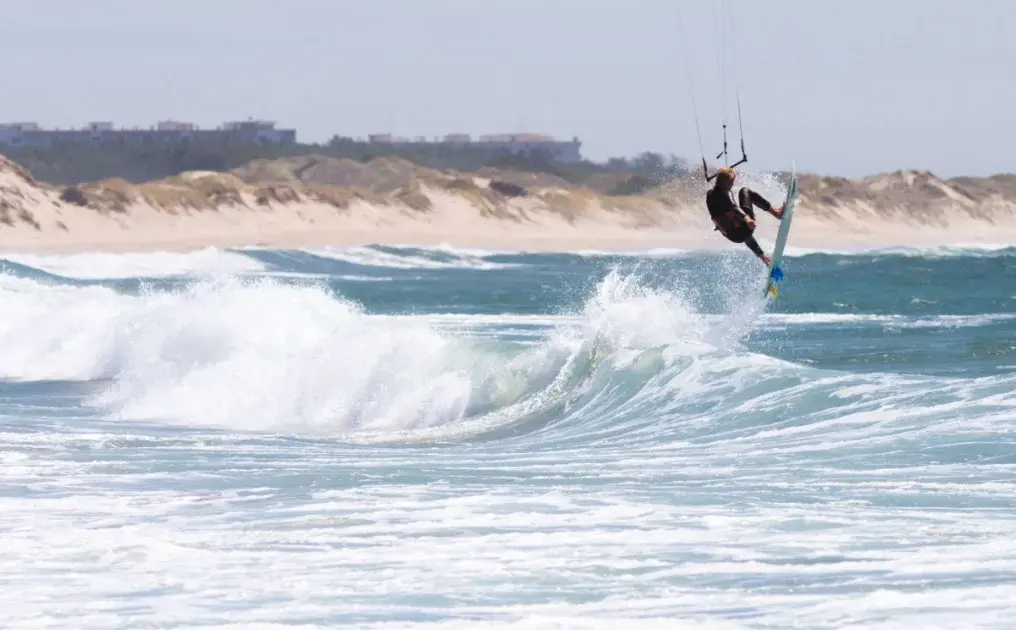
What makes Cabedelo truly exceptional is its geography: inside the breakwater (the calmer zone) the water is flat and perfect for kitesurf instruction and freestyle; outside, Atlantic swells deliver quality surf. This duality makes Cabedelo one of the most versatile spots on the Portuguese coast and explains the international recognition it has earned.
Duotone established a professional centre here, and the beach has hosted GKA (Global Kitesports Association) World Tour stages. In 2026, Viana do Castelo hosts the Formula Kite World Championships, cementing its place on the world map of wind sports.
Getting to Cabedelo: The Lima River Ferry
The most iconic — and most practical — way to reach Praia do Cabedelo is the ferry departing from Praça da Liberdade, at the heart of Viana. The crossing takes just 5 minutes; boats run every 30 minutes between 9:00 and 19:00 during the bathing season. Prices are modest: €1.50 per adult and €0.80 per child. This brief voyage across the Lima estuary, with the hills and Santa Luzia Sanctuary visible behind the city, is itself a memorable experience.
Alternatively, you can drive via the A28 motorway (Darque exit, then N13) and park near the beach. But for anyone staying in the centre, the ferry is the obvious choice.
- GPS: 41.6787, -8.8314
- Length: 3.5 km
- Ferry: Praça da Liberdade → Cabedelo | €1.50 adult | 5 min | 9h–19h (bathing season)
- Kitesurf: Flat zone (inside breakwater) + wave zone (outside)
- Schools: FeelViana (4-star hotel + school), multiple IKO-certified schools
- Blue Flag: Yes (2026)
- Bathing season: June–September (lifeguards on duty)
3. Praia da Arda — Untouched Dunes and Wild Atlantic
Less well-known than its two neighbours closer to the city, Praia da Arda lies south of Viana, beyond the Cabedelo sands, with more extensive dunes and a wilder atmosphere. It is the right choice for those seeking space, silence and a more direct encounter with Costa Verde nature. There are no beach support facilities, so bring water and sun cream. Surf conditions here can be excellent, particularly with north swells.
- GPS: 41.6650, -8.8340 (approx.)
- Access: Car (A28, Darque exit + N13) or on foot from Cabedelo (20 min south)
- Atmosphere: Wild, no facilities
- Best for: Experienced surf, long beach walks, nature
Santa Luzia Sanctuary: Panorama Over the Lima and the Atlantic
No visit to Viana do Castelo is complete without ascending to the Santa Luzia Sanctuary. Built on Monte de Santa Luzia at 257 metres altitude, this neo-Romanesque and neo-Byzantine basilica, completed in the early 20th century, is visible from every corner of the city and coastline. The view from the top is simply extraordinary: the Lima estuary winding towards the Atlantic, the historic city far below, and on the horizon the blue stripe of the ocean.
How to Reach the Sanctuary
- Funicular: Most recommended — departs near the railway station, covers 650 metres in 6–7 minutes, ascending 160 metres. It is Portugal's longest funicular. Price: €2.00 (one way) / €3.00 (return). Hours: Apr–Sep 8h–19h; Oct–Mar 8h–17h.
- Car: 3.5 km road from the centre, with a car park at the top.
- On foot: Stone stairway with 600 steps — demanding but with progressively improving views.
At the top, you can visit the basilica (free entry), climb to the dome for even higher views (€0.80), and stroll through the gardens. Daily mass is held at 16:00.
Festas da Senhora da Agonia 2026: Portugal's Greatest Popular Festival
If you visit Viana do Castelo between 15 and 23 August 2026, you arrive in time for one of Portugal's most authentic experiences. The Romaria de Nossa Senhora da Agonia has been celebrated since 1772 (documented in August since 1783) and is today considered the country's largest religious and ethnographic pilgrimage — nine days of festivities that completely transform the city.
What Happens During the Festas
- Procissão ao Mar (Procession to the Sea): The festival's most iconic moment — the image of Our Lady is carried in procession to the sea, a ritual of faith and maritime tradition that captivates visitors and locals alike.
- Salt Carpets (Tapetes de Sal): Artisans create elaborate decorative carpets from coloured salt on the city streets — a unique tradition of great visual beauty.
- Ethnographic Parade: Hundreds of participants in regional Minho costumes parade through the streets, celebrating the cultural identity of the Minho.
- Fireworks: Nightly pyrotechnic displays over the Lima that draw crowds to the riverbanks.
- Concerts and Folk Music: Traditional music, folk dance groups and performances throughout the week.
Practical note: Viana's hotels sell out months ahead during the Festas da Agonia. If you plan to visit during this period, book accommodation well in advance — or consider staying in Braga, Barcelos or Ponte de Lima and travelling daily by train or car.
Food and Drink: Fish, Shellfish and Vinho Verde
Viana do Castelo sits on the coast and is proud of it at the table. The Minho fishing tradition produces extraordinary seafood cuisine, perfectly complemented by the region's Vinho Verde wines — the ideal pairing for a meal by the Lima or with an ocean view.
What to Try
- Arroz de Marisco (Seafood Rice): Brothy, generous, with clams, prawns and cockles — a Viana classic that local restaurants execute with mastery.
- Bacalhau à Lagareiro: The tradition of salt cod with olive oil and garlic is deeply rooted in the Minho.
- Grilled Fish: Fresh hake, sea bass and bream from the coast, grilled over charcoal.
- Rojões à Minhota: For a break from seafood — fried pork with potato and chestnut, a typical inland Minho dish.
- Vinho Verde: The whites (especially Loureiro and Alvarinho from the Minho) are the natural companion to any fish meal.
Where to Eat
- O Pescador — Historic centre; outstanding seafood rice and grilled fish; reservations recommended in high season.
- Tasquinha da Linda — Former fishing warehouse converted into a restaurant; daily catch fish and shellfish in an authentic setting.
- Restaurante Alcazar — Full shellfish platter; good choice for groups.
How to Get to Viana do Castelo
By Car
Viana do Castelo is approximately 75 km from Porto (45–55 min via the A28, €3–4 tolls) and 380 km from Lisbon (3h30–4h via A1+A28). Access is straightforward and parking is available in the centre (paid car parks) and near the beaches.
By Train (CP)
The train is an excellent option: the Linha do Minho connects Porto (Campanhã) to Viana do Castelo in approximately 1h15–1h30 (InterRegional service), with tickets from around €8–11. Trains run roughly hourly and arrive directly in the city centre. From Lisbon, the journey requires a change at Porto and takes around 4–4h30 in total.
By Coach
FlixBus and Rede Expressos serve Viana do Castelo with connections from Porto and Lisbon. The Porto–Viana journey takes around 1h15–1h30 and is an economical alternative to the train.
Water Sports in Viana do Castelo
Beyond kitesurf (which has in Cabedelo one of Europe's finest spots), Viana do Castelo offers a broad range of water activities:
- Surf: Cabedelo has waves for all levels; Arda offers more powerful conditions for experienced surfers. Several surf schools operate at Cabedelo with beginner lessons.
- Windsurf: The same wind that draws kitesurfers makes Viana ideal for windsurfing — FeelViana Sport Hotel offers dedicated packages.
- SUP (Stand Up Paddle): The Lima estuary is perfect for calm SUP with views over the city and the Santa Luzia Sanctuary.
- Kayak: Guided eco-tourism kayak tours on the Lima River, exploring the estuary and its birdlife.
- Bodyboard: Popular at Cabedelo and Praia Norte when south or north swells arrive.
Best Time to Visit Viana do Castelo
| Month | Air Temp | Sea Temp | Notes |
|---|---|---|---|
| June | 19–23°C | 16–18°C | Start of season, quieter crowds |
| July | 21–26°C | 17–19°C | Ideal wind for kitesurf |
| August | 22–27°C | 18–20°C | Festas da Agonia 15–23 Aug; very busy |
| September | 19–24°C | 18–20°C | Excellent: fewer tourists, sea still warm |
| October | 15–19°C | 16–17°C | Quality surf; autumn landscape |
Note: sea temperatures in northern Portugal are influenced by coastal upwelling and tend to be cooler than in the Algarve.
Practical Tips for Visiting Viana do Castelo's Beaches
- Cabedelo Ferry: Last departure at 19:00 — don't miss the boat at the end of the day. In August queues can form; arrive ahead of time.
- Kitesurf: Book your school in advance for July and August — Cabedelo is heavily sought after by European kitesurfers, especially British and German visitors.
- Festas da Agonia: Book accommodation 3–4 months ahead if you want to stay in the city between 15 and 23 August.
- Sun Protection: Northern Portugal has fewer guaranteed sunny days, but when the July/August sun appears it is intense. Do not underestimate SPF.
- Wind: Viana's beaches have frequent afternoon winds (northern trade wind). Bring a light jacket for the end of the day on the beach.
- Water Temperature: The sea in the Minho rarely exceeds 20°C in summer. A thermal rash vest is recommended for children and for those planning extended time in the water.
FAQ — Frequently Asked Questions about Viana do Castelo Beaches
How do you get to Praia do Cabedelo from Viana do Castelo city centre?
The ferry is the quickest and most enjoyable option: it departs from Praça da Liberdade, crosses the River Lima in 5 minutes and costs €1.50 per adult. It runs every 30 minutes between 9:00 and 19:00 during the bathing season. Alternatively, driving round via the A28 takes around 10–15 minutes.
Which is the best Viana do Castelo beach for families with children?
Praia Norte is ideal for families: it is 15 minutes on foot from the centre, holds a Blue Flag, has lifeguards during the bathing season and the natural tidal pools are perfect for children — the children's pool is shallow and sheltered. Cabedelo is also a great option, especially in the inner zone (inside the breakwater), which is calmer and flatter.
When are the Festas da Agonia in 2026?
The Romaria de Nossa Senhora da Agonia runs from 15 to 23 August 2026. The highlights are the ethnographic parade and the Procession to the Sea, typically held on the central weekend of the festival (around 15 August). Check the official programme at festasdagonia.com for exact dates of each event.
Is Cabedelo good for learning to kitesurf?
Yes — it is considered one of Portugal's best spots for beginners due to the flat, calm water inside the breakwater. Wind is consistent between May and October (averaging 5 days out of 7 in June–August) and there are several IKO-certified schools with experienced instructors. A full beginner course (6–8 hours) costs approximately €200–€280.
Is it worth visiting the Santa Luzia Sanctuary?
Absolutely. The view from the top over the Lima estuary, the city and the Atlantic is one of the finest panoramas in northern Portugal. We recommend the funicular (€3 return, 7 minutes) rather than the stairway, especially in summer heat. The best time for photography is late afternoon, when golden light falls across the city and river.
Conclusion: Viana do Castelo Belongs at the Top of Your Northern Portugal Itinerary
Viana do Castelo is one of Portugal's most complete coastal cities: it combines high-quality beaches with world-level water sports, a well-preserved historic centre, outstanding gastronomy and an intense cultural life that culminates in the Festas da Agonia in August. It is not the kind of destination that can be done in a day — ideally, set aside two or three days to explore it properly.
To complete your northern Portugal itinerary, also consult our guide to central Portugal beaches and our article on coastal hiking trails in Portugal, which includes routes along the Costa Verde. If kitesurf has captured your attention, do not miss our complete Peniche guide — another unmissable reference for water sports in Portugal.