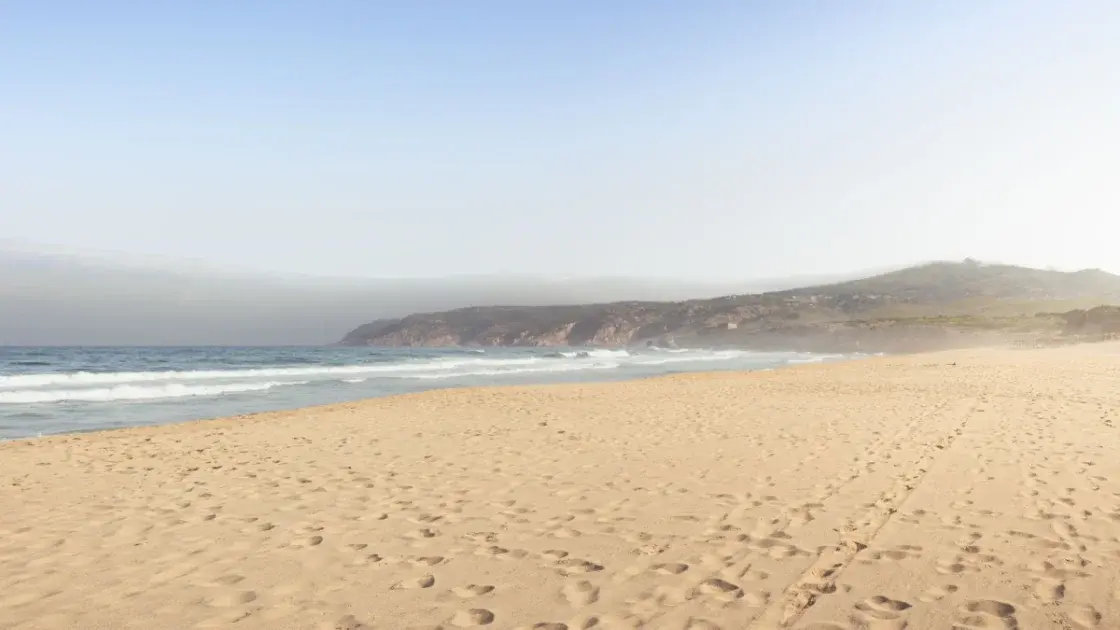
Beach Volleyball & Ball Games on Portugal's Beaches 2026: Where It's Allowed, Rules and Fines
Turning up at the beach with a volleyball under your arm feels like the most natural thing in the world — but it isn't always as simple as it looks. While updating our guide to beach fines, we noticed most visitors have no idea that every Portuguese beach has its own governing document, the Plano de Praia (Beach Plan), which spells out exactly where ball games are allowed, tolerated or flatly banned — and that these rules differ significantly between neighbouring municipalities. In Cascais, for instance, playing ball or racket games on the sand is prohibited throughout the entire bathing season, regardless of where on the beach you are, while a few kilometres away there are beaches with permanent, marked volleyball courts open to any visitor.
In this article we explain the legal framework behind these differences, point you to Portugal's official beach volleyball courts — including the country's largest training centre, at Carcavelos — and detail what you need to know if you want to set up a net, organise an informal tournament with friends, or simply understand how much a fine for playing in the wrong spot can actually cost.
Why Every Beach Has Different Rules: the Beach Plan
Since Decree-Law 97/2018, of 27 November, which implements the competency transfer set out in Law 50/2018, management of maritime, river and lake beaches within Portugal's public water domain has passed to municipal councils — including, specifically, the licensing of sports and recreational activities on the sand. That means there is no single "national beach volleyball regulation": each municipality approves its own Beach Plan, marking out, beach by beach, the bathing zones, the areas reserved for water sports, the pedestrian/traffic corridors and, most relevant here, the so-called games and recreation zones.
Games and Recreation Zones: What's Usually Defined
In most beach plans, the games and recreation zone is the strip of sand — typically further from the waterline and beach support facilities — where volleyball, beach football or racket games are tolerated, as long as they don't interfere with bathers or other licensed activities. This is exactly the logic behind the fine most often cited in the Portuguese press for 2026, between 30€ and 100€, applied to anyone "playing ball or racket games outside the designated zones" — in other words, straying into the bathing zone or the pedestrian corridors instead of staying within the area set aside for games.
When Ball Games Are Simply Banned Across the Whole Beach
Some municipalities take a stricter approach. Cascais's Municipal Beach Management Regulation, in the version revised in May 2025, explicitly lists "playing games involving balls and/or rackets during the bathing season" among the behaviours prohibited on the sand of the municipality's beaches — with no zone exception. In other words, on beaches like Carcavelos, Guincho or Praia da Rainha, playing ball outside the specifically licensed sports facilities isn't a matter of being in the "wrong zone" — it's simply off-limits all summer. That's one reason it pays to check the exact rule for the beach you're visiting before you leave home: the same game that's perfectly normal on an Alentejo beach can earn you a fine in Cascais.
Want to Set Up a Volleyball Net or Goalposts? You Need a Permit
Bringing a small portable net for an informal afternoon game with the family is, on most beaches, tolerated within the games and recreation zone. But installing any more permanent sports infrastructure or equipment — fixed poles, a professional volleyball net, beach football goals — counts as a private use of the public water domain, subject to licensing under Decree-Law 58/2005 and Decree-Law 226-A/2007. In practice this mostly applies to clubs, sports schools and tourism operators who want to keep equipment set up for the whole bathing season, not the casual visitor with a pocket net — but the line between the two can be thinner than it looks, especially if equipment is left standing overnight.
Organising a Beach Volleyball Tournament or Event: What the Council Requires
If the plan goes beyond a casual game to an organised tournament, a school competition or a public event, holding "sporting, recreational, ceremonial or other events" on the beach always requires municipal licensing. In Cascais's case, the Council's decision is preceded by a favourable opinion from the Harbour Master's Office (Capitania do Porto) whenever the activity could affect maritime safety, the safety of people and property, or the preservation of the marine environment — and the municipality can also make the licence conditional on taking out civil liability insurance to cover any damage to third parties. For clubs and associations, this process mirrors what already applies to water-sports competitions, and should be started well ahead of the bathing season.
Where to Play Beach Volleyball Without Complications: Official Courts in Portugal
The good news is that, for anyone who wants to play beach volleyball properly, Portugal has a growing number of official, marked courts that are free to use outside reserved hours.
Carcavelos (Cascais): the Country's Biggest Training Centre
Carcavelos beach now has the largest beach sports area in the Lisbon region: four permanently mounted volleyball nets, a beach football pitch and a beach tennis court, run by Cascais Municipal Council. Two of the nets are allocated to Carcavelos Beach Volleyball Club, which runs the Beach Volleyball Training Centre there, accredited by the Portuguese Volleyball Federation (FPV), hosting rounds of the National Championship. The space is free to use informally, but organised activities — events, groups or visiting teams' training sessions — need advance booking and licensing, with requests submitted at least three weeks ahead; no bookings are accepted during August, the peak of the bathing season.
Costa da Caparica: the São João Beach Court
At Praia de São João, in Costa da Caparica, there's a beach volleyball court run by the Alfarroba Surf Academy, with floor markings and fixed poles and net set up until the end of the bathing season. The court is free for any visitor to use, except on weekdays between 8am and 5pm, when it's reserved for school activities — a good example of how a single space can juggle school sport and beachgoers' leisure throughout the day.
What About the Rest of the Country's Beaches?
Beyond these two more organised hubs, informal beach volleyball is a common sight on urban beaches with long seafront promenades and clearly marked games areas, as we've already noted in our guide to Espinho, where the strip of sand closest to the boardwalk has traditionally been the main stage for summer sports activity. In these cases, the golden rule still applies: play within the games and recreation zone, keep your distance from bathers and other licensed activities, and avoid setting up fixed equipment without checking the local council's rules first.
What Breaking the Rules Actually Costs: Fine Table
| Infraction | Approximate Fine |
|---|---|
| Playing ball or racket games outside the games and recreation zone | 30€ to 100€ (most-cited national figure) |
| Playing ball games in municipalities where it's banned beach-wide (e.g. Cascais), by negligence | 200€ to 2,000€ (minor environmental offence) |
| Same infraction, with proven intent | 400€ to 4,000€ |
| Installing a fixed net, poles or goalposts without a private-use permit | Serious offence, higher fines + possible removal of the equipment |
| Organising a tournament or event without municipal licensing | Serious offence, subject to the Decree-Law 226-A/2007 regime |
Official Beach Volleyball Rules (If You Want to Play It Properly)
For anyone looking to go beyond a casual game, the Official Beach Volleyball Rules 2025-2028, approved at the International Federation's 39th World Congress in 2024 and in force since 1 January 2025, set out a 16-by-8-metre court, two-player teams, and matches decided over two sets to 21 points, with a tiebreak third set to 15 points when needed. These are the rules followed in tournaments organised by the Portuguese Volleyball Federation and its regional associations, including the Lisbon Volleyball Association's Senior Regional Circuit and Gira-Praia Regional Circuit, held every summer on beaches around the country.
Frequently Asked Questions
Can I play beach volleyball on any beach in Portugal?
It depends on each municipality's Beach Plan. On most beaches, playing is allowed within the marked games and recreation zone. On others, such as beaches in the Cascais municipality, ball and racket games are banned across the entire sand during the bathing season, regardless of zone.
How much is the fine for playing ball outside the allowed zone?
The most widely reported national figure is between 30€ and 100€. In municipalities where the game is banned entirely and the infraction is treated as an environmental offence, the fine can rise to 200€-2,000€ (negligence) or 400€-4,000€ (intent), under the Environmental Offences Framework Law.
Do I need a permit to bring a volleyball net to the beach?
For a portable net used informally and temporarily, generally no. For fixed or permanent equipment — driven-in poles, professional nets left up for several days — yes, a private-use permit for the public water domain, issued by the municipal council, is required.
Where are the official beach volleyball courts in Portugal?
The best known are at Carcavelos, in Cascais — with four permanent nets and a training centre accredited by the Portuguese Volleyball Federation — and the court at Praia de São João, in Costa da Caparica, run by the Alfarroba Surf Academy.
Can I organise a beach volleyball tournament with friends?
A casual game among friends, non-commercial and without fixed equipment, usually doesn't need a permit. An organised tournament, open to the public or using installed equipment, does require prior municipal licensing, and may also need a Harbour Master's opinion and civil liability insurance.
Conclusion
Before bringing a volleyball or football to the beach in 2026, it's worth checking two things: whether there's a marked games and recreation zone, and whether that municipality allows ball games outside it at all. When in doubt, the official courts at Carcavelos and Costa da Caparica are always a safe bet. To keep planning your summer without surprises, check out our guide to beach fines, umbrellas and concessions in 2026, our guide to the best beaches on the Cascais coast, our Costa da Caparica guide and our Espinho beaches and surf guide.