Guias de Viagem

Nómadas Digitais em Portugal: Os Melhores Destinos de Praia para Trabalhar Remotamente em 2026

Rui Costa Geverifieerde inhoud

Lagos, Ericeira, Cascais, Tavira ou Funchal? Descubra os melhores destinos costeiros de Portugal para nómadas digitais em 2026: coworkings, visto D8, custo de vida, qualidade das praias e comunidade nómada em cada localidade.

Portugal tornou-se, nos últimos anos, um dos destinos favoritos dos nómadas digitais a nível mundial — e não é difícil perceber porquê. Um clima invejável durante grande parte do ano, infraestrutura digital sólida, um visto de trabalho remoto (o D8) acessível, e, acima de tudo, uma costa de rara beleza com praias que não ficam nada a dever às mais famosas do Mediterrâneo. Ao longo de vários anos a explorar o litoral português, descobrimos que a combinação "trabalho + praia" raramente funciona tão bem como aqui.

Este guia foi escrito para quem quer ir além do óbvio: não apenas "Portugal é bom para nómadas digitais" — mas qual destino costeiro específico encaixa no seu estilo de trabalho, no seu orçamento e na qualidade de praia que exige. Analisamos Lagos, Ericeira, Cascais, Tavira e Funchal, com informação prática e atualizada para 2026.

Ponto-chave: O Visto D8 (Visto de Nómada Digital) exige um rendimento mínimo comprovado de 3.680€/mês (4x o salário mínimo português em 2026). Com este visto, pode residir legalmente em Portugal até 2 anos, com possibilidade de renovação. Os destinos desta lista estão todos bem servidos de coworkings, fibra ótica e, claro, praias de qualidade a poucos minutos de distância.

O Visto D8: O Que Precisa de Saber Antes de Escolher o Destino

Antes de mergulhar nos destinos, convém perceber o enquadramento legal. O Visto D8 português, criado em 2022, foi atualizado em 2026 e continua a ser um dos vistos de trabalho remoto mais atrativos da Europa. Para se qualificar, é necessário:

  • Rendimento mínimo: 3.680€/mês (4x o salário mínimo de 920€ em 2026); acresce 50% por cônjuge e 30% por filho dependente
  • Extrato bancário: Saldo equivalente a 12x o salário mínimo (11.040€ mínimo)
  • Contrato de trabalho remoto ou comprovativo de atividade como freelancer/prestador de serviços para entidades fora de Portugal
  • Seguro de saúde válido em Portugal
  • Registo criminal limpo do país de origem

O prazo de processamento real é de 4 a 7 meses em 2026 — recomendamos tratar do visto com antecedência e não deixar para a última hora. Para informações atualizadas, consulte o portal oficial do AIMA (Agência para a Integração, Migrações e Asilo).

Lagos, Algarve: Sol, Falésias e uma Comunidade Nómada Madura

Lagos é, sem dúvida, o destino de praia mais popular entre os nómadas digitais de toda a Península Ibérica. Esta cidade do Sotavento algarvio tem tudo: praias de cenas de cinema (Ponta da Piedade, Praia do Camilo, Praia Dona Ana), um centro histórico autêntico, restaurantes de qualidade a preços ainda razoáveis, e uma das comunidades nómadas mais estabelecidas do país.

Praias de Lagos para Recarregar Energias

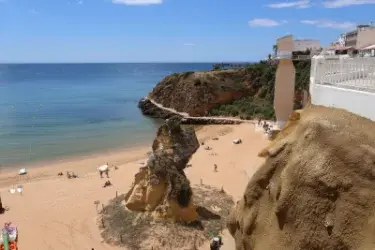
A poucos minutos do centro de Lagos encontram-se algumas das praias mais fotografadas de Portugal. A Praia Dona Ana é um exemplo clássico — falésias douradas de calcário, águas turquesa e areia fina, com uma escadaria de acesso que torna a chegada memorável. A Praia do Camilo, ainda mais íntima, é um destino obrigatório ao fim da tarde: a iluminação do sol a baixar sobre as formações rochosas é de uma qualidade fotográfica ímpar. Para uma tarde de leitura e descanso após uma manhã de trabalho intenso, a Meia Praia oferece seis quilómetros de areia quase infinita a norte da baía de Lagos.

Coworkings em Lagos

A oferta de coworkings em Lagos tem crescido consistentemente. O Noma Village é a opção mais completa: um espaço de coliving e coworking a poucos minutos das praias, com comunidade ativa, atividades matinais (yoga, pilates) e uma programação de eventos de networking. O preço médio de um posto de trabalho mensal ronda os 180€. Existem também espaços mais simples e económicos no centro histórico, adequados para freelancers que não precisam de infraestrutura extra.

Custo de Vida em Lagos (2026)

  • Apartamento T1 em Lagos: 900€–1.400€/mês (temporada baixa vs. verão)
  • Coworking (posto mensal): ~180€/mês
  • Refeição num restaurante local: 10€–18€
  • Passe de transportes: Lagos tem serviço de autocarros regionais (EVA Transportes); carro ou bicicleta são mais práticos para chegar às praias

Veredito Lagos: Melhor para quem procura comunidade nómada ativa, praias de beleza excecional e um estilo de vida mediterrânico. Evite julho e agosto se for sensível ao turismo de massa — os preços disparam e o trânsito pode ser frustrante.

Ericeira: A Capital Europeia do Surf e do Coworking com Vista para o Mar

A apenas 45 minutos de Lisboa (de carro) mas com uma atmosfera de vila piscatória que o centro da capital não tem, Ericeira é a opção favorita dos nómadas que querem proximidade à cidade sem abdicar da qualidade de vida costeira. A vila foi declarada Reserva Mundial de Surf pela organização Save The Waves — a segunda da Europa e a primeira de Portugal — o que atrai uma comunidade de surfistas-nómadas de enorme qualidade.

Praias de Ericeira para Surfistas e Não Surfistas

A Praia de Ribeira d'Ilhas é o spot de surf mais famoso da vila, com ondas de direita longas que recebem etapas do Campeonato do Mundo de Surf (WSL). A Praia do Sul e a Praia dos Pescadores, no centro da vila, são mais calmas e adequadas para quem quer simplesmente mergulhar ou tomar banho de sol. O Pico da Pedra e a Coxos são spots para surfistas avançados — ondas tubulares e fortes que nada têm de turístico.

Coworkings em Ericeira

Ericeira surpreende pela qualidade e variedade da oferta de coworkings para a sua dimensão. Os dois mais recomendados em 2026 são:

  • Kelp Coworking: Espaço aberto 24/7 para membros, com planos diários, semanais e mensais. Preço: a partir de 19€/dia ou 217€/mês. Ambiente descontraído mas funcional.
  • Coastal Cowork Collective: O espaço mais moderno e profissional do centro histórico, com vistas para o oceano, luz natural abundante e quatro salas de reunião insonorizadas com iluminação dedicada para videochamadas. Ideal para quem tem reuniões frequentes em ecrã. Preço: ~19€/dia.

Custo de Vida em Ericeira (2026)

  • Apartamento T1 em Ericeira: 800€–1.200€/mês
  • Coworking (posto mensal): 186€–217€/mês
  • Refeição num restaurante local: 9€–15€
  • Proximidade a Lisboa: Flixbus e autocarros Mafrense fazem o percurso Ericeira–Lisboa em 45–60 min. Carro recomendado para explorar as praias.

Veredito Ericeira: Melhor para nómadas que surfam (ou querem aprender), que valorizam a comunidade internacional e a proximidade a Lisboa para reuniões presenciais ocasionais. Uma das melhores relações qualidade/preço do país.

Cascais: A Sofisticação da Costa de Lisboa com Comboio para a Capital

Cascais é o destino costeiro mais "premium" desta lista — e também o mais bem servido de infraestrutura. A 40 minutos de comboio do centro de Lisboa (Linha de Cascais, CP), a vila oferece praias urbanas de qualidade, uma vila histórica encantadora, uma oferta gastronómica de nível, e ligações de internet entre as melhores de Portugal. Para nómadas que precisam de ir frequentemente a Lisboa — reuniões, aeroporto, networking — Cascais é de longe a opção mais prática.

Trabalhar de Manhã, Praia à Tarde

A rotina em Cascais para um nómada digital é quase perfeita: a maioria dos coworkings abre às 9h, e à hora de almoço é possível estar na Praia da Rainha, na Conceição ou na Duquesa em menos de 10 minutos a pé. Para quem prefere uma praia mais selvagem ao fim do dia, a Praia do Guincho fica a 9 km de distância — vento do norte garantido para kitesurfers e windsurfistas, e um dos pores do sol mais dramáticos da região de Lisboa. Para mais detalhes sobre todas as praias da costa de Cascais, consulte o nosso guia completo das praias de Cascais.

Coworkings e Internet em Cascais

Cascais tem um ecossistema de coworkings que beneficia da sua posição como "hub tecnológico" da Grande Lisboa. Espaços como o Cowork Cascais e o Startup Lisboa Cascais oferecem planos mensais entre 150€ e 250€, com eventos de networking regulares. A fibra ótica está disponível em praticamente todos os alojamentos da vila, com velocidades de 200 Mbps a 1 Gbps comuns. O espaço público também tem boa cobertura de rede 5G.

Custo de Vida em Cascais (2026)

  • Apartamento T1 em Cascais: 1.100€–1.800€/mês (o mais caro desta lista)
  • Coworking (posto mensal): 150€–250€/mês
  • Refeição num restaurante local: 12€–22€
  • Transporte: Linha de Cascais (CP) para Lisboa — 2,45€ por viagem; passe mensal muito acessível

Veredito Cascais: Melhor para nómadas com orçamento mais elevado que precisam de fácil acesso a Lisboa e valorizam infraestrutura de topo, vida noturna e gastronomia de qualidade. Menos indicado para quem quer uma experiência mais "autentica" ou económica.

Tavira, Algarve Oriental: Tranquilidade, Mar da Ria e Trabalho Focado

Tavira é o segredo mais bem guardado desta lista. Enquanto Lagos e Ericeira disputam a atenção dos nómadas mais jovens e animados, Tavira oferece algo diferente: uma cidade histórica mourisca de uma beleza arquitetónica rara, praias de areia branca e águas calmas da Ria Formosa acessíveis de barco (as ilhas barreira de Tavira e Cabanas), e um ritmo de vida que favorece o trabalho focado e a descompressão real.

As Praias da Ria Formosa a partir de Tavira

As praias de Tavira são de acesso diferente das praias convencionais: chegam-se de barquinho (2-3 minutos de travessia) ou de "aquatáxi" a partir do Quatro Águas, e isso faz toda a diferença. A Ilha de Tavira tem 11 quilómetros de praia praticamente selvagem, com muito menos movimento do que as praias do Barlavento algarvio. Para saber mais sobre as praias da Ria Formosa, consulte o nosso guia completo de Tavira e a Ria Formosa.

Coworkings e Conectividade em Tavira

A oferta de coworkings em Tavira é mais limitada do que em Lagos ou Ericeira, mas está a crescer. O Tavira Makers e alguns espaços de coliving com área de trabalho têm surgido nos últimos dois anos. Para nómadas mais independentes, muitos cafés do centro histórico oferecem boa conectividade e permitem trabalhar durante algumas horas. A fibra ótica está disponível na maioria dos alojamentos modernos. Custo de coworking: 100€–160€/mês.

Custo de Vida em Tavira (2026)

  • Apartamento T1 em Tavira: 700€–1.050€/mês (o mais acessível desta lista)
  • Refeição num restaurante local: 8€–14€
  • Transporte: Comboio CP conecta Tavira a Faro (aeroporto) em 30 min e a Vila Real de Santo António em 25 min

Veredito Tavira: Melhor para nómadas que valorizam tranquilidade, autenticidade e custo de vida baixo. Ideal para trabalho focado durante a semana com escapadas às praias da Ria Formosa ao fim do dia ou ao fim de semana. Menos indicado para quem precisa de comunidade nómada ativa ou agenda social intensa.

Funchal, Madeira: O Destino 365 Dias por Ano com Incentivos Fiscais

A Madeira ocupa um lugar especial nesta lista porque é tecnicamente um destino diferente — uma ilha autónoma no Atlântico — mas os seus benefícios para nómadas digitais são únicos em Portugal. O programa "Digital Nomads Madeira Islands", lançado em 2021 e consolidado em 2026, inclui um hub de coworking gratuito (o Ponta do Sol Digital Village), eventos de networking regulares e suporte à instalação. O clima da Madeira é suave durante todo o ano (18°C–26°C), o que significa que o conceito de "época balnear" é aqui muito mais alargado.

Praias e Piscinas Naturais na Madeira

A Madeira não tem praias de areia branca em abundância (a costa é maioritariamente rochosa e de origem vulcânica), mas compensa com piscinas naturais de água cristalina em Porto Moniz, São Vicente e Seixal, e com a extensa praia de areia dourada de Porto Santo (ilha adjacente, a 2h de barco ou 15 min de avião). Para os nómadas que querem mergulho, snorkeling e surf, a Madeira tem spots de excelência. Para mais detalhes sobre as praias da Madeira, veja o nosso guia completo das praias da Madeira e Porto Santo.

Coworkings em Funchal e Ponta do Sol

O Ponta do Sol Digital Village foi o primeiro hub de coworking governamental para nómadas digitais em Portugal e continua a funcionar em 2026 com espaço de trabalho, alojamento e agenda comunitária. Em Funchal, existem vários coworkings privados de qualidade, com planos a partir de 120€/mês. A internet de fibra está disponível em toda a ilha, com velocidades muito competitivas.

Custo de Vida em Funchal (2026)

  • Apartamento T1 em Funchal: 900€–1.300€/mês
  • Coworking (posto mensal): 120€–200€/mês
  • Refeição num restaurante local: 9€–16€
  • Voo Lisboa–Funchal: 60€–150€ (TAP, Ryanair, easyJet); ~1h45 de viagem

Veredito Funchal: Melhor para nómadas que querem fugir ao inverno europeu, que valorizam paisagem dramática, senderismo e um destino de ano inteiro. A única desvantagem é o isolamento geográfico — viagens frequentes ao continente têm um custo acumulado a ter em conta.

Comparativo Rápido: Qual o Destino Certo para Si?

Destino Praia Coworking Custo T1 Comunidade
Lagos Excecional Boa (~180€/mês) 900€–1.400€ Muito ativa
Ericeira Excelente (surf) Excelente (~217€/mês) 800€–1.200€ Ativa
Cascais Muito boa Excelente (~200€/mês) 1.100€–1.800€ Ativa (Lisboa)
Tavira Muito boa (Ria Formosa) Limitada (~130€/mês) 700€–1.050€ Discreta
Funchal Boa (piscinas naturais) Boa (~160€/mês) 900€–1.300€ Moderada

Dicas Práticas para Nómadas Digitais nas Praias de Portugal

Evite o Pico do Verão (Julho e Agosto)

Os meses de julho e agosto transformam os destinos costeiros de Portugal — especialmente Lagos e Cascais — em destinos saturados, com preços de alojamento a duplicar ou triplicar e praias lotadas. Para quem tem flexibilidade de calendário, maio, junho, setembro e outubro são os meses de ouro: clima excelente, preços baixos e praias desafogadas. A temperatura da água em setembro continua muito agradável (21°C–23°C no Algarve).

Internet e Conectividade: O Que Esperar

Portugal tem uma das infraestruturas de fibra ótica mais desenvolvidas da Europa. Em todos os destinos desta lista, é expectável encontrar ligações de pelo menos 100 Mbps nos alojamentos modernos. Nos coworkings, os planos incluem geralmente fibra dedicada de 500 Mbps a 1 Gbps. A cobertura 5G está disponível em Cascais, Funchal e Lagos; em Ericeira e Tavira, o 4G é robusto e suficiente para a maioria das necessidades de trabalho remoto.

Fiscalidade para Nómadas Digitais em Portugal

Se permanecer em Portugal mais de 183 dias por ano, torna-se residente fiscal português. O antigo regime NHR (Non-Habitual Resident), que permitia uma taxa de IRS de 20% durante 10 anos, foi substituído em 2024 pelo regime IFICI (Incentivo Fiscal à Investigação Científica e Inovação). Em 2026, recomendamos vivamente consultar um contabilista certificado ou advogado fiscal especializado antes de formalizar a residência — as regras são complexas e dependem do país de origem e do tipo de rendimento.

FAQ — Nómadas Digitais em Portugal

Qual é o melhor destino de praia em Portugal para nómadas digitais em 2026?

Depende do seu perfil. Lagos é a melhor opção para quem quer comunidade nómada ativa, praias de cartão-postal e vida social animada. Ericeira é ideal para surfistas que querem manter produtividade. Cascais é perfeita para quem precisa de fácil acesso a Lisboa. Tavira é a escolha para quem quer tranquilidade e custo de vida baixo. Funchal vence pelo clima todo o ano e pelos incentivos governamentais aos nómadas.

O Visto D8 de Portugal é difícil de obter?

O processo não é complexo em termos de requisitos, mas os tempos de espera podem ser longos — entre 4 e 7 meses em 2026. O principal requisito é comprovar um rendimento mínimo de 3.680€/mês. Recomenda-se contratar um advogado ou agência especializada em vistos para Portugal para facilitar o processo e evitar erros burocráticos que atrasem a aprovação.

Posso trabalhar remotamente em Portugal com um simples visto de turista?

Cidadãos da UE/EEE podem trabalhar e residir em Portugal sem visto. Para cidadãos de países terceiros (incluindo Reino Unido pós-Brexit, EUA, Brasil, etc.), o visto de turista (90 dias no espaço Schengen) não autoriza legalmente o trabalho. O Visto D8 é o caminho legal correto para estadias superiores a 90 dias com atividade profissional remota.

Qual é o custo de vida médio para um nómada digital em Portugal junto ao mar?

Em 2026, um nómada digital com alojamento confortável (T1), coworking, alimentação e lazer pode esperar gastar entre 1.800€ e 2.800€/mês dependendo do destino e do estilo de vida. Tavira é o mais económico; Cascais o mais caro. Lagos e Ericeira situam-se no meio-termo — uma boa relação entre qualidade de vida e custo, especialmente fora dos meses de julho e agosto.

Há comunidades de nómadas digitais em Portugal junto ao mar?

Sim — e são bastante ativas. Lagos tem uma das maiores comunidades nómadas de Portugal, com eventos semanais, grupos no Meetup e no Slack, e coliving spaces dedicados. Ericeira tem uma comunidade fortemente ligada ao surf e ao trabalho criativo. Cascais beneficia da proximidade ao ecossistema de startups de Lisboa. Funchal tem a comunidade oficial do programa Digital Nomads Madeira, com eventos regulares organizados pelo governo regional.

Conclusão

Portugal é, em 2026, um dos países mais bem posicionados do mundo para receber nómadas digitais — e a sua costa é o argumento mais forte de todos. Seja pelas falésias douradas de Lagos, pelas ondas perfeitas de Ericeira, pela comodidade de Cascais, pela tranquilidade de Tavira ou pelo clima suave de Funchal, há um destino para cada perfil de trabalhador remoto.

O segredo está em escolher com base nas suas prioridades reais: comunidade, custo, qualidade de praia, tipo de trabalho e necessidade de acesso a uma grande cidade. Com o Visto D8 em mãos e um portátil com boa bateria, o resto — como descobrimos ao longo de anos a explorar o litoral português — trata-se por si mesmo.

Explore o nosso diretório de praias do Algarve para encontrar as melhores praias perto do seu destino, e não perca o nosso guia das melhores praias do Algarve para mais inspiração.

Bronnen en referenties

R

Rui Costa

Redactioneel medewerker bij Praias de Portugal. Gespecialiseerd in strandtoerisme en watersport in Portugal.


Gerelateerde Artikelen

Guias de Viagem

Tavira: Guia Completo das Praias, Ilhas e O Que Fazer em 2026

Guia completo de Tavira 2026: praias da Ilha de Tavira, Praia do Barril (Cemitério das Âncoras), Cabanas, Terra Estreita, centro histórico, Santa Luzia (polvo), Cacela Velha, kayak na Ria Formosa, gastronomia e como chegar.

03 Jun 2026 door Rui Costa
Guias de Viagem

Praia de Monte Clérigo: Complete Gids voor het Beste Strand van Europa 2026

<div class="key-takeaway" style="background:#f0f7ff;border-left:4px solid #0070c0;padding:16px 20px;margin-bottom:32px;border-radius:4px;"> <strong>Key Takeaway:</strong> Praia de Monte Clérigo in Aljezur was named <strong>Europe's Best Beach 2026</strong> by European Best Destinations — beating 30 finalists from across the continent. Set within the Southwest Alentejo and Vicentine Coast Natural Park, this 700-metre stretch of Atlantic sand combines surf waves, natural rock pools, intact dunes and an atmosphere that has remained untouched by mass tourism. GPS: 37.3408, -8.8531. Located 8 km from Aljezur and 30 km from Lagos. Best time to visit: June to September. </div> <h2>Europe's Best Beach 2026 Is in Portugal — on the Wild Vicentine Coast</h2> <p>On 27 May 2026, the <strong>European Best Destinations</strong> organisation revealed its annual ranking of Europe's finest beaches — and for the first time in the award's history, a Portuguese beach claimed the top spot. <strong>Praia de Monte Clérigo</strong>, in Aljezur, beat 29 finalists from across the continent, including Greek, Italian and Croatian beaches that have historically dominated the rankings, to become officially recognised as <strong>Europe's Best Beach 2026</strong>.</p> <p>For those who already know the Vicentine Coast, the recognition comes as no surprise. After visiting this coastline repeatedly over the years, we have consistently been struck by how Monte Clérigo manages to offer everything — surf, nature, authenticity, minimal but sufficient facilities — without yielding to the mass-tourism pressure that has transformed so many beaches along Portugal's southern shore. The secret has been well kept. Until now.</p> <p>This guide covers everything you need to know to visit Europe's best beach in 2026: how to get there, when to go, what to do, where to eat, nearby beaches, and the criteria that earned Monte Clérigo its historic title.</p> <h2>Why Monte Clérigo Was Named Europe's Best Beach</h2> <p>The European Best Destinations selection process follows a rigorous two-stage methodology. In the first stage, the editorial team evaluates hundreds of European beaches against a comprehensive set of criteria: natural beauty, water quality, accessibility, family-friendliness, authenticity, available activities, environmental preservation, beach services, quality of nearby accommodation and overall atmosphere. This analysis yields the 30 finalists submitted to an international vote of travellers and tourism specialists.</p> <p>Monte Clérigo achieved the highest overall score on the criterion that carried the most weight in the final evaluation: <strong>environmental preservation combined with authentic visitor experience</strong>. Located within the <strong>Southwest Alentejo and Vicentine Coast Natural Park (PNSACV)</strong>, the beach is protected by legislation that prohibits construction on the front line and severely limits tourist development in the surrounding area. The result is a beach that, in the 21st century, still looks as Portuguese beaches looked 40 years ago: free, wild, integrated into the natural landscape.</p> <p>Second place went to <strong>Voutoumi Beach</strong> on Antipaxos in Greece — named the most visually beautiful beach on the continent by evaluators. Third and fourth went to Greek beaches <strong>Fteri on Kefalonia</strong> and <strong>Elafonisi in Crete</strong> — three extraordinary destinations that nonetheless finished behind the quiet Vicentine Coast.</p> <h2>Where Is Praia de Monte Clérigo</h2> <p>Praia de Monte Clérigo is located in the <strong>municipality of Aljezur</strong>, in the far northwest of the Algarve region, fully within the <strong>Vicentine Coast</strong>. GPS coordinates: <strong>37.3408, -8.8531</strong>. The hamlet of Monte Clérigo sits directly above the beach, with whitewashed houses cascading down the hillside towards the shore.</p> <p>Administratively, it falls within the <strong>Southwest Alentejo and Vicentine Coast Natural Park</strong>, the largest protected coastal area in Western Europe, stretching over 110 km of coastline from Burgau (Algarve) to Santiago do Cacém (Alentejo). This legal protection is, in large part, responsible for the beach's exceptional state of conservation.</p> <h3>Distances and Reference Points</h3> <ul> <li><strong>Aljezur town:</strong> 8 km — access follows the N120 from Aljezur</li> <li><strong>Lagos:</strong> 30 km south — the nearest city with full services</li> <li><strong>Portimão:</strong> 45 km southeast</li> <li><strong>Lisbon:</strong> 265 km north via A2 + A22</li> <li><strong>Faro Airport:</strong> 95 km east</li> </ul> <h2>How to Get to Praia de Monte Clérigo</h2> <p>The Vicentine Coast is, by nature, a destination that requires logistical planning — and Monte Clérigo is no exception. The beach is not within walking distance of any town, so the vast majority of visitors arrive by car.</p> <h3>By Car</h3> <p>The most direct route from <strong>Lisbon</strong> is via the A2 motorway to Grândola Sul, then the EN393 heading south, or alternatively the A22 (Via do Infante) to Lagos, then the N120 north to Aljezur. From Aljezur, follow signs for "Praia de Monte Clérigo". Total distance: <strong>265 km, approximately 2h45 to 3h</strong>, depending on summer traffic on the A22.</p> <p>From <strong>Lagos</strong>, take the N120 north for 30 km — approximately <strong>30 to 35 minutes</strong> along a winding but well-signposted road.</p> <p>A paid car park operates at the beach entrance (<strong>free from October to May; paid June to September</strong>, approximately €2–3 per hour in peak season). On summer weekends — especially in 2026 following the European award — the car park can fill before 10am. We recommend arriving before 9:30am or visiting on weekdays.</p> <h3>By Bus</h3> <p>The <strong>Lisbon to Aljezur</strong> route is served by <strong>Rede Expressos</strong>, departing from Sete Rios bus station. The journey takes approximately <strong>3h40</strong>, with tickets from <strong>€4</strong> when booked in advance. From Aljezur to the beach itself, a local taxi (~€8–10) or bicycle is required as no bus route reaches the shore directly.</p> <p>From <strong>Lagos</strong>, <strong>Vamus — Algarve Transports</strong> operates a service to Aljezur taking approximately <strong>41 minutes</strong>. Check timetables at vamus.pt as departures are limited (typically 3–4 per day in the bathing season).</p> <p>Car-free access is possible but requires planning. For a day trip, the combination of Rede Expressos and local taxi works well. For longer stays, consider hiring a car in Faro or Lagos.</p> <h2>The Beach: Features and Atmosphere</h2> <p>Monte Clérigo stretches approximately <strong>700 metres in length</strong> and between 40 to 80 metres in width depending on the tide. The sand is golden with a medium grain — not the fine white sand of the southern Algarve, but the textured Atlantic sand that surfers appreciate for warm-up on land. The beach faces <strong>west</strong>, delivering sunsets directly over the ocean — one of the most sought-after spectacles in the region.</p> <p>To the north, a small stream reaches the beach beside the dunes, creating a sheltered area of mixed, calmer water that families with young children favour when Atlantic waves feel too powerful. To the south, low cliffs and rock formations frame the beach, revealing natural tidal pools at low tide that shelter anemones, crabs, small fish and sea urchins.</p> <p>The hamlet of Monte Clérigo — a small village of fewer than 200 permanent residents — sits immediately above the beach, with two or three restaurants and a surf school. This human scale is precisely what keeps Monte Clérigo different: no four-star hotels on the front line, no loud music bars, no jet-skis circling the shore. What exists is a beach that still feels as if it belongs to nature, with visitors integrating into it rather than dominating it.</p> <h3>Beach Features at a Glance</h3> <table style="width:100%;border-collapse:collapse;margin:16px 0;"> <thead><tr style="background:#0070c0;color:#fff;"> <th style="padding:8px;text-align:left;">Feature</th><th style="padding:8px;text-align:left;">Detail</th> </tr></thead> <tbody> <tr style="background:#f5f5f5;"><td style="padding:8px;">Length</td><td style="padding:8px;">~700 metres</td></tr> <tr><td style="padding:8px;">Orientation</td><td style="padding:8px;">West (sunset over the ocean)</td></tr> <tr style="background:#f5f5f5;"><td style="padding:8px;">Sand type</td><td style="padding:8px;">Golden, medium grain</td></tr> <tr><td style="padding:8px;">Blue Flag</td><td style="padding:8px;">Yes (2026)</td></tr> <tr style="background:#f5f5f5;"><td style="padding:8px;">Lifeguards</td><td style="padding:8px;">July to September</td></tr> <tr><td style="padding:8px;">Parking</td><td style="padding:8px;">Paid Jun–Sep; free rest of year</td></tr> <tr style="background:#f5f5f5;"><td style="padding:8px;">WC and showers</td><td style="padding:8px;">Yes</td></tr> <tr><td style="padding:8px;">Bar / Restaurant</td><td style="padding:8px;">Yes (hamlet directly above beach)</td></tr> <tr style="background:#f5f5f5;"><td style="padding:8px;">Accessibility</td><td style="padding:8px;">Wooden boardwalk to the shore</td></tr> <tr><td style="padding:8px;">Surf</td><td style="padding:8px;">All levels</td></tr> <tr style="background:#f5f5f5;"><td style="padding:8px;">Families</td><td style="padding:8px;">Excellent (calm stream area)</td></tr> <tr><td style="padding:8px;">Natural pools</td><td style="padding:8px;">Visible at low tide (south end)</td></tr> <tr style="background:#f5f5f5;"><td style="padding:8px;">Legal protection</td><td style="padding:8px;">PNSACV — Natural Park</td></tr> <tr><td style="padding:8px;">GPS</td><td style="padding:8px;">37.3408, -8.8531</td></tr> </tbody> </table> <h2>Surfing and Activities at Monte Clérigo</h2> <p>The Vicentine Coast is one of the most respected surf destinations on the Iberian Peninsula, and Monte Clérigo is one of its most versatile beaches. The Atlantic swells that reach this coast travel unobstructed from the North Atlantic, guaranteeing consistency year-round — but it is between September and April that experienced surfers find optimal conditions.</p> <h3>Surfing for All Levels</h3> <p>Monte Clérigo is considered suitable for <strong>beginners and intermediate surfers</strong> most of the time. Waves form over a sandy bottom with a relatively predictable break pattern, and the northern section (near the stream) offers smaller, more widely spaced waves ideal for first steps. On days with larger swell generated by North Atlantic depressions between October and March, the beach becomes more demanding and is best left to experienced surfers.</p> <p><strong>Boa Onda Surf School</strong> runs group lessons on the beach during the bathing season (June to September), priced at approximately <strong>€30–40 for a 2-hour group session</strong>. <strong>Aljezur Surf School</strong> also divides its operation between Monte Clérigo and the nearby Arrifana, rotating according to daily conditions. Both schools offer board and wetsuit hire.</p> <p>For non-surfers, the <strong>natural tidal pools</strong> on the rocks at the south end of the beach are an extraordinary alternative. At low tide, natural lagoons of clear water form, sheltered from the waves, where marine life — starfish, crabs, shrimps, polyps, small rock fish — can be observed at eye level. It is free snorkelling with no equipment other than a simple dive mask.</p> <p>The <strong>Rota Vicentina</strong> coastal trail passes directly through Monte Clérigo. The most popular section links the beach to <strong>Praia da Amoreira</strong> to the north (15 minutes on foot along the cliffs and dunes) and descends to <strong>Praia da Arrifana</strong> to the south (60 to 90 minutes). The route delivers ocean views and heathland scenery that are difficult to match anywhere else in Portugal.</p> <h2>Nearby Beaches: The Northern Vicentine Coast Corridor</h2> <p>One of the reasons the Aljezur region captivates visitors who discover it is the density of exceptional beaches within a 15 to 20 km radius. Monte Clérigo sits at the natural centre of a corridor that includes some of Portugal's most impressive stretches of coast.</p> <h3>Praia da Amoreira (5 min by car / 15 min on foot)</h3> <p><strong>Praia da Amoreira</strong> lies immediately north of Monte Clérigo — walkable along the coast in 15 minutes or reachable by car in 5. It is a long beach with a stream creating a shallow, warm lagoon (<strong>perfect for very young children</strong>) and full Atlantic waves in the more exposed section for surfers. The dune landscape covered in low-growing vegetation and the near-total absence of infrastructure make Amoreira one of the most photogenic beaches on the Vicentine Coast. <strong>GPS: 37.3611, -8.8632</strong></p> <h3>Praia da Arrifana (15 min by car)</h3> <p><strong>Praia da Arrifana</strong> is the most famous beach in the Aljezur municipality among the surf community. Sheltered by a headland that creates a semi-enclosed bay, Arrifana has a characteristic <strong>left-hand wave</strong> that works with northwest swell and is highly regarded by intermediate and advanced surfers. The beach has slightly more infrastructure than Monte Clérigo — more restaurants, an established surf school — but retains the Vicentine atmosphere. The ruins of <strong>Arrifana Fortress</strong> at the top of the headland are a must-visit for the view over the bay. <strong>GPS: 37.2897, -8.8615</strong></p> <h3>Praia de Odeceixe (25 min by car)</h3> <p><strong>Praia de Odeceixe</strong> is a Vicentine Coast classic: the Seixe stream divides the beach in two, creating on the river side a completely calm and warm zone (26–28°C in August), and on the ocean side perfect surf and bodyboard waves. It is the only beach in Portugal simultaneously located in the Algarve (south bank) and the Alentejo (north bank). A destination in its own right, 25 minutes by car from Monte Clérigo. <strong>GPS: 37.4282, -8.7920</strong></p> <h3>Praia de Bordeira / Carrapateira (30 min by car)</h3> <p>To the south of Monte Clérigo, <strong>Praia da Bordeira</strong> near Carrapateira is one of the largest deserted beaches on the Vicentine Coast, with over 2 km of monumental dune formations and powerful waves. It is a beach for those seeking the full force of the Atlantic — no beach infrastructure, dirt track access roads, and surfers who travel from across Portugal on days of good swell. To the north of Bordeira lies <strong>Praia do Amado</strong>, considered one of the finest surf beaches on the Vicentine Coast and host to national surf championships. <strong>GPS Bordeira: 37.1912, -8.9041</strong></p> <h2>Food and Where to Eat Near Monte Clérigo</h2> <p>The gastronomy of the Aljezur region has distinctive characteristics that set it apart from the rest of the Algarve. Positioned at the border between the Algarve and the Alentejo, in a predominantly rural municipality, local ingredients carry an authenticity that restaurants in more touristic areas rarely replicate.</p> <h3>In the Hamlet of Monte Clérigo</h3> <p>The hamlet itself has two or three eating establishments facing the beach, with simple menus of freshly grilled fish, sandwiches and petiscos. These are informal spaces with sea-view terraces, well suited to a post-beach lunch. On summer weekends in 2026 — with the elevated footfall expected following the European award — arriving early or booking ahead is strongly recommended.</p> <h3>In Aljezur (8 km)</h3> <p>The town of Aljezur offers a wider restaurant selection. A highlight not to miss is the <strong>Aljezur sweet potato</strong> — a product with Protected Geographical Indication (PGI) that exists only on this coast: a pink-skinned, gently sweet variety with a texture found nowhere else in Portugal. It appears roasted, in soups or as an accompaniment to grilled fish in many restaurants in town. Another regional speciality worth seeking out is <strong>cataplana de percebes</strong> — the barnacles harvested from the Vicentine Coast rocks are of exceptional quality, with a more intense iodine-and-sea flavour than those found on the southern Algarve.</p> <h2>Best Time to Visit Monte Clérigo</h2> <p>The most common question from visitors discovering Monte Clérigo is simple: when should I go? The answer depends on what you are looking for.</p> <table style="width:100%;border-collapse:collapse;margin:16px 0;"> <thead><tr style="background:#0070c0;color:#fff;"> <th style="padding:8px;">Month</th><th style="padding:8px;">Air temp</th><th style="padding:8px;">Sea temp</th><th style="padding:8px;">Waves</th><th style="padding:8px;">Crowds</th> </tr></thead> <tbody> <tr style="background:#f5f5f5;"><td style="padding:8px;">May</td><td style="padding:8px;">18–22°C</td><td style="padding:8px;">16–17°C</td><td style="padding:8px;">Medium</td><td style="padding:8px;">Low</td></tr> <tr><td style="padding:8px;"><strong>June</strong></td><td style="padding:8px;"><strong>22–26°C</strong></td><td style="padding:8px;"><strong>17–19°C</strong></td><td style="padding:8px;">Small–medium</td><td style="padding:8px;">Medium</td></tr> <tr style="background:#f5f5f5;"><td style="padding:8px;">July</td><td style="padding:8px;">25–28°C</td><td style="padding:8px;">19–21°C</td><td style="padding:8px;">Small</td><td style="padding:8px;">High</td></tr> <tr><td style="padding:8px;">August</td><td style="padding:8px;">26–30°C</td><td style="padding:8px;">19–22°C</td><td style="padding:8px;">Small</td><td style="padding:8px;">Very high</td></tr> <tr style="background:#f5f5f5;"><td style="padding:8px;"><strong>September</strong></td><td style="padding:8px;"><strong>23–27°C</strong></td><td style="padding:8px;"><strong>20–22°C</strong></td><td style="padding:8px;">Medium–large</td><td style="padding:8px;">Medium</td></tr> <tr><td style="padding:8px;">October</td><td style="padding:8px;">19–23°C</td><td style="padding:8px;">19–21°C</td><td style="padding:8px;">Large</td><td style="padding:8px;">Low</td></tr> <tr style="background:#f5f5f5;"><td style="padding:8px;">Nov–Mar</td><td style="padding:8px;">12–17°C</td><td style="padding:8px;">14–17°C</td><td style="padding:8px;">Very large</td><td style="padding:8px;">Minimal</td></tr> </tbody> </table> <p>Our unequivocal recommendation is <strong>June and September</strong>. In June, crowds have yet to build significantly, the weather is stable and warm, and the golden late-afternoon light turns sunsets cinematically beautiful. In September, water temperatures reach their annual peak, visitor numbers fall after the end of school holidays, and the first autumn swells begin to arrive — making it the best month of the year for those wanting to combine swimming, surfing and hiking in peace.</p> <p>August is the most in-demand month, but in 2026 the pressure may be exceptionally high due to the European award. Those who can should avoid August or compensate with very early or very late arrivals.</p> <h2>Practical Tips for Visiting Monte Clérigo in 2026</h2> <ul> <li><strong>Arrive before 9:30am in July and August:</strong> The car park fills quickly on summer weekends. In 2026, with the additional visibility from the European award, demand is expected to exceed previous years significantly.</li> <li><strong>Use high-factor sun protection:</strong> The Vicentine Coast's northerly winds create a feeling of coolness that masks the intensity of the sun. UV levels are high from May to September even under partial cloud cover.</li> <li><strong>Wind is a fact of life:</strong> Northerly winds are the norm on this coast. They carry sand and can be uncomfortable on the beach on windier days. Bring a windbreak or choose the south end of the beach, which is more sheltered by the cliffs.</li> <li><strong>Check the tide for the rock pools:</strong> Consult the tide tables before visiting. The natural pools at the south end are accessible and safe only in the 2 hours before and after low tide. The "Tides Near Me" app or Portugal's Hydrographic Institute (hidrografico.pt) have accurate predictions.</li> <li><strong>Wetsuit until July:</strong> Atlantic water on this coast rarely exceeds 21–22°C even in August. For extended surf sessions or exploring the tidal pools, a shortie (2mm) until July and a 3/2mm from October onwards is the right choice.</li> <li><strong>Bring cash:</strong> Establishments in the hamlet of Monte Clérigo do not always accept card payment. Carry some euros for the beach bar and smaller restaurants.</li> </ul> <h2>Frequently Asked Questions about Praia de Monte Clérigo</h2> <h3>Why was Praia de Monte Clérigo named Europe's best beach in 2026?</h3> <p>European Best Destinations distinguished Monte Clérigo for its combination of preserved natural beauty, certified environmental quality (Blue Flag), authentic visitor experience and the legal protection guaranteed by the Southwest Alentejo and Vicentine Coast Natural Park. The beach stood out from 30 European finalists by maintaining its natural environment intact without yielding to the mass-tourism pressure that has affected many of Europe's most famous beaches.</p> <h3>Is Praia de Monte Clérigo suitable for children?</h3> <p>Yes, particularly the northern section of the beach where a stream creates a calm, shallow area that is very safe for young children. Atlantic waves in the main section can be powerful on days of larger swell, but for the majority of summer (July and August) conditions are moderate and suitable for families. The natural tidal pools at the south end are an additional attraction for children with a sense of exploration.</p> <h3>Is there public transport to Praia de Monte Clérigo?</h3> <p>No bus route reaches the beach directly. The closest connection is to Aljezur (Rede Expressos from Lisbon, ~3h40, from €4; or Vamus from Lagos, ~41 min). From Aljezur to the beach (8 km), a local taxi (~€8–10) or bicycle hire is required. For a day trip, the bus and taxi combination works well; for longer stays, hiring a car in Lagos or Faro is recommended.</p> <h3>Does Praia de Monte Clérigo have lifeguards?</h3> <p>Yes, from July to September during the official bathing season. Outside this period the beach is unguarded and should be visited with extra caution, as Atlantic currents can be unpredictable. When in doubt about sea conditions, check the flag displayed at the beach entrance and any notices posted at the access points.</p> <h3>What are the nearest beaches to Monte Clérigo?</h3> <p>To the north, Praia da Amoreira is just 5 minutes by car or 15 minutes on foot along the coast. To the south, Praia da Arrifana (15 min by car) is the most celebrated surf beach in the area. Further south, Praia do Amado (35 min) and Praia de Bordeira/Carrapateira (30 min) complete what is arguably Portugal's most impressive sequence of wild beaches — all within the Vicentine Coast Natural Park.</p> <h2>A Beach That Has Earned Its Title</h2> <p>There are beaches that win awards because of their fame — and there are beaches that win because they are simply extraordinary. Praia de Monte Clérigo belongs firmly to the second category. The title of Europe's best beach 2026 will not transform it overnight, but it will bring more visitors — and those visitors deserve an honest guide that tells them what to expect.</p> <p>What they will find is a beach that combines everything nature lovers, families and surfers seek: Atlantic waves, natural pools in volcanic rock, dunes covered in protected vegetation, sunsets directly over the ocean, and a small hamlet that has not yet been consumed by the tourist industry. That, ultimately, is what sets the Vicentine Coast apart from the rest of Portugal — and what made Monte Clérigo deserve the title.</p> <p>For more beach suggestions in the same region, explore our <a href="/blog/costa-vicentina-praias-guia-completo">complete guide to the Vicentine Coast</a> and the article on <a href="/blog/trilhos-costeiros-portugal-praias-guia-completo">Portugal's best coastal hiking trails</a>. If you are planning to combine the visit with other beaches in western Algarve, the <a href="/blog/sagres-guia-completo-praias-surf-cabo-sao-vicente-2026">Sagres guide</a> and the <a href="/blog/lagos-algarve-guia-completo-praias-2026">Lagos guide</a> are ideal starting points.</p>

01 Jun 2026 door Rui Costa
Guias de Viagem

Póvoa de Varzim: Guia Completo de Praias e O Que Fazer 2026

Guia completo de Póvoa de Varzim 2026: praias, casino histórico, surf em Aguçadoura, cultura Poveira, gastronomia e como chegar de metro em 45 minutos a partir do Porto.

31 May 2026 door Rui Costa