Some destinations surprise you with their understated beauty. Aveiro is exactly that. Known as the "Portuguese Venice" for its painted moliceiro boats gliding through urban canals, the city hides along its Atlantic fringe a series of beaches that few international visitors ever discover — yet which the Portuguese fiercely protect as one of their best-kept secrets. Through multiple visits to this Silver Coast region, we've found that the combination of lagoon, canals and ocean beaches creates a genuinely singular experience in Portugal.
In this complete guide, we cover everything you need to plan your 2026 visit to Aveiro and its beaches: the best lagoon and ocean beaches, how to get there without a car, where to eat the finest ovos moles and eel stew, and how to climb the 288 steps of Portugal's tallest lighthouse.
The Ria de Aveiro: The City's Aquatic Heart
Before reaching the beaches, it's impossible to ignore the Ria de Aveiro — Portugal's most important coastal lagoon, stretching some 45 km and encompassing a network of channels, islands, salt pans and marshland that shelter over 60 bird species. The Ria isn't merely a backdrop: it's the true engine of this territory's identity.
Moliceiro Boat Ride Through the Canals
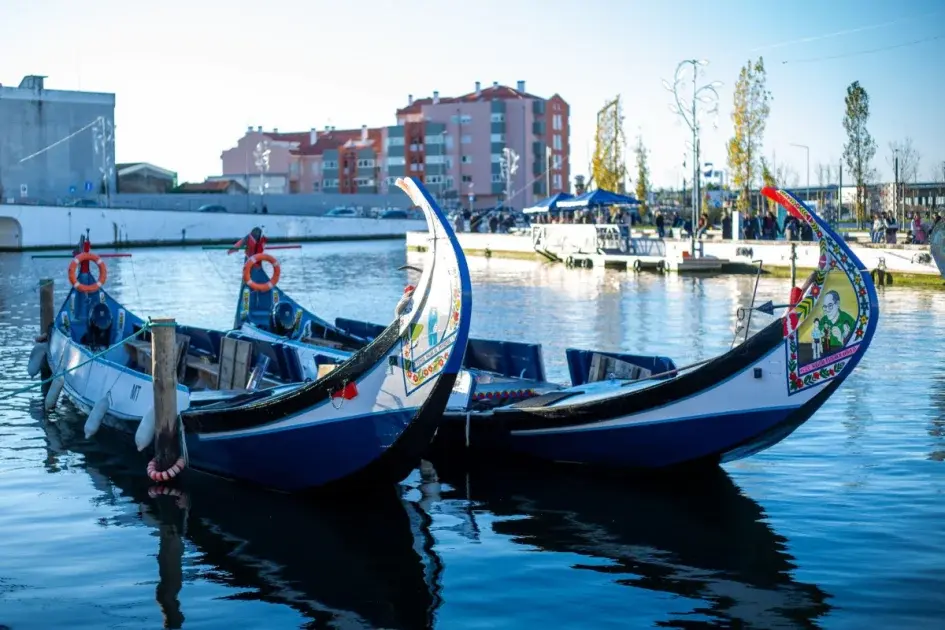
The moliceiro trip is Aveiro's most iconic experience. These traditional boats — with their curved, painted prows — were once used to collect moliço (seaweed) as agricultural fertiliser, and have been reinvented as a tourist attraction navigating the four main city channels: Canal Central, Canal do Côjo, Canal das Pirâmides and Canal de São Roque. In 2026, the entire tourist fleet is 100% electric, making rides completely silent and emissions-free.
Trips last 45 minutes and cost approximately €15 per adult and €8 per child (ages 5–12). Along the route you'll discover the tiled facade of Aveiro railway station, Art Nouveau buildings and ancient salt pans. Booking online in advance secures a discount.
Lagoon Beaches — The Calm Side of the Ria
Along the Ria's margins are several lagoon beaches with warm, calm and shallow water — ideal for families with young children. The São Jacinto beaches (on the northern bank) and Salreu are the most popular with locals during the summer months, with water temperatures easily reaching 22–24°C in August.
Praia da Barra: The Main Ocean Gateway
Located 9 km west of Aveiro along the Canal de Ílhavo, Praia da Barra is the closest ocean beach to the city and the best-equipped in the region. Its sandy strip extends for several kilometres north and south, with a Blue Flag designation, lifeguards active from June to September, and an above-average selection of restaurants and beach bars.
Farol da Barra: Portugal's Tallest Lighthouse
The dominant landmark of Praia da Barra is the Farol da Barra, Portugal's tallest lighthouse at 62 metres (66 metres above mean sea level) — one of the tallest in Europe. Built in 1893, it has guided ships through the challenging Ria entrance for over 130 years.
Interior visits are available on Wednesday afternoons, with three timed ascents on a first-come, first-served basis: 14:00, 15:00 and 16:00 (summer hours). From the top, the view spans the bar entrance, the beaches of Barra and Costa Nova, the São Jacinto sands and, on clear days, the Serra da Boa Viagem. Climbing the 288 steps takes approximately 8–10 minutes and requires a reasonable level of fitness.
Costa Nova–Barra Boardwalk
One of the best ways to connect Praia da Barra to Costa Nova is via the Passadiço, a 6 km elevated wooden boardwalk that follows the protected dune system and offers uninterrupted ocean views. The route is flat, accessible to wheelchairs and bicycles, and allows you to stop and photograph the colourful palheiros as Costa Nova comes into view.
Costa Nova: Portugal's Most Photographed Striped Houses
Costa Nova do Prado is a small settlement in the municipality of Ílhavo, situated 11 km west of Aveiro. What made it world-famous are the palheiros — traditional fishermen's houses built in wood and decorated with vivid vertical stripes: red and white, blue and white, green and yellow. Concentrated mainly along Avenida José Estêvão, these facades are now one of the most photographed scenes in Portugal, shared millions of times on social media.
Costa Nova Beach
Beyond the houses, Costa Nova has one of the region's finest beaches. The ocean side is wide, with fine golden sand and Atlantic waves that attract surfers and bodyboarders. On the Ria side, the lagoon beach offers completely calm, shallow water — a rare combination that lets the whole family find their element. In summer, wave intensity varies considerably throughout the day with the tides: check surf forecasts on Meteosurf before entering the water.
Costa Nova Fish Market
The Costa Nova Fish Market is a mandatory stop for anyone visiting the area. In the early morning, boats arrive with the day's catch and the petisco (tapas-style) restaurants beside the market serve the finest caldeiradas and grilled fish in the region. The "tripas de Aveiro" — thin crepes filled with ovos moles or chocolate cream — are the quintessential local sweet and can be bought at several confectioneries along Avenida José Estêvão.
Praia de Mira: The Undiscovered Secret to the South
Located 30 km south of Aveiro, Praia de Mira is one of the most authentic and least touristy destinations on the Silver Coast. The village occupies a narrow strip of land between the Atlantic Ocean to the west and the Canal de Mira (an arm of the Ria de Aveiro) to the east — an arrangement that creates two completely different environments less than 500 metres apart.
Two Worlds Side by Side
On the ocean side: a wide sandy beach with regular waves suited to surfing and bodyboarding, and northerly winds from May to September that attract kitesurfers. Kitesurf conditions are particularly reliable in June and July, with consistent north-northeast wind. The Canal de Mira, on the opposite side, offers completely calm water with boat rentals, kayaking, SUP and sport fishing. Several equipment rental stands line the lagoon promenade.
This duality makes Praia de Mira ideal for groups with different preferences: surfers head to the ocean, children stay on the lagoon, and everyone meets for dinner at the same restaurant.
Atmosphere and Accommodation
Praia de Mira maintains a peaceful, family-friendly atmosphere without the excesses of nightlife that characterise other Portuguese beaches. Local accommodation and campsites dominate, with very competitive prices even in August. Ideal for those seeking an authentic beach week away from the crowds.
How to Get to Aveiro and its Beaches
By Train (Recommended)
Aveiro has a direct Alfa Pendular and Intercidades train service from:
- Porto (Campanhã): 40–50 minutes, €5–€9, frequent services (CP)
- Lisbon (Santa Apolónia/Oriente): 2h30–3h by Alfa Pendular, €18–€32
- Coimbra: 40–45 minutes, €5–€7
From the Beaches by Bus (No Car)
From Aveiro railway station, BUSVWAY lines 35 and 36 connect the city centre to Praia da Barra, Costa Nova and the São Jacinto Natural Dunes Park. The journey to Costa Nova takes approximately 43 minutes and costs €2–€4. Timetables are available at busway-cira.pt.
By taxi or UBER, the trip from Aveiro to Praia da Barra or Costa Nova takes just 10–11 minutes and costs €12–€17.
By Car
From Porto, follow the A1/A29 to Aveiro (75 km, approximately 50 minutes). From Lisbon, the A1 covers 250 km in roughly 2h10–2h30. Parking at the beaches is available but during peak season (July–August) aim to arrive before 10:00.
When to Visit: Temperature and Conditions Table
| Month | Air Temp (°C) | Water Temp (°C) | Lifeguard | Crowds |
|---|---|---|---|---|
| June | 22–26 | 17–19 | Yes | Moderate |
| July | 25–29 | 18–20 | Yes | High |
| August | 26–30 | 19–21 | Yes | Very High |
| September | 22–26 | 18–20 | Yes (mid-month) | Moderate |
| October | 18–21 | 17–18 | No | Low |
Best month to visit: September is our top pick — the water is still reasonably warm, August crowds have gone, and the late afternoon light over Costa Nova's striped houses is superb for photography.
Food and Drink: What to Eat in the Aveiro Region
The cuisine of Aveiro and the Ria is one of Portugal's most distinctive, with dishes rarely found outside the region:
- Caldeirada de enguias (eel stew): The Ria's most iconic dish, prepared with eels caught in the channels, tomato, peppers and olive oil. Find it at riverside restaurants in Murtosa and Torreira.
- Lampreia (season: Jan–Mar): Vouga lamprey is considered among the finest in Portugal, prepared à bordalesa or with rice.
- Grilled fish from Costa Nova: Sole, sea bass and bream arrive fresh every morning. Restaurants beside the fish market are the most authentic.
- Ovos moles de Aveiro: The city's most celebrated sweet — egg yolk and sugar in moliceiro boat, fish and shell shapes. Protected Geographical Indication (PGI) product. Average price: €5–€8 per small box.
- Tripas de Aveiro: Thin crepes served with ovos moles or chocolate cream, sold at confectioneries along Costa Nova's main avenue.
Recommended Restaurants
- O Telheiro (Costa Nova) — eel caldeirada and fresh grilled fish; views over the Ria.
- Maré Alta (Praia da Barra) — seafood and sole, terrace with lighthouse views.
- Mercado do Peixe (Costa Nova) — morning petiscos and catch of the day.
- A Cozinha do Rei (Aveiro) — historic confectionery with the city's finest ovos moles.
2-Day Itinerary: Aveiro, Barra, Costa Nova and Mira
Day 1 — Aveiro and the North Shore:
- Morning: electric moliceiro boat ride through Aveiro's canals (book online, 45 min, €15).
- Lunch: restaurant at Aveiro's canal-side fish market.
- Afternoon: BUSVWAY line 35 to Praia da Barra (43 min) — lighthouse ascent if it's Wednesday, Atlantic beach swim.
- Late afternoon: 6 km boardwalk to Costa Nova (or taxi, 5 min) — photograph the palheiros in the golden evening light.
- Dinner: O Telheiro in Costa Nova.
- Overnight: local accommodation in Costa Nova or Aveiro.
Day 2 — Praia de Mira and São Jacinto Dunes:
- Morning: São Jacinto Natural Dunes Park (north of the Ria) — dune trail and birdwatching, free entry, approx. 3 km.
- Lunch: Torreira or Murtosa — eel caldeirada on the Ria waterfront.
- Afternoon: drive (or regional bus) to Praia de Mira (30 km south) — Canal de Mira for children, surfing or kite on the ocean for active travellers.
- Late afternoon: return to Aveiro; farewell ovos moles from the historic confectionery.
Frequently Asked Questions about Aveiro and Costa Nova
How far is Aveiro from Porto and how do you get there by train?
Aveiro is just 75 km from Porto. The Alfa Pendular or Intercidades train from Porto Campanhã station takes 40 to 50 minutes and costs between €5 and €9. It is by far the most convenient way to arrive, as Aveiro station is right in the city centre.
Can I visit Aveiro and Costa Nova without a car?
Absolutely. Trains connect Porto and Lisbon directly to Aveiro. From the station, BUSVWAY buses (lines 35 and 36) reach Praia da Barra and Costa Nova for €2–€4. A taxi or UBER covers the same route in 10–11 minutes for €12–€17. For Praia de Mira (30 km south) a car is more practical, though a regional bus service exists.
When is the Farol da Barra lighthouse open for visits?
The lighthouse opens for visits on Wednesday afternoons, with timed ascents at 14:00, 15:00 and 16:00 (summer hours), on a first-come, first-served basis. On special dates such as Navy Day (May) it opens on extended hours. Entry is free or with a nominal contribution.
Are Costa Nova beaches safe for children?
The Ria de Aveiro lagoon side is very safe for young children, with calm and shallow water. The ocean side has Atlantic waves that can be powerful — always check the safety flag. At Praia da Barra and Costa Nova, lifeguards are on duty from June to mid-September.
Where can I buy authentic ovos moles in Aveiro?
Aveiro's ovos moles hold Protected Geographical Indication (PGI) status, guaranteeing quality and authenticity. The most respected confectioneries are A Cozinha do Rei (near the cathedral) and Confeitaria Peixinho. Avoid those sold from tourist kiosks near the station — quality is not always consistent.
Conclusion
Aveiro, Costa Nova and the Ria beaches offer one of Portugal's most complete and authentic coastal experiences. In just two days, you can ride a silent electric moliceiro through painted canals, climb Portugal's tallest lighthouse, photograph striped houses at golden hour, surf the Atlantic and eat eel stew with your feet in the sand. Very few destinations manage to pack so much variety into such a compact area.
For more inspiration along Portugal's Silver Coast and Central Portugal, explore our guide to Central Portugal beaches and discover more secrets between Porto and the Algarve. For hikers, our coastal trails guide has outstanding routes along the entire coastline.