Coasteering in Portugal 2026: the Complete Guide to the Algarve's Adventure Sport
If you've ever stood on an Algarve beach and watched a group in wetsuits and helmets leap off a cliff into the sea, you've probably witnessed a coasteering session. Born on the rugged coastline of Wales in the 1980s, this adventure sport — part coastal scrambling, part cliff jumping, part open-water swimming — has found one of its best natural stages in Europe along the Algarve's limestone shoreline, with its sea caves, cliffs and clear water. By 2026, dozens of licensed operators run guided sessions between Sagres and Albufeira, drawing both adrenaline-seeking travellers and families with teenagers looking for a different kind of morning out. This guide explains what coasteering actually involves, where to try it in Portugal, how much it costs, what safety standards and licences to look for in an operator, and how to prepare so you get the most out of the experience safely.
What Coasteering Actually Is — and Why the Algarve Does It So Well
Coasteering means moving along the shoreline at sea level, combining scrambling over rock, low-grade climbing, open-water swimming and cliff jumps that typically range from 1 to 11 metres, depending on the group's experience and the day's conditions. Unlike diving or surfing, it requires no prior experience: guides adjust the route and jump heights to suit each group, and it's common to see participants aged anywhere from 8 to 60 on the same outing.
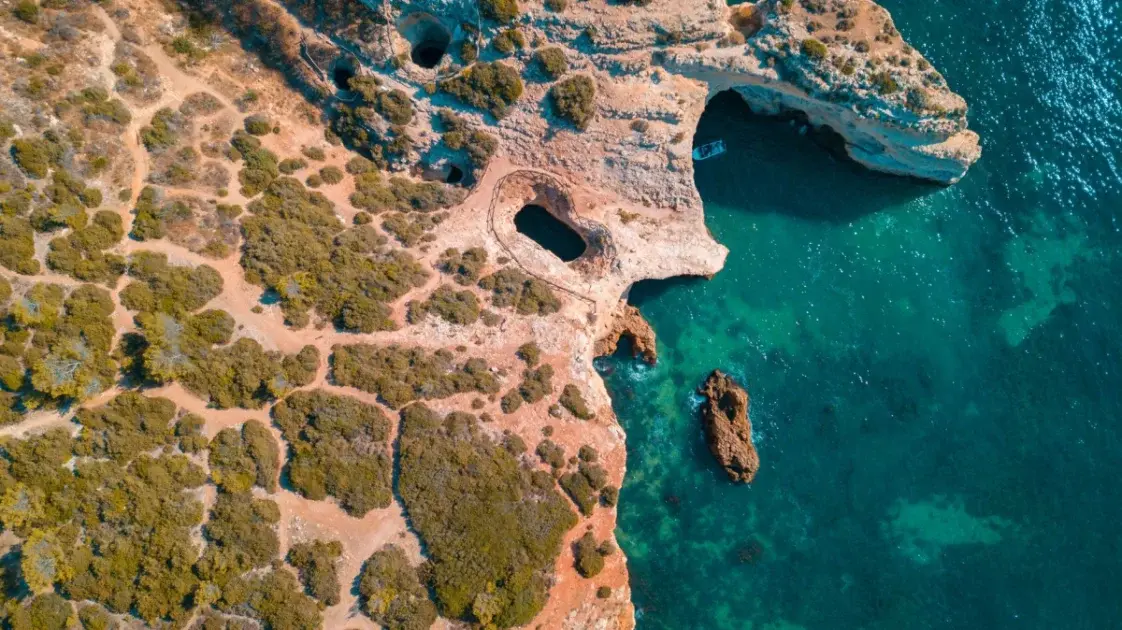
The reason the Algarve has become one of the world's go-to coasteering destinations comes down to geology: wave-carved limestone cliffs create sea caves, natural arches and rock pools that make every stretch of coast different from the next. Warm water from June to September, good visibility, and an adventure-tourism industry that already matured around surfing and diving allowed coasteering to professionalise quickly over the past decade.
Where to Go Coasteering in Portugal: the Best Spots
Sagres and the Costa Vicentina
The Sagres area, at the Algarve's south-western tip and the gateway to the Southwest Alentejo and Vicentine Coast Natural Park, has cliffs more exposed to the Atlantic, livelier swell and dramatic scenery near Cape St Vincent. It's the preferred choice for anyone with some experience, or looking for a more intense session with higher jumps and currents to respect.
Lagos and Ponta da Piedade
In Lagos, the Ponta da Piedade area is arguably the birthplace of commercial coasteering in the Algarve: easily accessible sea caves, water more sheltered from the north wind, and one of the highest concentrations of certified operators in the region. It's also the best starting point for first-timers.
Albufeira and São Rafael
Near Albufeira, the stretch above São Rafael beach is one of the central Algarve's most popular routes, balancing swim-through caves with jump platforms of varying heights and easy access from town.
Carvoeiro and the Benagil Area
The coastline between Carvoeiro and Benagil combines some of the country's most photographed rock formations with gentler coasteering routes, often sold together with a land-based visit to the famous Benagil cave (entering the cave by sea is subject to seasonal restrictions, so confirm this with your operator).
How Much Coasteering Costs in Portugal in 2026
Prices vary by duration, group size, and whether professional photos are included. The table below summarises average rates charged by certified Algarve operators in 2026 — always confirm the current price directly with the operator before booking.
| Session Type | Duration | Average Price | Includes |
|---|---|---|---|
| Group introduction | 2 hours | €45 – €60 | Full gear, certified guide, insurance |
| Half-day / full adventure | 3 – 4 hours | €65 – €90 | Snorkelling, more jumps, digital photos |
| Private or with photographer | 2 hours | €120 – €180 | Small/exclusive group, dedicated photographer |
| Family / kids | 1.5 hours | €35 – €50 | Shorter route, low or optional jumps |
Most operators require a minimum age of 8-10 and the ability to swim unaided — always check this condition when booking with children.
Is It Safe? Gear, Licensing and Precautions
With a certified operator, coasteering carries a risk profile comparable to other outdoor adventure activities, and considerably lower than jumping off cliffs unsupervised — the leading cause of serious "cliff jumping" injuries in Portugal involves precisely people jumping on their own, without knowing the real water depth or the presence of submerged rocks.
Before booking, confirm the operator:
- Is registered with RNAAT (Registo Nacional dos Agentes de Animação Turística), Portugal's national tourist-activity register run by Turismo de Portugal under Decreto-Lei n.º 108/2009 — mandatory for any adventure-tourism company operating in Portugal;
- Provides a wetsuit, helmet and buoyancy aid to every participant, no exceptions;
- Carries valid personal accident and public liability insurance for the activity;
- Employs guides trained in water rescue and with local knowledge of the area's tides and currents.
On your side, the main precautions are: never jump on your own initiative outside the points the guide indicates, always disclose relevant health conditions (heart or respiratory issues, back injuries), and follow the "feet together, body straight" entry technique to avoid injury on impact.
Coasteering vs Canyoning vs Cliff Jumping: What's the Difference
These three activities are easy to mix up, but they differ in important ways. Coasteering always takes place at sea level, along the shoreline, combining scrambling, swimming and moderate guided jumps. Canyoning (more common inland, around the Gerês mountains) follows mountain river gorges and requires abseiling, in freshwater. Cliff jumping isn't an organised activity at all — it's the generic term for jumping off rocks or cliffs unsupervised, precisely the behaviour that guided coasteering makes safe, by having a guide check depth and obstacles at every jump point beforehand.
Best Season, Tides and Weather Conditions
The Algarve's coasteering high season runs from May to October, peaking in July and August when water temperatures sit around 20-22°C. Outside this window, some operators still run trips on good-weather days, using thicker wetsuits and with reduced availability.
Sea state — swell and wind — matters more than the tide itself for whether a session runs, though spring tides with stronger currents can lead to a cancelled or shortened route. If you're planning a trip to the Algarve specifically for this activity, it's worth checking our guide to Portugal's summer north wind ("nortada"), since strong north-wind days often lead to postponed sessions on the south coast.
Tips for First-Timers: What to Bring and How to Prepare
Bring swimwear to wear under the wetsuit, a towel, water shoes or sandals for the walk to the meeting point, and waterproof sunscreen applied ahead of time — most of the session covers your body with the wetsuit, but your face, neck and hands stay exposed for several hours. Avoid a heavy meal beforehand and bring water to rehydrate afterwards. If you wear glasses, consider contact lenses or a safety strap, since jumps can knock glasses off on water impact.
If it's your first time, always choose the "introduction" option rather than an advanced route — most operators let you move up a level on a second outing once you feel confident after your first jump.
Frequently Asked Questions
Do I need to be a strong swimmer to go coasteering? Yes, you need to be able to swim unaided, since the activity includes open-water sections between exit points along the route. The buoyancy aid provided helps, but doesn't replace basic swimming confidence.
What age can children start coasteering? Most certified Algarve operators accept children from around 8-10 years old on family routes, with lower or optional jumps. Always confirm the minimum age and specific conditions with the operator before booking.
Do I need swimming skills in a wetsuit to jump off a cliff? The wetsuit and buoyancy aid increase buoyancy, making water entry and getting back to the surface easier than in normal clothes, but correct jumping technique — always shown by the guide before each point — remains essential to avoid injury.
Is coasteering safe if I'm afraid of heights? Many operators adjust the route to avoid or reduce the higher jumps, letting you take part only in the swimming and low-scramble sections. Tell your guide about your comfort level at the start of the session.
Can I go coasteering without booking a licensed operator? It isn't advisable. Jumping off cliffs without a guide, without knowing the real water depth at each point, and without proper gear is the leading cause of serious accidents linked to this activity in Portugal. Always book with an operator registered with Turismo de Portugal's RNAAT.
Coasteering combines adrenaline, scenery and a view of the Algarve coastline you simply can't get from the beach or a standard boat trip. Choosing a licensed operator with full safety gear and experienced guides makes it one of the safest and most memorable ways to see the Algarve's cliffs from the inside. To round out your trip planning, check out our guides to Lagos, Sagres, and our complete guide to water sports in Portugal.