Why Lagos Is the Cliff Beach Capital of the Algarve
Many places in the Algarve compete for the title of "best beach," but Lagos is the only one that concentrates — within a compact, walkable area from its historic centre — an uninterrupted sequence of cliff beaches with golden limestone formations, sea caves accessible by boat, and water clarity that rivals the Mediterranean. Over multiple visits to Lagos — in June, in September and even on a March weekend — we found the town has a rare quality: it works equally and magnificently well for those who want to lay down a towel and swim, and for those who want to explore, photograph and discover.
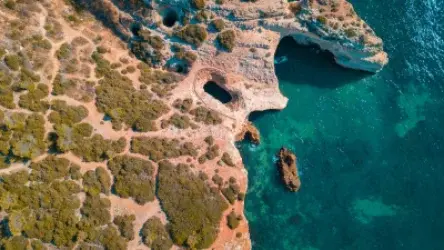
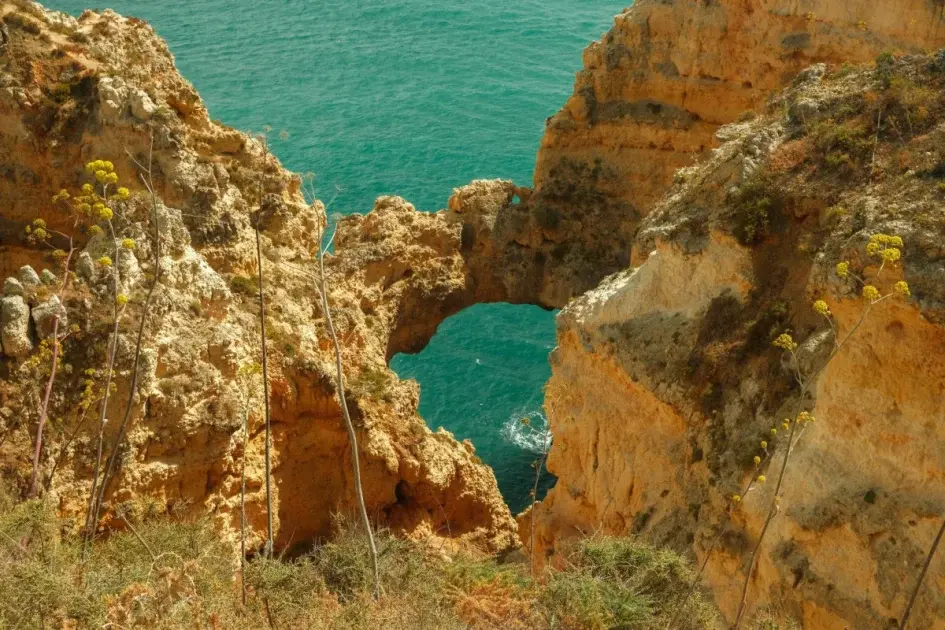
The historic centre is walled, compact and full of life. The most famous beaches are 20 minutes on foot. The marina sits between the centre and the cliff beaches. And Ponta da Piedade — that impossible sequence of arches, pillars and golden rock grottoes above turquoise water — is, without hyperbole, one of the most impressive natural spectacles in western Europe.
This guide covers everything: the beaches one by one (with distances, access and character), boat tours through the Ponta da Piedade caves, how to get to Lagos from Lisbon, what to do in the historic town, where to eat fresh fish, and the most common mistakes first-time visitors make.
Lagos Beaches: A Beach-by-Beach Guide
Praia de Dona Ana — The Most Famous and Photogenic
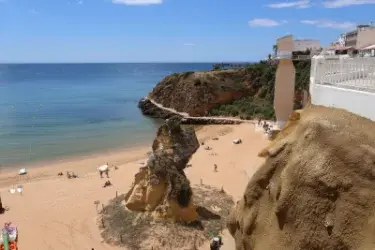
Praia de Dona Ana is probably the most photographed beach in the Algarve. Golden cliffs of 20–30 metres frame a 300-metre-long cove with water that shifts from turquoise near the shore to deep cobalt blue offshore. The cliffs shelter the beach from the northwest wind on cooler days, making it comfortable even in June and September.
- Distance from historic centre: 1.8 km — about 20 minutes on foot or 5 minutes by bus
- Access: Paved roads and stairs. Local bus line and city tourist train
- Facilities: Lifeguard (June–September), beach bar, toilets, showers, paid parking nearby
- Blue Flag: Yes — annual certification for several consecutive years
- Best for: Families, photography, swimming in calm waters
- Warning: Gets very crowded in July and August. Arrive before 10am or prefer June/September
Praia do Camilo — The Postcard Beach with 227 Steps
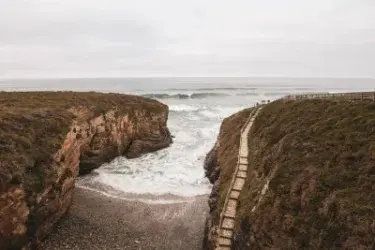
Praia do Camilo is about 10 minutes' walk from Dona Ana along the clifftop road. Access is via a wooden staircase of 227 steps descending through the cliffs — and it is precisely on the way down that you take the best photographs: as you descend, the beach is progressively revealed, with the rock arches and turquoise water gaining scale below you.
The beach itself is small — no more than 50 metres long — but it is surrounded by impressive rock formations, including a natural arch on the west side that serves as a natural frame for photographs. There is a small snack bar at the top of the staircase.
- Distance from historic centre: 2.5 km — 40 minutes on foot or by taxi/Uber
- Access: 227 wooden steps — not recommended for limited mobility
- Parking: Camilo car park (paid, ~€5/day in peak season); from 2026, car access to Ponta da Piedade during peak hours is restricted and vehicles are redirected to this car park
- Best for: Photography, couples, cave exploration
- Tip: Arrive at sunrise for photographs with no one around and golden light on the cliffs
Praia do Pinhão — The Least Known Gem
Between Dona Ana and Praia da Batata, nestled between cliffs, Praia do Pinhão is the most secret of Lagos's cliff beaches. Its small size means it fills up quickly in August, but outside peak season it is the ideal spot for those who want a cliff beach without the notoriety of its neighbours. The water tends to be very calm because the surrounding cliffs block the swell.
- Distance from historic centre: 1.2 km — 15 minutes on foot
- Access: Concrete steps and ramp. No lifeguard outside peak season
- Best for: Snorkelling, travellers seeking less touristy spots, photography during off-peak hours
Praia da Batata — The Gateway to the Cliff Beaches
Praia da Batata is the beach closest to the historic centre and Lagos Marina. Of medium size, with more open sand and less cliff exposure than its neighbours, it is the natural starting point for those who want to explore the coast on foot. Heading south, in 10–15 minutes you reach Pinhão; in another 10 minutes, Dona Ana.
- Distance from historic centre: 500 metres — 5 to 7 minutes on foot
- Facilities: Lifeguard (summer), beach bar, toilets, showers, improved accessibility
- Best for: Families with young children, starting point for a coastal walk
Meia Praia — 5 km of Space and Water Sports
On the other side of the marina, north and east of Lagos, stretches Meia Praia: five kilometres of wide, flat, ocean-facing sand. It is the perfect counterpoint to the cliff beaches — no rocks, much more space, windy enough for kitesurfing and windsurfing, and with regular swell that makes it popular with bodyboarders.
The western end of Meia Praia is accessible on foot from the marina in 10 minutes. The eastern end, near Odiáxere, is much quieter and suitable for those looking for kilometres of nearly deserted beach.
- Distance from historic centre: 1 km (western end) — 10 to 15 minutes on foot or by water taxi via the marina
- Sports available: Kitesurfing, windsurfing, SUP, kayaking, sailing, parasailing, bodyboarding
- Facilities: Several beach bars along the 5 km stretch, lifeguards at designated points during the bathing season
- Blue Flag: Yes
- Best for: Water sports, families wanting lots of space, dogs (in specific sections outside the bathing season)
Praia dos Estudantes — The Most Urban and Accessible
Tucked right below the historic walls of Lagos, Praia dos Estudantes is the most urban of the town's beaches. It is smaller and often more sheltered than the cliff beaches, but its access via a lift from the wall makes it the most accessible beach in Lagos for people with limited mobility.
- Distance from historic centre: Adjacent to the walls — 2 minutes on foot from the centre
- Special access: Lift descending from the walls directly to the beach
- Best for: Limited mobility, a quick afternoon swim, local residents
Ponta da Piedade: Lagos's Greatest Natural Spectacle
Ponta da Piedade is a golden-yellow limestone headland projecting into the sea 2.5 km south of Lagos town centre. This is where the highest density of arches, pillars, grottoes and sea caves on the Algarve coast is concentrated — a landscape that looks like it belongs to another world and that can only be fully understood when you are at water level, inside the caves, by boat.
How to Visit Ponta da Piedade by Land
Land access is free, no ticket required, no opening hours. Park at the Camilo car park (less than 400 metres away in 2026 following the access restriction near the lighthouse), walk to the 1913 lighthouse and descend the 182 wooden steps to the boat landing. The clifftop path offers panoramic views of the pillars and arches; the lower landing is the departure point for tour boats.
Note: the cliff-edge trail linking Camilo to Ponta da Piedade has some sections without barriers. Children should always be supervised and should never approach the cliff edges beyond designated viewpoints — limestone erosion is active and some edges are unstable.
Boat Cave Tours — Prices and Operators in 2026
Boat tours are by far the best way to see Ponta da Piedade. From Lagos Marina or directly from the landing at the lighthouse, small wooden boats navigate inside the grottoes, pass under arches and enter coves only accessible by sea. The experience lasts between 45 minutes and 1h30 depending on the tour.
- Classic boat tour (45–75 min): €20–30 per adult; children typically €10–15
- Kayak tour (2–3 hours): €35–55 per person; includes instruction, equipment and a stop at an isolated beach for swimming
- Catamaran with snorkelling (4 hours): €55–75 per person; includes Ponta da Piedade plus a stop at Praia da Luz for snorkelling and SUP
- Booking: In peak season, book 24–48 hours in advance. Local boatmen at the landing near the lighthouse often offer tours without prior booking at slightly lower prices
- Sea conditions: With swell above 1 metre, some operators cancel entry to the smaller grottoes for safety reasons
Experience tip: the best light for Ponta da Piedade is between 10am and 1pm, when the sun shines directly into the grottoes with golden light that enhances the limestone. If going by kayak, try to arrive during this window.
How to Get to Lagos from Lisbon and the Rest of Portugal
By Car (The Most Practical Option)
Lagos is 300 km from Lisbon via the A2 and A22 (Via do Infante) motorways. The journey takes approximately 3 hours in normal traffic conditions. In August, the exit from Lagos on the A22 can have significant queues at weekends — aim to leave before 8am or after 8pm.
Within Lagos, parking in the historic centre is limited. The Rossio da Bela Vista car park (next to the marina) is the most convenient for walking access to both the centre and the cliff beaches.
By Bus (The Most Economical Option)
Rede Expressos and FlixBus operate direct services from Lisbon (Sete Rios bus terminal) to Lagos. Journey times range from 3h30 to 4h30 depending on the number of stops, with tickets from €7.99. Around 20 daily departures make this the most frequent and affordable public transport connection.
By Train (Comfortable, with a Connection)
There is no direct train from Lisbon to Lagos. You need to take the Alfa Pendular from Lisbon Oriente to Tunes (approximately 2h30) and then the regional train from Tunes to Lagos (approximately 40 minutes). Total journey time is approximately 3h30 to 4h10. Tickets from €24.15 on the CP website (cp.pt). Lagos station is 700 metres from the historic centre and 1.5 km from the cliff beaches.
From Faro Airport
Faro Airport is 80 km from Lagos. The options are:
- Taxi/Transfer: €60–80 per journey (regardless of the number of passengers up to 4)
- Bus + train: Airport bus to Faro town, then regional train Faro–Lagos (~1h30, €7–10)
- Car hire: Best option if you plan to explore the coast beyond Lagos; all major operators have desks at the airport
What to Do in Lagos Beyond the Beaches
Historic Centre: Walls, Churches and Azulejo Tiles
Lagos has one of the best-preserved historic centres in the Algarve. The medieval walls — partly of Arab origin — surround a labyrinth of cobbled streets, whitewashed houses and baroque churches with azulejo-lined interiors. Do not miss:
- Igreja de Santo António (18th century): Interior completely covered in gilded woodcarving and azulejo tiles — one of the most elaborate baroque churches in the Algarve
- Lagos Municipal Museum: Adjacent to Igreja de Santo António; collection of Roman and Arab archaeology, Algarve ethnography and city history
- Fortress of Ponta da Bandeira (17th century): A maritime fortress accessed via a drawbridge, with views over the marina and coast
- Rua 25 de Abril and Praça Gil Eanes: The heart of Lagos urban life — terraces, shops and the gathering point for local residents
Mercado Municipal — Fresh Fish and Local Produce
The Lagos Municipal Market is next to the marina and is the best place to see (and buy) freshly landed fish and seafood. Tuna, sardines, sea bream and barnacles arrive directly from local fishing vessels. The market operates in the morning, with the busiest period between 8am and 1pm.
Clifftop Walk: From the Centre to Ponta da Piedade
One of the best experiences in Lagos is the clifftop walk from Praia da Batata to Ponta da Piedade — about 3.5 km of trail with constant views over the ocean and beaches below. The route is mostly flat and accessible to any fitness level. The return can be made on foot, by taxi or by Uber.
Where to Eat in Lagos: Fresh Fish and Algarve Cuisine
Lagos has a solid restaurant scene, with several quality options for tasting the best of Algarve cuisine without paying resort prices:
- Restaurante Casinha Velha: Grilled fresh fish and seafood cataplana; family atmosphere and reasonable prices; next to the Municipal Market
- Meu Limão: Informal tasca with a daily menu that changes with the market; popular with locals and visitors avoiding tourist restaurants
- O Camilo: Right at the top of the Camilo beach staircase; breathtaking views; specialities of octopus, tuna and barnacles
- No Pátio: Creative Algarve cuisine in a courtyard in the historic centre; booking recommended in peak season
Typical dishes not to miss in Lagos: cataplana de amêijoas (clam and chorizo cataplana), atum de cebolada (tuna with onions), percebes (barnacles) and sardinhas assadas (grilled sardines) in summer. For barnacles, the Sagres area (30 km) has the freshest — but they are easily found in Lagos during the right season.
Best Time to Visit Lagos
Lagos works year-round, but each season has its own specific advantages and disadvantages:
| Month | Air temp | Water temp | Crowds | Notes |
|---|---|---|---|---|
| March–April | 15–20 °C | 16–17 °C | Low | Minimum prices, excellent photographic light, rough sea |
| May | 19–24 °C | 17–18 °C | Medium | Nearly empty beaches, water still cool, excellent for exploration |
| June | 23–27 °C | 19–21 °C | Medium-High | Best month: good temperature, accessible beaches, long days |
| July–August | 27–32 °C | 21–23 °C | Maximum | Very crowded; book accommodation 2–3 months in advance |
| September | 25–28 °C | 22–23 °C | Medium | Best month: warmest water of the year, fewer crowds, accessible prices |
| October | 21–25 °C | 20–21 °C | Low-Medium | Excellent for surfing at Meia Praia, cliff walks, gastronomy |
| November–February | 13–18 °C | 16–17 °C | Low | Lagos off-season: minimum prices, almost no tourists, frequent sunshine |
Our personal recommendation: if you can choose freely, go in September. The water is at its annual peak temperature (22–23 °C), the beaches are accessible without the August crowds, accommodation prices drop 20–40% compared to peak, and the late-afternoon light on the Ponta da Piedade cliffs is simply unforgettable.
Practical Tips and Mistakes to Avoid
- Do not drive to the Ponta da Piedade lighthouse in peak season: In 2026, vehicles are redirected to the Camilo car park 400 metres away. Plan this walk into your day.
- Book boat tours in advance: In July and August, tours sell out days in advance. Book online or with the operator the day before.
- Use broad-spectrum sunscreen: The cliffs reflect light and intensify sun exposure. Lagos has over 300 sunny days per year.
- Appropriate footwear on the cliffs: The clifftop trail can have sections of loose sand and irregular limestone. Trainers or sandals with good grip are essential.
- Water and sun protection on kayak tours: Kayak tours through the caves are longer than they seem, and sun exposure on the water is intense.
- Praia dos Estudantes for limited mobility: The only beach in Lagos with a lift and improved access — ideal for those with mobility difficulties.
Frequently Asked Questions about Lagos, Algarve
Which is the best beach in Lagos for families with children?
Praia de Dona Ana is the best option for families: easy access, calm water sheltered by the cliffs, lifeguard during the bathing season and a beach bar with toilets. Praia da Batata is closer to the centre and equally suitable for young children.
How much does a boat tour at Ponta da Piedade cost?
Classic boat tours (45–75 minutes) cost between €20 and €30 per adult. Kayak tours (2–3 hours) cost €35–55 per person. Catamaran tours with snorkelling (4 hours) cost €55–75 per person. Local boatmen at the landing near the lighthouse frequently offer tours without prior booking at slightly lower prices.
Is it possible to visit Lagos without a car?
Yes. Rede Expressos and FlixBus offer direct services from Lisbon from €7.99. The cliff beaches (Batata, Pinhão, Dona Ana, Camilo) are all walkable from the historic centre. For Ponta da Piedade, a taxi or Uber is recommended for the return journey (3–4 km from the centre).
When does the bathing season in Lagos start and end?
Lifeguards at Lagos beaches are normally present from 15 June to 15 September, between 9am and 7pm. Outside this period, swimming is possible but without supervision. The beaches are open to the public year-round.
Is it worth visiting Lagos in October?
Absolutely. In October the water is still at 20–21 °C, the number of tourists drops dramatically, accommodation prices fall 20–30%, and the autumn light on the golden cliffs is extraordinary for photography. For surfers, October is excellent at Meia Praia with regular northwest swell.
Conclusion: Lagos as Your Base for Exploring the Western Algarve
Lagos is not just a collection of beautiful beaches — it is the best base for exploring the Barlavento Algarve, the western third of the Algarve coast, ranging from the deserted beaches of the Costa Vicentina to the cliffs of Albufeira. The town has a human scale, an authentic historic centre, quality gastronomy and a range of transport and activities that make it work for every type of traveller.
If you are planning a trip to the Algarve in 2026 and have not yet visited Lagos, this is the time. And if you have already been — you know exactly what we mean when we say that Ponta da Piedade at the end of the day, with the golden light on the cliffs and the emerald-green sea below, is one of those images that stays with you forever.
For more information on the Algarve coast, see our guide to the best beaches in the Algarve and our article on the difference between Barlavento and Sotavento Algarve. If you are planning to explore the cliff coastline further north, our Sesimbra guide and the Arrábida guide are complementary reads.