Snorkelling and Free-Diving in Portugal: A World-Class Experience Off the Radar
Over years of exploring Portugal's coastline, we have been repeatedly surprised by the quality of marine life accessible within two metres of the surface at many of the country's beaches. Portugal does not have Caribbean coral reefs or the uniform transparency of the Greek Aegean — but it does offer something few European countries can match: a remarkable diversity of marine ecosystems, with octopus, conger eels, rays, sea urchins, moray eels, sponges, and on the best days, schools of sea bass and gilt-head bream passing within arm's reach of a snorkel mask.
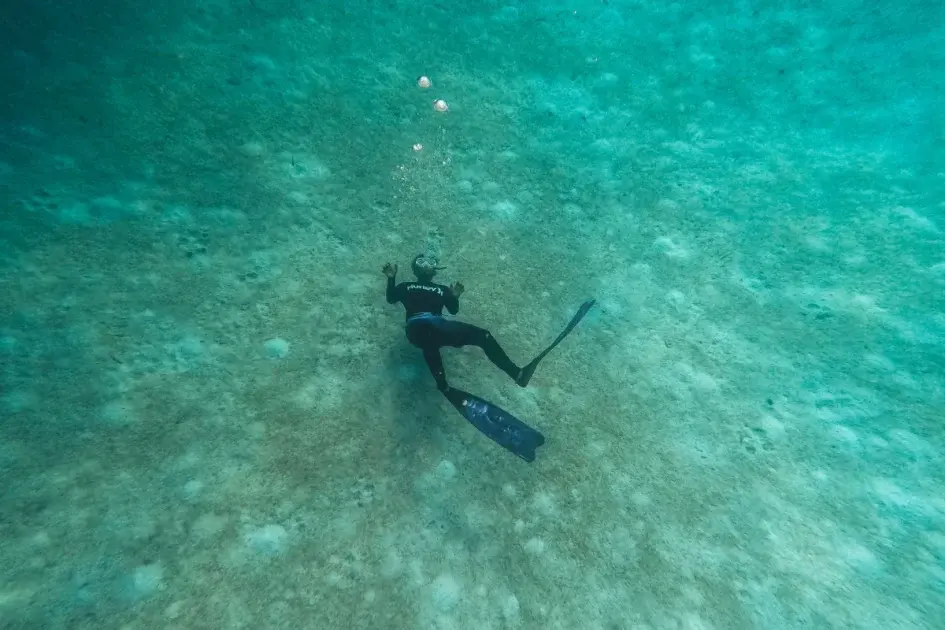
Snorkelling is accessible to anyone who can swim, requires no training and relatively little equipment, and opens a door to an entirely different world from what you see on the beach. Free-diving (apnoea or freediving) is a step up: it requires equalisation technique, breath control and ideally formal training, but allows you to descend to 5, 10 or 15 metres with only a mask, snorkel and fins — revealing rocky crevices, shallow caves and posidonia meadows that surface snorkelling never reaches.
This guide details the best snorkelling and free-diving spots in mainland Portugal, with a focus on the three zones of excellence: the Algarve, Arrábida and Berlenga. For each spot you will find GPS coordinates, average depth, expected visibility, characteristic marine life, difficulty rating and the ideal months to visit.
What Makes Portugal Special for Snorkelling and Free-Diving
Three factors combine to make Portugal's coastline exceptional for shallow underwater exploration:
Coastal Geology
The Algarve coastline is a sequence of caves, arches and cavities carved into golden limestone — the same formation that gave rise to the famous Benagil Cave. Underwater, these structures continue: vertical fissures, walls covered in soft corals, algae and sponges that provide shelter for abundant marine life. At Arrábida, the substrate is white limestone with pronounced slopes and water clarity that, in north-wind conditions, can reach 15 to 20 metres of horizontal visibility. At Berlenga, granite and geological faults create caverns and tunnels that are, quite literally, journeys into the heart of the island under water.
Currents and Temperature
Water temperature is the most important limiting factor. In southern and south-eastern Algarve (Barlavento and Sotavento), the water reaches 22–25°C in August, making snorkelling comfortable without a wetsuit for at least two hours. At Arrábida, North Atlantic upwelling can push temperatures down to 16–18°C even in August, so a 3mm wetsuit is recommended. At Berlenga, the water rarely exceeds 18°C in summer, and a 5mm wetsuit is virtually mandatory for extended free-dive sessions.
Marine Life
Mainland Portugal benefits from the cold Canary Current, which brings nutrient-rich waters and supports denser food chains than warm seas. Common octopus (Octopus vulgaris), Mediterranean moray, conger eel, white sea bream, meagre, common dentex, sea bass, common stingray, short-snouted seahorse, colourful nudibranchs, orange sponges and starfish are among the most frequently encountered species at the spots described here. In summer months, loggerhead sea turtles (Caretta caretta) are occasionally spotted in the Algarve, particularly near beaches with jellyfish populations.
The Best Algarve Spots for Snorkelling and Free-Diving
The Algarve offers the best combination of warm water, visibility and support infrastructure (equipment rental, dive centres, easy access) anywhere in the country.
1. Ponta de Piedade — Lagos
| Detail | Information |
|---|---|
| GPS (kayak entry point) | 37.0648, -8.6679 |
| Snorkelling depth | 0.5 – 6 m |
| Free-dive depth | up to 12 m at outer caves |
| Average visibility | 8 – 15 m (best Jul/Aug) |
| Best months | May to October |
| Snorkelling difficulty | Beginner – Intermediate |
| Free-diving difficulty | Intermediate (local currents) |
Ponta de Piedade is without doubt the most spectacular snorkelling spot in the Algarve, and one of the finest in the entire Iberian Peninsula. The formation of arches, pillars and golden limestone caves that rises 20 metres above the sea continues underwater in vertical walls covered in marine life. The fauna is extraordinarily diverse: octopus hide in crevices, white sea bream and gilt-head bream circle between the columns, and in the more sheltered caves it is possible to find dusky grouper resting in the shadows.
Direct beach snorkel access is limited — the coves are small and the swim from Praia do Pinhão (GPS 37.0722, -8.6733) to the headland is around 800 metres of open water, suitable only for experienced swimmers. The safest and most productive way to explore the area is by kayak or glass-bottom SUP, which allows you to reach the caves without effort and stop wherever you choose to dive. Several operators in Lagos offer this service from around €35–55 per person for 2–3 hour tours. An important note: the deeper interior caves should not be explored in apnoea by untrained divers — tidal action creates in-out currents that can catch out the inexperienced.
For a more complete guide to Lagos and Ponta de Piedade, see our full Lagos guide.
2. Praia do Camilo and Praia de Dona Ana — Lagos
| Detail | Information |
|---|---|
| GPS Camilo | 37.0786, -8.6692 |
| GPS Dona Ana | 37.0821, -8.6700 |
| Snorkelling depth | 1 – 5 m |
| Average visibility | 6 – 12 m |
| Best months | June to September |
| Snorkelling difficulty | Beginner |
| Key marine life | Octopus, white sea bream, gilt-head bream, sea urchins, nudibranchs |
Praia do Camilo and neighbouring Dona Ana are coves sheltered by the cliffs flanking them — which translates, under water, to sand and rock floors with surprisingly good visibility for beaches accessed by cliff staircases. The contact zone between the sandy substrate and the limestone blocks at the base of the cliff walls is an extraordinarily rich microhabitat: octopus hunt crabs, sea urchins cover the rocky surfaces, and white sea bream and gilt-head bream patrol the lower thirds of the water column. There are semi-submerged natural arches that a snorkeller can explore at the surface with clear visibility to the bottom.
Praia do Camilo is particularly well-suited to beginners and families: the water is calm on most summer days, beach access is straightforward, and depth rarely exceeds 3 metres within the first few dozen metres from shore. Praia de Dona Ana is slightly more exposed to the south, which can mean more swell but also more marine life in the lateral rocky sections.
3. Praia dos Três Castelos — Portimão
| Detail | Information |
|---|---|
| GPS | 37.1028, -8.5512 |
| Snorkelling depth | 1 – 7 m |
| Free-dive depth | up to 10 m near the arches |
| Average visibility | 7 – 14 m |
| Best months | June to October |
| Snorkelling difficulty | Intermediate (120 steps of cliff access) |
| Key marine life | Dusky grouper, moray eel, octopus, conger eel, stingray |
Praia dos Três Castelos is one of the most rewarding underwater surprises in the Algarve. Access requires descending around 120 wooden steps carved into the cliff face — which keeps the beach less crowded than its neighbours and, consequently, the marine life more undisturbed. The three rocky arches that give the beach its name extend underwater in limestone walls covered with orange sponges and white soft corals, with fissures sheltering respectably-sized Mediterranean moray eels (Muraena helena) and conger eels that rarely leave their dens during daylight hours.
For free-diving, the outer arches allow descents to 7–10 metres with excellent visibility, revealing the sandy bottom surrounding the base of the rock formations. Common stingrays (Dasyatis pastinaca) are regularly spotted resting on this sand. It is a spot that rewards anyone with even minimal breath-hold capacity — descending just 4–5 metres already reveals what simply does not exist at the surface.
4. Praia da Marinha — Lagoa/Carvoeiro
| Detail | Information |
|---|---|
| GPS | 37.0836, -8.4128 |
| Snorkelling depth | 1 – 4 m (natural rock pools) |
| Free-dive depth | up to 8 m near lateral walls |
| Average visibility | 8 – 18 m |
| Best months | May to October (peak Jul/Aug) |
| Snorkelling difficulty | Beginner (rock pools) / Intermediate (open sea) |
| Key marine life | Octopus, sea urchins, nudibranchs, seahorse, white sea bream, monkfish |
Praia da Marinha is frequently listed among the world's most beautiful beaches — and its underwater reputation is proportional to its surface beauty. The natural rock pools exposed at low tide form isolated microhabitats where marine life concentrates: colourful nudibranchs cover the limestone walls, small fish circulate in dense schools within the depressions, and young octopus hide under blocks that any curious snorkeller can gently lift (and must replace). In open sea, alongside the beach's lateral walls, visibility can reach 18 metres on calm days with northerly winds — exceptional values for the Mediterranean, let alone the Atlantic.
The short-snouted seahorse (Hippocampus hippocampus) has been repeatedly spotted by local divers in the seagrass beds of the more sheltered zones. It is a rare and memorable sighting — do not search actively, but keep your eye on the denser algae patches near the bottom.
For more on the area, read our complete Carvoeiro and Lagoa guide.
5. Praia de São Rafael — Albufeira
| Detail | Information |
|---|---|
| GPS | 37.0809, -8.2837 |
| Snorkelling depth | 1 – 5 m |
| Average visibility | 6 – 12 m |
| Best months | June to September |
| Snorkelling difficulty | Beginner – Intermediate |
| Key marine life | Octopus, white sea bream, gilt-head bream, small squid, starfish |
Praia de São Rafael is a small 250-metre cove flanked by limestone formations that, at their interface with the sea, create cavities and ledges where marine life accumulates. It is one of the easiest beaches in Albufeira for independent snorkelling: the water is generally calm, the depth is gradual, and equipment hire is available from the beach concession. Formations of small squid (Alloteuthis subulata) appear at dusk in the rocky zones — an unusual but documented spectacle for late-afternoon snorkellers (with enough daylight remaining).
For a broader view of Albufeira's beaches, see our complete Albufeira guide.
The Best Arrábida Spots for Snorkelling and Free-Diving
The Professor Luís Saldanha Marine Park, surrounding the Arrábida coast near Setúbal, is the most important marine protected area in mainland Portugal. Covering 52 km², it is a reservoir of biodiversity including more than 1,100 identified species — many of them accessible to snorkellers and free-divers.
6. Portinho da Arrábida — Setúbal
| Detail | Information |
|---|---|
| GPS | 38.4833, -8.9833 |
| Snorkelling depth | 1 – 8 m |
| Free-dive depth | up to 15 m near outer limestone walls |
| Average visibility | 10 – 20 m (with northerly winds) |
| Best months | July to September (most stable) |
| Water temperature | 16 – 20°C (wetsuit recommended) |
| Snorkelling difficulty | Beginner – Intermediate |
| Free-diving difficulty | Intermediate – Advanced (cold, depth) |
| Key marine life | Sea fans, sponges, octopus, white sea bream, sea bass, dusky grouper, conger eel |
Portinho da Arrábida is the reference snorkelling spot north of Lisbon. The transparent water — a result of the marine park's full protection and exposure to northerly winds that suppress suspended sediment — offers visibility that frequently rivals renowned Mediterranean destinations. The white limestone walls that descend from the cliffs continue underwater with slopes of 40–60°, covered in sea fans (Eunicella verrucosa), sponges of various shapes and colours, and feather worm colonies that expand when undisturbed.
For free-diving, the most productive approach is to swim out from the cove towards the lateral rocky extremities, where depth increases rapidly and the marine life is more undisturbed. A 3–5mm wetsuit is essential: the cold water can trigger hyperventilation and loss of apnoea control in beginners. Never dive alone at Arrábida.
Read our full Setúbal and Arrábida guide for logistics, car parks and summer access restrictions.
7. Praia dos Galapinhos — Setúbal
| Detail | Information |
|---|---|
| GPS | 38.4706, -8.9544 |
| Snorkelling depth | 1 – 6 m |
| Average visibility | 8 – 18 m |
| Best months | July to September |
| Snorkelling difficulty | Intermediate (no facilities; capacity 600 people) |
| Key marine life | Octopus, sea urchins, white sea bream, seahorse (rare), shallow sea fans |
Galapinhos is considered the most beautiful beach in Portugal by many ecotourism specialists — and it retains that status underwater. With a capacity limited to 600 people, no beach bar and no showers, only those willing to walk or take the shuttle bus arrive here. The result is a cove with clarity and marine life that is hard to find at a higher-footfall beach. The lateral rock walls of the beach, reachable by swimming 3–5 minutes from the sand, reveal shallow sea fans at 2–3 metres of depth — unusually close to the surface for this species.
Berlenga: Portugal's Most Exclusive Free-Diving Spot
8. Praia da Berlenga and the Blue Cave — Berlenga Island, Peniche
| Detail | Information |
|---|---|
| GPS (island) | 39.4089, -9.5094 |
| Snorkelling depth | 1 – 5 m (beach zone) |
| Free-dive depth | up to 20 m (outer zones) |
| Average visibility | 15 – 25 m (exceptional) |
| Water temperature | 15 – 18°C (5mm wetsuit mandatory) |
| Best months | July to September |
| Snorkelling difficulty | Intermediate (cold; ferry access only) |
| Free-diving difficulty | Advanced (cold, currents, depth) |
| Key marine life | Lobster, giant octopus, dusky grouper, conger, moray, sea bass, bream, common dentex |
Berlenga Island is in a class of its own for Portuguese snorkelling. A Nature Reserve since 1981, with access controlled by the mandatory ICNF Berlengas Pass (€3 per adult, berlengaspass.icnf.pt, with a daily limit of 550 visitors), the island has maintained a marine community that, in terms of intactness, is unique in mainland Portugal. Visibility can reach 25 metres — figures that belong to Pacific or Red Sea diving guides, and which are a reality here in the North Atlantic.
The Blue Cave (Gruta Azul) and the Dream Cave (Gruta do Sonho) can be visited on glass-bottom boat tours or by kayak — but snorkelling at the cave entrances, where the light shifts from deep blue to turquoise depending on the time of day, is one of the most memorable experiences Portugal has to offer. The underwater tunnels connecting granite chambers are within reach of free-divers with 15–25 metre apnoea capacity: they are shallow passages (4–6 metres maximum depth) but require confidence and experience, as the exit may not be immediately visible.
See our complete Berlenga Island guide to plan your trip, including ferry operators, the ICNF pass system and the historic fort.
Essential Safety Guidelines for Snorkelling and Free-Diving
Snorkelling and free-diving are low-risk activities when practised with knowledge — and carry real risk when approached carelessly. The following rules summarise the most important safety principles:
- Never dive alone. Hypoxic blackout (loss of consciousness from oxygen deficiency during apnoea) can occur without warning, especially after hyperventilation. An observing buddy is indispensable for any breath-hold diving.
- Never hyperventilate before diving. Hyperventilation artificially reduces the urge to breathe without increasing oxygenation — and can cause underwater loss of consciousness. Breathe normally before each dive.
- Respect lifeguard flags and instructions. At many Algarve beaches, snorkelling is permitted only outside the marked bathing zones.
- Wear a wetsuit in Arrábida and Berlenga waters. The cold (16–18°C) increases energy consumption, shortens breath-hold time and can trigger thermal shock.
- Do not touch marine life. Beyond conservation concerns, sea urchins cause painful injuries, moray eels bite when provoked, and some sponges and algae are irritating.
- Check weather and sea conditions. The Windy app and the Portuguese Environment Agency website (ipma.pt) provide swell forecasts up to 5 days ahead. Avoid any snorkelling with wave height above 1.5 metres.
- Use a surface marker buoy (SMB). An orange snorkel buoy on the surface makes you visible to vessels, particularly in the access channels to more remote beaches.
Spot Comparison Table
| Spot | Region | Difficulty | Visibility | Wetsuit | Best Month |
|---|---|---|---|---|---|
| Ponta de Piedade | Algarve | Beginner / Intermediate | 8–15 m | Optional (>3mm) | Jul–Aug |
| Camilo / Dona Ana | Algarve | Beginner | 6–12 m | Optional | Jun–Sep |
| Três Castelos | Algarve | Intermediate | 7–14 m | Recommended 3mm | Jun–Oct |
| Praia da Marinha | Algarve | Beginner / Intermediate | 8–18 m | Optional | Jul–Aug |
| São Rafael | Algarve | Beginner | 6–12 m | Optional | Jun–Sep |
| Portinho da Arrábida | Arrábida | Intermediate / Advanced | 10–20 m | Required 3–5mm | Jul–Sep |
| Galapinhos | Arrábida | Intermediate | 8–18 m | Recommended 3mm | Jul–Sep |
| Berlenga | Central Coast | Advanced | 15–25 m | Required 5mm | Jul–Aug |
Equipment: What to Bring for Snorkelling and Free-Diving in Portugal
For basic snorkelling, essential equipment is simple and affordable:
- Mask: choose a silicone mask with a frame that fits your face well. Hard plastic masks with rubber seals are less effective and more likely to leak. Test in the shop: press the mask against your face without the strap and inhale through your nose — it should stay attached.
- Snorkel: a simple tube with an anti-flood valve is sufficient for surface snorkelling. For free-diving, prefer a tube without a valve — valves interfere with equalisation.
- Fins: for surface snorkelling, short plastic fins are adequate. For free-diving, long fins (carbon fibre or fibreglass for more serious free-divers) multiply the efficiency of each leg kick.
- Wetsuit: 1–2mm in the Algarve in August; 3mm for Arrábida; 5mm for Berlenga at any time.
- Snorkel buoy (SMB): orange, surface-deployed, strongly recommended at any spot with boat traffic.
Most tourist Algarve beaches have mask and snorkel hire at reasonable prices (€5–10/day). At Berlenga, no equipment hire is available on the island — bring your own.
FAQ — Frequently Asked Questions
What is the best month for snorkelling in Portugal?
July and August offer the best combination of visibility, water temperature and calm sea conditions, particularly in the Algarve (22–25°C). June and September are excellent alternatives with fewer crowds at the beaches. At Arrábida and Berlenga, August is the most stable month, but the water remains cold (16–18°C) throughout the summer.
Do I need training to go snorkelling?
No — anyone who can swim can surface-snorkel without training. For free-diving (breath-hold descents below 3 metres), it is strongly recommended to complete at least an introductory free-diving course (AIDA1 or equivalent), which teaches safe equalisation, breathing technique and anti-blackout safety rules. Contact dive centres in Lagos, Portimão or Sesimbra.
Can I hire snorkelling equipment at Algarve beaches?
Yes — most Algarve beaches with beach concessions offer mask and snorkel hire at €5–10 per day. At more remote beaches (Três Castelos, Marinha), hire may not be available on-site, so it is recommended to bring your own equipment.
Can I snorkel inside Benagil Cave?
Since August 2024, Maritime Authority Notice 019/2024 prohibits swimming and snorkelling inside Benagil Cave. Access is permitted only by licensed boat or kayak, with no entry to the interior beach or swimming inside the cave. Fines are €2,500. The outer area in front of the cave is accessible to snorkellers without restriction.
What marine life can I expect to see while snorkelling in the Algarve?
The most common sightings include common octopus, white sea bream, gilt-head bream, salema, bogue, moray eel (in rock crevices), conger eel, sea urchin, starfish, shrimp and nudibranchs. With luck and good visibility, it is possible to see dusky grouper, sea bass, common stingray and occasionally seahorse. Loggerhead sea turtles (Caretta caretta) are sporadically spotted in the Algarve from August to October.
Conclusion: Portugal Is a World-Class Shallow-Diving Destination
Whether you are a first-timer wanting to see a wild octopus at arm's length in an Algarve cove, or an experienced free-diver seeking perfect visibility in Berlenga's granite tunnels, Portugal has a spot at your level. The diversity of ecosystems — from Carvoeiro's shallow natural pools to Arrábida's sea fan walls, and Lagos's turquoise cave interiors — places the country in a tier of shallow diving destinations that deserves far greater recognition than it currently receives.
The formula for the best experience is straightforward: visit between July and September, bring or hire appropriate equipment, and never dive alone. The ocean does not forgive carelessness — but it rewards generously those who respect it.
Explore more of our favourite beaches: Sesimbra and the Saldanha Marine Park, the complete Arrábida guide, and the best beaches in the Algarve.