Praia da Falésia is, without exaggeration, one of the most breathtaking beaches in the world. In 2026, TripAdvisor confirmed what visitors had known for years: this broad sweep of golden sand in the heart of the Algarve, framed by towering cliffs of ochre and deep red that plunge straight to the sea, ranks 5th in the world on the Travellers' Choice Awards — and 3rd in Europe. Over several summers, we have walked the full 6-kilometre length of Falésia beach from end to end. In this complete guide, we share everything you need to know before visiting: how to get there, where to park, what to expect in each section, and the insider details that only those who know the Algarve well tend to share.
What Makes Praia da Falésia Unique in the Algarve
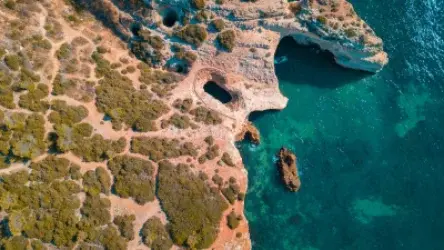
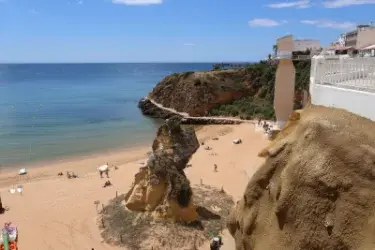
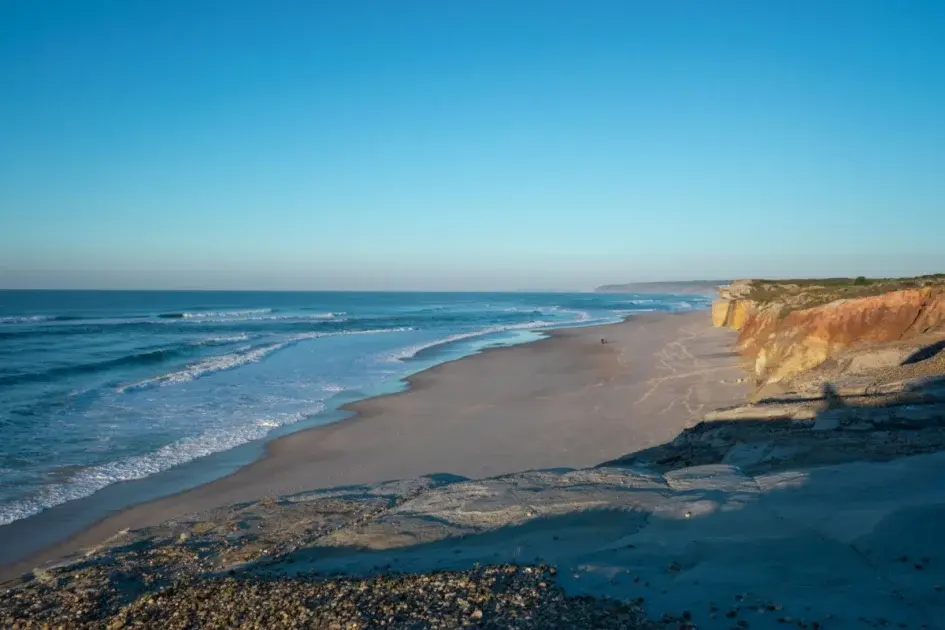
There are beautiful beaches all over the Algarve — and this site has many of them catalogued — but Falésia belongs to a category of its own. Its most striking feature is the red and ochre clay cliffs that accompany the beach along its entire length, reaching over 30 metres in height at certain points. The contrast between the deep red of the rock, the golden fine sand and the intense blue of the Atlantic creates a colour palette that very few places in the world can replicate.
The beach stretches for approximately 6 km, between the Olhos de Água area to the west and the Vilamoura marina to the east. This length means that even during the peak summer months, it is always possible to find a quieter corner by walking a few minutes away from the main access points. The sand is fine and light golden, and the sea presents relatively calm conditions by Atlantic standards — making it suitable for families with children.
Unlike many Algarve beaches wedged between rocky headlands, Falésia offers a south-south-westerly orientation that guarantees sunshine from morning until sunset. The cliffs also act as a natural windbreak in the sections closest to their base, which is a significant advantage on summer afternoons when the sea breeze comes in from the ocean.
Location and How to Get to Praia da Falésia
Praia da Falésia is located in the municipality of Albufeira, specifically between the village of Olhos de Água to the west and the Vilamoura marina (municipality of Loulé) to the east. The GPS coordinates for the main access point are 37.0883° N, 8.1705° W.
By Car
From Albufeira, head towards Olhos de Água and follow signs for the Sheraton Hotel or Aldeia da Falésia. The drive takes about 15 minutes. The most reliable GPS address is: Rua da Falésia, Aldeia da Falésia, Olhos de Água, Albufeira. There is also access from the road linking Vilamoura to the beach — useful if you are coming from Faro or the airport.
By Bus
The Vamus bus company operates line no. 8 between Albufeira bus station and Praia da Rocha Baixinha, stopping at Praia da Falésia in approximately 20 minutes. This is an excellent alternative during peak months to avoid parking issues.
Parking
There are two main parking areas in the vicinity:
- Free car park at the top of the cliffs (GPS: 37.08832, -8.17053) — the largest, with space for several dozen vehicles. Free of charge, but fills quickly in July and August. We recommend arriving before 9:30am on weekdays and before 9am at weekends.
- Secondary car park at the base of the cliffs (GPS: 37.09547, -8.18154) — around 43 spaces, closer to the sand but with more limited access.
- On-street parking — on the roads leading to the beach, but with very limited availability during high season.
Outside peak season (October to May), parking is not an issue — there is plenty of space at all access points.
The Different Sections of the Beach
With 6 km of length, Praia da Falésia is not really one beach — it is almost a miniature coastline, with different atmospheres and visitor numbers depending on the section.
Western Sector — Olhos de Água
The section closest to Olhos de Água is the busiest, with full beach support facilities (bar, showers, toilets, sun lounger and parasol rental). This is where families with children and hotel guests from nearby properties such as the Sheraton and Jardins da Falésia tend to congregate.
Central Sector
The heart of the beach, accessible via Rua Infante Dom Henrique, is where the cliffs reach their greatest visual impact. This is the most photographed section — the red clay walls create a dramatic frame that is particularly beautiful in the late afternoon when the sun illuminates them from the front. Visitor numbers here are moderate and beach support is available.
Eastern Sector — Vilamoura
As you walk towards Vilamoura, the beach gradually becomes quieter. There are no beach support facilities at this eastern end, but the reward is peace and a greater sense of isolation. Ideal for those who prefer a wilder experience.
Swimming Season, Lifeguards and Safety
The official bathing season at Praia da Falésia runs from June to September, during which lifeguards are stationed at the main sections from 9am to 7pm. Outside the bathing season, the beach remains accessible but without supervision.
The sea at Falésia is relatively calm for the Algarve, with moderate swell. Nevertheless, as on any Portuguese beach, it is essential to respect the flag system:
- Green flag — calm sea, swimming permitted
- Yellow flag — rough sea, swim with caution
- Red flag — swimming prohibited
- Blue-and-white chequered flag — beach temporarily unsupervised
For more detailed information on beach safety and flag meanings, read our Complete Guide to Beach Safety in Portugal.
One important safety consideration: the cliffs are subject to erosion and rockfalls, particularly after periods of heavy rain. Never stand or sit close to the base of the cliffs, and never attempt to climb them. A minimum safety distance of 10 metres from the base of the cliffs is strongly recommended.
Things to Do at Praia da Falésia and Surroundings
Photography
Falésia is one of the most rewarding photography spots in Portugal. Morning light casts dramatic shadows across the cliffs, while in the late afternoon the setting sun bathes the red rock in an extraordinary golden glow. For landscape photographers, the central section of the beach, where the cliffs are most vertical, offers the most impactful compositions. See our Photography Guide to Portugal's Beaches for equipment tips and lighting schedules.
Snorkelling and Swimming
The waters at Falésia are relatively clear and, in the rocky areas at either end of the beach, it is possible to spot small fish and marine flora. For a richer snorkelling experience, the beaches of Olhos de Água and the coastal stretch towards Forte de São João have more interesting rocky seabeds.
Walking Along the Coast
One of the most rewarding activities at Falésia is simply walking the full length of the beach from one end to the other — 6 km in one direction, 12 km round trip. For those who prefer the clifftop paths, there are informal trails along the cliff edges with stunning views over the sea. Read our Guide to Coastal Hiking Trails in Portugal for more structured routes in the region.
Nearby Beaches
A few minutes from Falésia lies a constellation of other notable beaches. Praia de Olhos de Água, with its rocks and natural pools, is a more sheltered alternative. For beaches with a more secret character in the Algarve, we suggest our article on the Secret Beaches of the Algarve.
The Best Time to Visit
The Algarve has some of the best weather conditions in Europe, with over 300 days of sunshine per year. For Praia da Falésia specifically, our recommendation is:
- June and September — the best months. Air temperatures between 24–28°C, a warm sea (21–23°C), considerably fewer crowds than July and August, and a late sunset. This is our personal preference after several Algarve summers.
- July and August — full high season. Maximum temperatures, warmest sea, but also maximum crowds. The car park fills before 10am. Arrive early or come by bus.
- May and October — excellent for hiking and photography. The sea may be cool (17–19°C), but the atmosphere is unbeatable. The cliffs look particularly beautiful in autumn light.
- Winter (November to March) — the beach is almost deserted and the cliffs reveal their full grandeur without the distraction of summer crowds. Air temperatures hover around 15–18°C. Read our guide to the best beaches in the Algarve for more inspiration.
Accommodation Near Praia da Falésia
The surrounding area has a good range of accommodation for all budgets:
- Luxury hotels: The Sheraton Algarve at Pine Cliffs Resort is the most iconic, with direct cliff-lift access to the beach. Jardins da Falésia also enjoys a privileged location.
- Apartments and villas: Albufeira and Olhos de Água offer plenty of self-catering apartments at more accessible prices, a 10–20-minute drive from the beach.
- Budget options: Albufeira has a range of hostels and guesthouses for travellers on tighter budgets.
Frequently Asked Questions about Praia da Falésia
Does Praia da Falésia have a Blue Flag?
Yes. Praia da Falésia regularly holds the Blue Flag certification, an international award recognising water quality, facilities and environmental management. To check the updated status for the 2026 bathing season, visit the ABAE website (abae.pt).
Is Praia da Falésia suitable for children?
Yes, especially the western sector near Olhos de Água, where the sea is calmer and full beach support including lifeguards is available. The cliffs add a visual element that children love, but it is essential to keep them well away from the base of the rocks at all times.
What is the difference between Praia da Falésia and Praia de Olhos de Água?
Technically they are contiguous beaches — Praia de Olhos de Água is the westernmost sector of Falésia, with direct access to the village of Olhos de Água and rockier seabeds ideal for snorkelling. Praia da Falésia proper is the stretch to the east, dominated by the wide sandy expanse and the tallest sections of cliff.
Why does TripAdvisor rank Praia da Falésia among the best beaches in the world?
The TripAdvisor Travellers' Choice Awards are based on the volume and quality of user reviews over a 12-month period. Falésia has accumulated thousands of highly positive reviews from visitors around the world, who consistently highlight the visually unique combination of cliffs, sand and sea, the quality of the water, and the available facilities. In 2024 it was ranked the best beach in the world; in 2026 it placed 5th globally and 3rd in Europe.
Can you walk from Albufeira to Praia da Falésia?
Yes, there is a coastal path linking Albufeira town centre to the Olhos de Água area and Falésia beach, covering around 5–6 km. It is a fairly challenging walk in some sections, but offers magnificent views of the Algarve coast. Consult our coastal hiking trails guide for more details on the route.
Conclusion: Does It Live Up to the Hype?
After visiting it repeatedly over the years, our answer is an unqualified yes. Praia da Falésia belongs to that rare category of places that exceed expectations even for those who arrive with already high ones. The combination of vertiginous cliffs, seemingly endless sand, luminous sea and reasonable accessibility makes it an unmissable visit for any trip to the Algarve. The secret is to go outside the peak — in June, September, or even on an October morning — to find the beach in its purest form, without the summer crowds that its fame inevitably attracts in August. Explore the other beaches of the Algarve in our complete directory.
- Location: Olhos de Água / Albufeira, Algarve
- Length: ~6 km
- Main access GPS: 37.0883° N, 8.1705° W
- Bathing season: June to September (lifeguards 9am–7pm)
- Parking: free but fills fast in peak season — arrive before 9:30am
- Best time to visit: June and September
- Recognition: 5th best beach in the world, TripAdvisor 2026