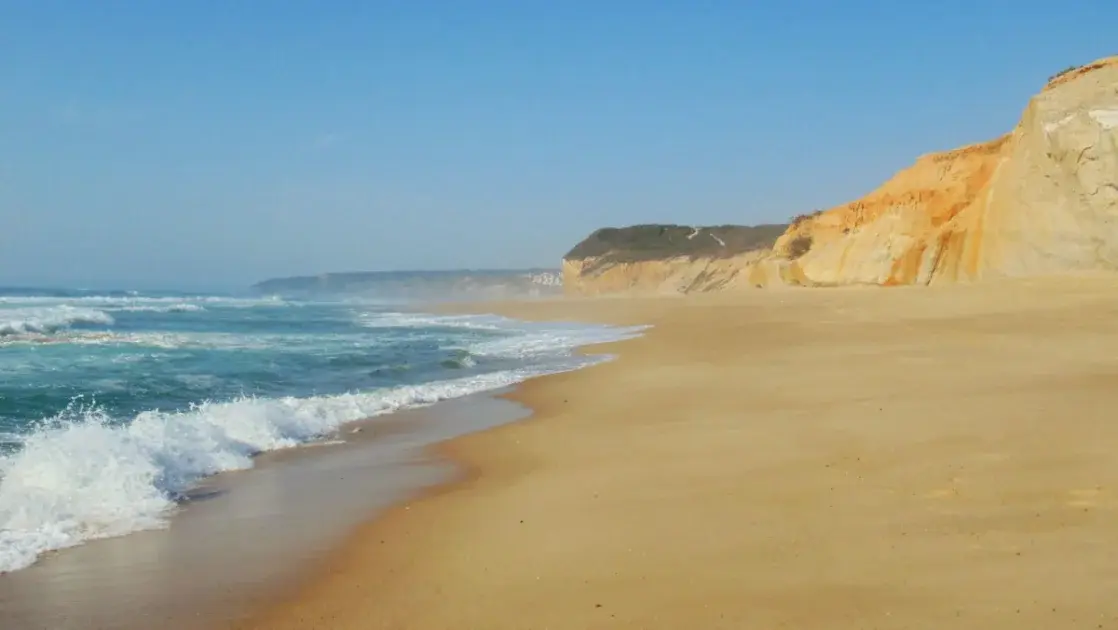
Portugal has some of the most beautiful beaches in Europe — and some of the most demanding. The North Atlantic, which washes the entire Portuguese mainland coast, is an ocean with character: unpredictable currents, Atlantic swell that can reach Portugal even on seemingly calm days, and rapid shifts in conditions that catch even experienced swimmers off guard.
In April 2026, Portugal's national lifeguard federation issued an alert about a critical period at the start of the bathing season: beaches still without lifeguard cover, inviting air temperatures, and many people eager to swim — a combination that historically concentrates a disproportionate number of accidents. This guide is designed to ensure you arrive at Portuguese beaches prepared, informed and safe.
The Portuguese Beach Flag System
In Portugal, all managed beaches are legally required to display a flag system that communicates sea safety conditions to bathers. This system is regulated by the Portuguese Environment Agency (APA) and is uniform across the entire country — mainland and islands alike.
Green Flag — Swimming Permitted
The green flag indicates that sea conditions are favourable for swimming and that the rescue post is active with a lifeguard on duty. The sea can still be rough under a green flag — the signal indicates that supervision is active, not that conditions are perfectly calm.
- Swimming authorised for all bathers
- Lifeguard on duty at the rescue post
- Always swim within the demarcated bathing zone (between the red-and-yellow striped flags)
Yellow Flag — Caution: Conditional Swimming
The yellow flag is the signal that most often confuses international visitors used to different systems. In Portugal, the yellow flag does not prohibit swimming — it indicates conditions that require caution: rough seas, lateral currents, reduced visibility or other moderate-risk factors.
- Swimming permitted with increased caution
- Children must always be accompanied by adults
- Less experienced swimmers should avoid moving away from the shoreline
- Lifeguard remains on duty
Red Flag — No Swimming
The red flag is unambiguous: absolute prohibition on entering the water for swimming. This includes the surf zone. The red flag is raised when conditions represent a serious risk to bathers — waves exceeding 1.5 metres at breaking point, identified rip currents, storm conditions or a warning from the Portuguese Sea and Atmosphere Institute (IPMA).
- Absolute ban on swimming — no exceptions
- Applies even to experienced swimmers
- Ignoring a red flag at a supervised beach may result in a fine
Chequered Flag (Black and White) — No Lifeguard on Duty
The chequered flag (black and white squares) indicates the beach does not currently have a lifeguard on duty. This may occur because the beach is outside the official bathing season, because the lifeguard is on a mandatory legal break, or because the beach is unmanaged. It is not an assessment of sea conditions — it is a warning of the absence of supervision.
- No organised rescue service in case of accident
- Bathers enter the water entirely at their own risk
- Always assess the risk carefully before swimming without a lifeguard present
Red and Yellow Striped Flags — Demarcated Bathing Zone
These flags, placed in pairs along the waterline, mark the recommended bathing zone — the corridor patrolled by the lifeguard. Swimming within this zone is always the safest choice, regardless of the main flag flying.
Rip Currents: The Greatest Danger on Portuguese Beaches
Rip currents — known in Portuguese as correntes de retorno or agueiros — are the leading cause of drowning at open beaches. In Portugal, they are estimated to be responsible for 80% of bathing-related drowning deaths.
What Is a Rip Current?
A rip current is a narrow channel of fast-moving water flowing away from the shore, cutting through the breaking wave line. It forms when water accumulated along the shoreline by wave action needs to return to sea, concentrating at a point of least resistance — typically beside rocks, piers, breakwaters or in areas of varying sand depth.
A rip current can reach speeds of 2 to 3 metres per second — faster than any Olympic swimmer can swim against. This is why attempting to swim directly back to shore against a rip current is always the wrong decision.
How to Recognise a Rip Current
Before entering the water, always observe the beach for a few minutes from an elevated position. Visual signs of a rip current include:
- A strip of water with a different colour — typically darker, murkier or brownish, running perpendicular to the shore
- Foam or debris moving rapidly away from shore in a narrow line
- Smaller or absent waves in a strip between two more active breaking zones
- Surface agitation in a narrow corridor contrasting with the calmer water alongside
In foggy or poor-visibility conditions, the lifeguard is your best source of information — always ask before entering the water.
What to Do If You Get Caught in a Rip Current
This is the most important information in this guide. If you find yourself caught in a rip current:
- Do not panic. Panic leads to physical exhaustion, which is the actual cause of drowning — not the current itself.
- Do not try to swim against the current towards shore. It is impossible to out-swim a rip current head-on. This mistake accounts for a large proportion of deaths.
- Swim parallel to the shoreline (sideways) for 30 to 50 metres, until you exit the narrow current channel. Rip currents are narrow — swimming sideways is always effective.
- Once clear of the current, swim diagonally back towards the beach, using the breaking waves to assist you.
- If you cannot swim sideways, allow the current to carry you beyond the breaking wave line, where it loses force, and only then swim laterally and return to shore.
- Wave your arms and call for help if you are in difficulty. Lifeguards are trained for exactly this scenario.
Bathing Season Rules in Portugal
The official bathing season in Portugal runs, as a general rule, from 15 June to 15 September on the mainland, although some municipalities extend this period. Outside this window, most managed beaches do not have a lifeguard on duty, though access remains permitted entirely at bathers' own risk.
General Rules at Supervised Beaches
- Swim only within the demarcated zone (between the red-and-yellow striped flags)
- Obey the lifeguard's instructions — their orders carry legal force
- Do not use inflatable equipment (airbeds, large rings) outside the bathing zone
- Watersports (jet-skiing, surfing, bodyboarding) are prohibited in the bathing zone
- Never leave children unattended near the water
- Excessive alcohol consumption is prohibited — intoxication is a major risk factor in drownings
Lifeguards: Who They Are and What They Do
Lifeguards on Portuguese beaches are certified professionals trained in first aid, cardiopulmonary resuscitation (CPR) and water rescue techniques. Every rescue post is equipped with emergency equipment: a stretcher, an automated external defibrillator (AED), oxygen therapy supplies and direct communication with INEM (the National Medical Emergency Institute).
The emergency number in Portugal is 112. At beaches with an active rescue post, go directly to the post in any emergency.
Safety Tips by Swimmer Type
Children and Toddlers
- Children under 6 should never be left without physical supervision near the water, even in shallow surf
- Approved life jackets are recommended for children who cannot swim
- Teach children to identify the lifeguard and locate the rescue post as soon as you arrive at the beach
- Choose low-swell beaches for young children: see our family beach guide
Experienced Adult Swimmers
- Pool experience does not equal ocean experience — the Atlantic has currents and swell that pools cannot simulate
- Never enter the sea after a heavy meal or under the influence of alcohol
- At surf beaches (Nazaré, Peniche, Costa Vicentina), currents can be particularly intense — always assess conditions before entering
- Respect surf-zone signage — surfboard zones and swimming zones are separated for safety reasons
International Visitors
- The Portuguese flag system is similar to the European standard but not identical — read this guide before entering the water
- Ocean temperatures in Portugal are colder than the Mediterranean — hypothermia can occur after prolonged exposure, especially in the North
- Atlantic waves in Portugal carry more energy than typical Mediterranean waves — even apparently small waves can be dangerous in the surf zone
Water Quality and Blue Flag Beaches
Beach safety in Portugal also encompasses water quality. Portugal consistently ranks among the highest in Europe for bathing water quality: in 2025, over 95% of monitored beaches were rated "Excellent" or "Good" by the European Environment Agency.
Beaches awarded the Blue Flag meet even stricter criteria covering water quality, environmental management, safety infrastructure and visitor information. See our complete guide to Blue Flag beaches in Portugal to find the distinguished beaches near you.
Beaches Without Lifeguards: Essential Precautions
Portugal has hundreds of beaches — many of them without permanent lifeguard cover, particularly outside the official bathing season, on the islands, and in remote coastal areas. If you choose to visit an unsupervised beach:
- Always tell someone where you are going and your expected return time
- Never enter the water alone
- Check wave and wind forecasts on the IPMA website (ipma.pt) before setting out
- Avoid unsupervised beaches on days with swell exceeding 1.5 metres
- Carry a fully charged mobile phone — the emergency number is 112
- At beaches with difficult access, always have an alternative exit plan
FAQ — Beach Safety in Portugal
What does the yellow flag mean on a Portuguese beach?
In Portugal, the yellow flag indicates conditional swimming — you are permitted to enter the water, but with caution. Conditions present some risk (rough seas, lateral current or reduced visibility). Children must always be accompanied by adults, and less experienced swimmers should avoid venturing away from the shoreline. This differs from some countries where a yellow flag prohibits swimming entirely.
How do I spot a rip current before entering the water?
Observe the beach from an elevated position for a few minutes. A rip current appears as a strip of darker, murkier or brownish water running perpendicular to the shore, sometimes with foam or debris moving rapidly seaward. Waves in that strip are smaller or absent, in contrast with the active breaking surf on either side. When in doubt, ask the lifeguard before entering.
What should I do if a child goes missing on the beach?
Go immediately to the beach rescue post — lifeguards have specific protocols for missing children and coordinate with police authorities. At beaches without a rescue post, call 112 immediately. As a precaution, always establish a meeting point with children as soon as you arrive at the beach.
Do beaches on the islands (Azores and Madeira) have different rules?
The flag system is the same, but sea conditions differ significantly. On beaches in the Azores and Madeira, currents can be more unpredictable and swell more intense than at equivalent mainland beaches. Many black-pebble (basalt) beaches feature dangerous shoreline dumping surf — always pay close attention to local guidance and information boards.
Is a life jacket compulsory for water activities?
Yes — in Portugal, a certified life jacket is compulsory on all recreational craft, including kayaks, SUPs and canoes, when used outside the designated bathing zone. The requirement applies particularly to children and non-swimmers. Consult the Maritime Authority regulations for specific requirements by craft type.
Conclusion
Portugal's beaches are one of the country's greatest natural treasures — and they deserve to be enjoyed safely and responsibly. The Atlantic is not an enemy, but it is an ocean with its own rules that are worth knowing. Understanding the flag system, recognising a rip current and knowing how to act in an emergency are skills that can literally save lives.
Before visiting any beach, explore our complete Portuguese beach directory, where every listing includes information on lifeguard cover, water quality and safety facilities. To choose the right beach for your family, see also our guide to family beaches in Portugal.