Where to See Whales and Dolphins in Portugal From Land (2026 Guide)
Every summer we hear the same question from travelers planning a coastal holiday in Portugal: "is it worth paying for a boat trip just to see dolphins?" More often than you'd think, the answer is that you don't even need to leave dry land. Anyone who has spent an afternoon on the cliffs at Sagres, binoculars in hand, knows that the Portuguese coast offers some of the best land-based cetacean-watching in all of continental Europe — free of charge, without a boat engine disturbing the animals, and often rewarding patience more than luck.
This guide rounds up the onshore spots with consistent sighting records, the species you can realistically expect to see off the Portuguese coast, the season and sea conditions that improve your odds, and the rules that protect sensitive populations — like the resident dolphins of the Sado Estuary, subject in 2026 to seasonal boat-traffic restrictions during August. The goal is simple: help you plan a responsible, well-informed watch with realistic expectations, no boat booking required.
Which Species Can You Actually See Off the Portuguese Coast?
Mainland Portugal sits on a migratory corridor used by several cetacean species throughout the year, linking cold North Atlantic waters to feeding and breeding grounds further south. Not all of them are equally visible from shore — generally, the larger and closer to the coastline a species travels, the better your chances.
| Species | Scientific name | Frequency from land |
|---|---|---|
| Common dolphin | Delphinus delphis | Frequent, especially in the Algarve |
| Bottlenose dolphin | Tursiops truncatus | Frequent; resident population in the Sado |
| Harbour porpoise | Phocoena phocoena | Occasional, more common up north |
| Minke whale | Balaenoptera acutorostrata | Occasional |
| Fin whale | Balaenoptera physalus | Occasional, usually further offshore |
| Risso's dolphin | Grampus griseus | Rare |
| Orca | Orcinus orca | Rare |
| Humpback whale | Megaptera novaeangliae | Rare, autumn migration |
| Sperm whale | Physeter macrocephalus | Very rare from land |
Common dolphins and bottlenose dolphins are by far the easiest to spot without a boat, since they hunt closer to shore. The larger whales tend to stay further out, so the height and vantage of your viewing spot make a real difference.
Sagres and Cabo de São Vicente: Continental Europe's Best Land-Based Cetacean Lookout
If you can only pick one destination for land-based watching, make it the Sagres peninsula. The cliffs of the Sagres Fortress and, especially, the Cabo de São Vicente headland — continental Europe's most south-westerly point — sit above a natural migratory corridor, the same one that already makes this region one of Europe's most important spots for migrating seabird watching, as we cover in our complete Sagres guide.
Exactly where to stand
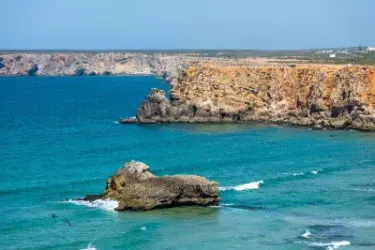
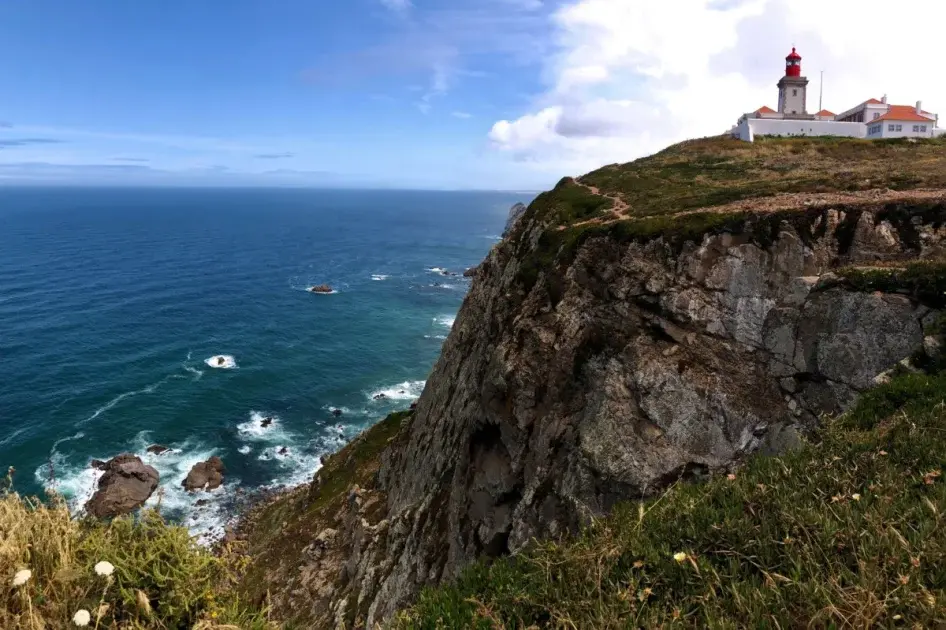
The best spots are the elevated areas around the Cabo de São Vicente lighthouse and the cliffs west of the Sagres Fortress, both offering unobstructed views for miles out to the horizon. The cliff height (up to around 60 meters in places) is a genuine advantage: the higher your vantage point, the more sea surface you can scan, and the easier it is to catch a whale's blow or a dolphin pod breaching before they come closer.
Best time of year
Sightings are possible year-round at Sagres, but September and October stand out as the most productive months, coinciding with the autumn migration and the region's well-known seabird-watching season — both driven by the same nutrient-rich coastal current. Calm mornings with a flat sea are always better than days with strong nortada winds, which make it hard to tell a blow or a fin from wave foam.
The Sado Estuary: Portugal's Only Resident Dolphins
Unlike the migratory species seen at Sagres, the Sado Estuary near Setúbal is home to a group of bottlenose dolphins that live there year-round — Portugal's only resident cetacean population, and one of just three known resident populations in the whole of Europe. As of 2026, the group numbers around 26 individuals, several over 40 years old, alongside calves born in recent years that researchers continue to identify and track, confirming the group has remained stable.
Land-based watching is entirely possible around the estuary, notably from the Doca do Outão, the Arrábida mountain viewpoint overlooking the bay, or even during the Setúbal–Tróia ferry crossing, which passes through part of the area the group frequents. To explore the wider region around the estuary, see our Setúbal and Arrábida guide.
Why boat traffic is restricted in August
In recent summers, Portugal's nature conservation authority, ICNF (Instituto da Conservação da Natureza e das Florestas), has temporarily banned tourist boat navigation and dolphin-watching trips in a defined zone near the mouth of the Sado Estuary during August — precisely the month with the highest number of beachgoers and boat traffic in the region. The measure aims to ease pressure on a small population that is sensitive to noise and repeated boat presence near the areas where it feeds and rests. Because this is a seasonal measure updated annually, always check current ICNF notices before planning a boat excursion here — but it in no way rules out responsible land-based watching, which is actually a stronger low-impact alternative at exactly this time of year.
Other Land-Based Viewing Spots
Beyond Sagres and the Sado, keep your binoculars handy at these locations too:
Cabo Espichel (Sesimbra): the cliffs south of Sesimbra, with open Atlantic views, record occasional sightings of bottlenose dolphins and, more rarely, fin whales, especially on calm-sea days.
Peniche and Cabo Carvoeiro: Peniche's west-facing rocky point, along with the ferry crossing to the Berlengas islands, offers good odds of spotting common dolphins, particularly in the late afternoon.
Costa Vicentina (Zambujeira do Mar, Carrapateira): the tall, sparsely developed cliffs of this stretch of the Alentejo coast offer excellent visibility and less human disturbance, though sightings are less predictable.
Northern coast: between Viana do Castelo and Caminha, colder and rougher seas make sightings less frequent, but harbour porpoises are occasionally recorded near the mouth of the Minho river.
Rules and Best Practices for Watching Without Disturbing
Licensed boat-based cetacean-watching operators in Portugal work under specific legislation that sets minimum approach distances, caps the number of boats near a single group, and bans chasing animals or swimming with wild dolphins — rules that exist because repeated stress from boats and people affects feeding, resting, and even breeding. The same common-sense principles apply from land:
Stay quiet and avoid shouting or loud music near the water; never try to attract animals with food; if flying a drone, respect no-fly zones around protected areas, covered in detail in our guide to drone rules on Portuguese beaches; and if you spot a group close to shore, consider logging the sighting through citizen-science platforms like iNaturalist or Portuguese cetacean-monitoring projects — every record helps track populations like the one in the Sado.
Best Season and Sea Conditions to Improve Your Odds
Time of year matters, but daily conditions matter almost as much. A flat sea, light wind, and good side lighting (early morning or late afternoon, with the sun behind you) are the ideal combination. Strong summer nortada winds — which we cover in detail in our guide to Portugal's summer nortada wind — chop up the sea surface and make it almost impossible to tell a whale's blow from wave spray. Near the Sado Estuary, the tide stage also affects the resident dolphins' activity, as they tend to gather near the estuary mouth during ebb tide, when the current concentrates the fish they feed on — check our complete guide to Portuguese tides to plan your visit around the day's tide table.
Gear and Practical Tips
A good pair of binoculars makes more difference than any other piece of gear — 8x42 or 10x50 are the recommended formats for marine watching, combining enough magnification with a stable field of view even on windy cliffs. Polarized sunglasses help cut glare off the water, making it easier to spot dark shapes below the surface. Arrive early, pick a clear, elevated spot, and set aside at least 30 to 40 minutes of continuous watching — patience is by far the biggest factor in a successful sighting, more so than the season or the exact location you choose.
Frequently Asked Questions
Do I need to book a boat trip to see whales or dolphins in Portugal? No. Spots like the cliffs at Sagres and Cabo de São Vicente, or the viewpoints around the Sado Estuary, allow free land-based watching, with decent odds of success outside days of strong wind.
What's the best time of year to see whales and dolphins from the Portuguese coast? September and October are generally the most productive months at Sagres, thanks to the autumn migration, but the resident dolphins of the Sado Estuary can be seen year-round.
Is it true that Portugal has resident dolphins? Yes. The Sado Estuary near Setúbal is home to a resident population of around 26 bottlenose dolphins, the only one of its kind in Portugal and one of just three known resident populations in Europe.
Why is tourist boat traffic restricted in the Sado during August? To reduce pressure from boat traffic on the resident dolphin population during the peak tourist season. The measure is set annually by ICNF and does not affect land-based watching.
Is it safe to swim near wild dolphins in Portugal? It's not recommended. Despite looking gentle, they are wild animals, and swimmers approaching them can alter their natural behavior and create risk for both sides; watching should always be done from a safe distance, ideally from land or a licensed boat.
Conclusion
Seeing a whale or dolphin off the Portuguese coast doesn't require booking a boat trip or spending any money — just picking the right spot, time, and day, and having some patience. The cliffs at Sagres, the viewpoints over the Sado Estuary, and other elevated points along the coast offer genuine, free, low-impact watching experiences for the animals — especially relevant in August, when ICNF's boat-traffic restrictions in the Sado make land-based watching an even better choice. Before your next coastal trip, explore our complete Sagres guide, discover the Setúbal and Arrábida region, check our tide guide to pick the best time of day, and read up on the summer nortada wind to know when it will (or won't) help your watch.