Invasive Seaweed on Algarve and Cascais Beaches in 2026: What Travellers Need to Know
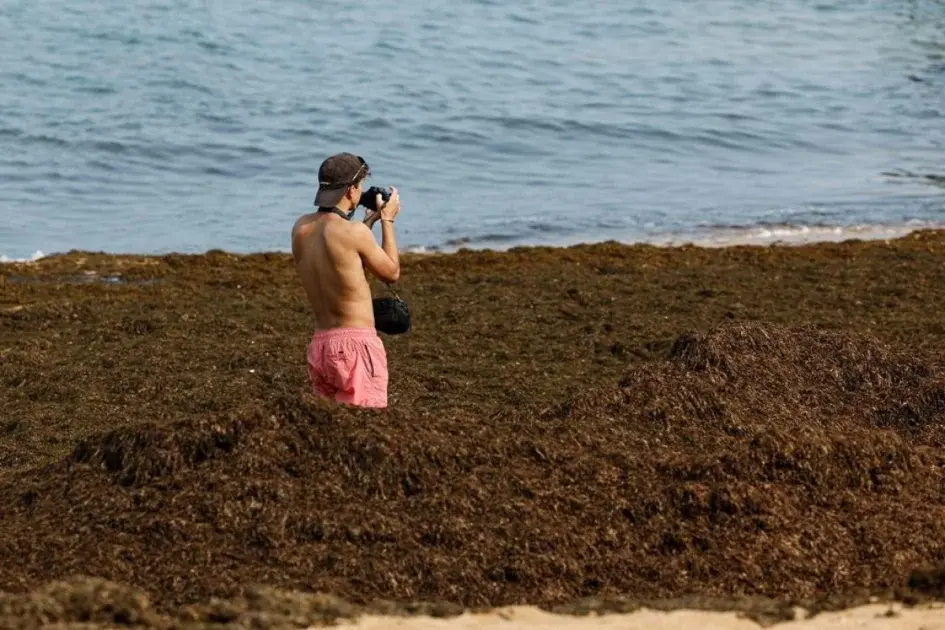
If you're planning a trip to the Algarve, Cascais, or Sesimbra this summer, there's a good chance you'll come across a phenomenon that has been dominating Portuguese environmental news for months: large accumulations of a brown, Asian-origin seaweed on the sand and on the seabed just offshore. Following the day-to-day reality of Portugal's beaches throughout this bathing season, we've seen consistent reports from municipalities, marine biologists, and tourism associations about the scale of this problem — and about the real effect it can have on a beach day.
This article pulls together verified information from official sources (the Portuguese government, coastal municipalities, and researchers at the TERRA Associate Laboratory) to answer the questions that matter most to anyone heading to a Portuguese beach in 2026: what exactly is this seaweed, which beaches tend to be worst affected, whether it poses any health risk, and what you can actually do so it doesn't ruin your holiday.
What Is Rugulopteryx okamurae and Why Is It Invading Portuguese Beaches
Rugulopteryx okamurae is a brown macroalga native to the temperate waters of the northwest Pacific — Japan, Korea, and China — where it has long been part of a balanced marine ecosystem. Outside its native range, without the natural predators and competitors that keep it in check in Asia, it behaves very differently: it grows and reproduces at an extremely fast rate, attaching itself to rocks and other surfaces on the seabed.
The species is believed to have arrived accidentally, likely via ship ballast water or aquaculture-related activity, first colonising the Strait of Gibraltar and the western Mediterranean roughly a decade ago. Since then it has spread north along the Atlantic coast, reaching Morocco, southern Spain and, more recently, the Algarve, Cascais, Madeira and the Azores — with reports in 2026 confirming it is now also spreading to Sesimbra and further north along the mainland coast. Under favourable conditions it can occupy up to 90% of the seabed between 10 and 20 metres deep, forming dense underwater "meadows" that later break loose and get pushed ashore by swell and currents.
Which Beaches and Regions Are Most Affected in 2026
The Algarve and the Cascais coastline remain the areas where the phenomenon is most visible and best studied, but 2026 reports confirm a geographic expansion that is now worrying other coastal municipalities too.
| Area | 2026 situation | Known data |
|---|---|---|
| Carvoeiro / Lagoa (Algarve) | One of the historically worst-hit spots | ~40,000 tonnes removed in a single recent summer |
| Cascais | Recurring build-ups, especially after storms | ~1,300 tonnes collected, a clean-up costing ~€500,000 |
| Sesimbra | Expansion reported in 2026 | No consolidated removal figures yet |
| Northern Portugal | Early signs of spread | Monitoring under way |
| Madeira and the Azores | Confirmed presence, impact varies by island | Regional studies ongoing |
In practical terms, this means you're more likely to run into accumulated seaweed on urban and semi-urban beaches on the Algarve's western coast and along the Cascais shoreline, especially after a few days of strong wind or rough seas, and less likely on more sheltered beaches or during calm weather. For a broader picture of overall bathing water quality in Portugal — including other seasonal contamination factors — see our guide to water quality at Portuguese beaches.
Is It Dangerous? Health and Environmental Risks
The good news is that Rugulopteryx okamurae is not toxic in the way certain cyanobacteria blooms can be. For most people, direct contact doesn't cause serious reactions, though it can trigger mild skin irritation in more sensitive skin, particularly once the seaweed has started decomposing. The most immediate impact for beachgoers is sensory rather than medical: a strong, unpleasant smell released during decomposition, and a visibly degraded look to the sand and shoreline.
The environmental impact is more concerning than the direct health risk. By blanketing large stretches of seabed, the algae competes for space and light with native species, reducing biodiversity on rocky bottoms. Divers and snorkellers notice the difference in spots that used to be rich in varied marine life, and local fishermen report nets and gear frequently clogging, leading to lower catches and higher operating costs. If you're planning to snorkel or free-dive in Portugal, it's worth checking our guide to the best snorkelling and free-diving spots before picking a destination, since some historically popular spots may be temporarily less appealing.
What the Government and Local Councils Are Doing
In 2026, the Portuguese government approved a National Strategy for the Management of the Invasive Macroalga Rugulopteryx okamurae, formally acknowledging that the problem needs a coordinated response from municipalities, environmental agencies, and researchers, rather than one-off, expensive beach clean-ups. Cascais is trialling the EO4RO project (Earth Observation for the Mapping and Monitoring of Rugulopteryx okamurae), which uses satellite Earth observation to try to predict, further in advance, when and where the algae will reach the coast — a tool that could eventually help both municipalities and visitors plan ahead.
At the same time, researchers at the TERRA Associate Laboratory, working with the Higher Institute of Agronomy, have been testing an innovative furnace that converts the collected biomass into biochar — a material with agricultural uses — turning a waste-management headache into a potential source of value. Portuguese scientists have also been pushing the European Commission to revise applicable regulations, to make removal operations in the worst-affected areas faster and easier.
How to Plan Your Beach Day Around Seaweed Season
The presence of seaweed shouldn't, on its own, put you off visiting the Algarve, Cascais, or Sesimbra — but a few simple habits will make for a more pleasant day at the beach:
- Check local updates before you leave — Algarve and Cascais municipalities have stepped up communication about clean-up operations and worst-affected zones on their websites and social media.
- Pick more sheltered beaches after strong wind — loose seaweed tends to build up more on exposed beaches after storms; tucked-away coves are usually less affected.
- Go early in the morning — much of the mechanical sand-cleaning happens first thing, before the first swimmers arrive.
- Don't over-worry about brief contact — rinsing the area with seawater is usually enough; if you have sensitive skin, it's worth avoiding prolonged contact with seaweed that's already decomposing.
- Consider less exposed alternatives — cliff-sheltered Algarve beaches like the ones in our guide to hidden Algarve beaches tend to see less build-up than urban beaches exposed to strong currents.
Blue Flag Beaches Can Be Affected Too
It's worth understanding that a Blue Flag rating doesn't guarantee seaweed-free sand: the award evaluates criteria such as water quality, safety, and environmental management, but seaweed accumulation depends mostly on local oceanographic factors that are hard to control even at very well-managed beaches. For the updated 2026 list, see our complete guide to Blue Flag beaches in Portugal.
Frequently Asked Questions
What is Rugulopteryx okamurae?
It's a brown macroalga native to Japan, Korea, and China that has become invasive outside its natural habitat. It is rapidly colonising rocky seabeds along the Atlantic coast, including Portugal, causing large accumulations on beaches when the sea dislodges it.
Which beaches are most affected by seaweed in 2026?
The Algarve (particularly the Carvoeiro and Lagoa area) and the Cascais coastline continue to see the largest build-ups, with reported expansion towards Sesimbra and areas further north on the mainland, plus confirmed presence in Madeira and the Azores.
Is it safe to swim at a beach with accumulated seaweed?
Yes, the seaweed isn't toxic to swimmers. It can, however, cause mild skin irritation in sensitive skin and a strong smell as it decomposes, which is why many people simply choose a different beach or a different time of day.
How can I find out if a beach is affected before I travel there?
The best approach is to check the websites and social media of Algarve and Cascais municipalities, which have been publishing updates on clean-up operations, as well as platforms like the APA's InfoÁgua for bathing water quality data.
What is being done to solve the problem?
The government has approved a national management strategy, Cascais is trialling early-detection technology (the EO4RO project), and researchers are developing ways to repurpose the collected biomass, such as producing biochar. Portuguese scientists are also asking the EU to amend regulations to make removal easier.
Conclusion
The Rugulopteryx okamurae invasion is now a fixture on beaches in the Algarve, Cascais and, increasingly, other parts of the Portuguese coast — but it's not a reason to cancel your 2026 beach plans. With a bit of planning, up-to-date information from local municipalities, and some flexibility about where or when you go, it's entirely possible to keep enjoying Portugal's beaches safely and comfortably. Keep exploring our site to learn more about water quality at Portuguese beaches, discover hidden Algarve beaches less exposed to this phenomenon, or check which beaches hold a 2026 Blue Flag before planning your next getaway.