Less than 35 minutes from Lisbon, one of Europe's most diverse stretches of Atlantic sand awaits: Costa da Caparica, with its 30 kilometres of beach running south from the town's harbour jetty all the way to the remote dunes of Fonte da Telha. This is Lisbon's beach — where city dwellers escape on weekends, where surfers catch their first waves, and where, in summer, the entire energy of the capital migrates south across the 25 de Abril Bridge.
After years of exploring this coastline, we have discovered that Costa da Caparica is not one beach but thirty-odd beaches, each with a distinct personality. This complete guide explains how to navigate the numbered beach system, which to choose depending on your style, how to get there without a car, and what to do beyond sunbathing.
The Numbered Beach System: How It Works
One of Costa da Caparica's most distinctive features is its numbered beach system stretching south of the main town. "Praia 1" begins immediately south of the harbour jetty, with numbers increasing as you head towards Fonte da Telha — reaching approximately 30 at the southern end. This organisation, unique in Portugal, allows visitors to find their ideal setting with ease.
The general rule is straightforward: the further south, the quieter and less crowded. Beaches 1 to 5 are closest to town, with the most infrastructure, beach bars and foot traffic. From beach 10 onwards, the atmosphere becomes progressively more peaceful and the dunes more intact. From beach 19 southwards, the territory turns wilder, with a clothes-optional section and eventually near-deserted stretches.
Beaches 1 to 5 — The Town Zone
The northernmost beaches, adjacent to the town of Costa da Caparica, are the most popular and accessible. Praia de São João (beaches 1–2) is known for its lively beach bars, terrace restaurants with live music, and strong surf culture — several surf schools cluster here, and young crowds gather at the end of the day. The sand is wide, the waves consistent, and the vibe decidedly youthful.
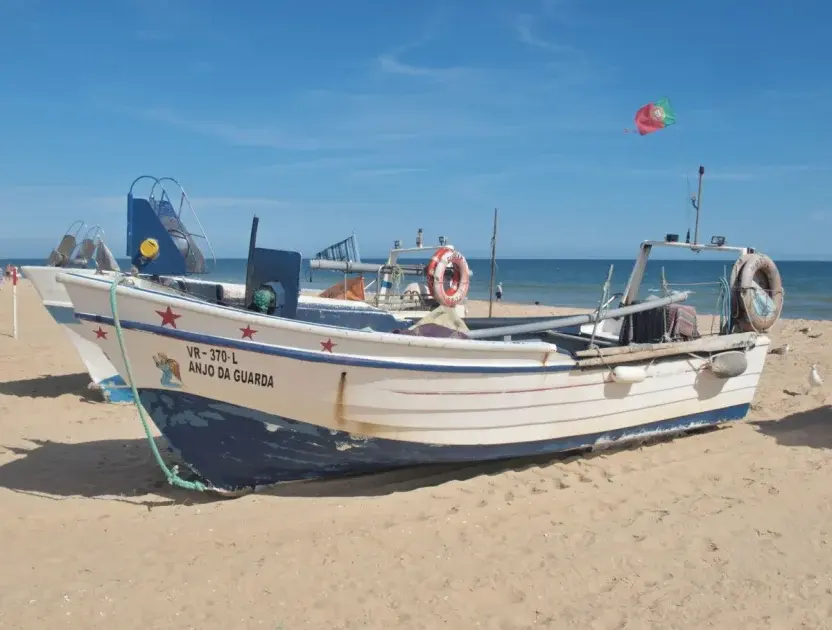
Praia da Mata (beach 4) stands out for its picturesque colourful fishermen's huts right on the sand — one of the most photographed scenes on the Caparica coast. Quieter than the first beaches, it is a good family option.
Beaches 6 to 13 — The Middle Zone
This mid-section combines good accessibility with a calmer atmosphere. Beaches are wide, well-equipped (beach bar, toilets, showers, lifeguard) and have fewer surf school concentrations. They are particularly suited to families with young children and to anyone looking for a classic beach day without the northern zone's intensity.
Praia da Saúde (around beach 7) has a well-established Blue Flag reputation and good water quality — a preferred choice for families. Praia do Paraíso hosted the main stage of the Caparica Surf Fest 2026 (3–12 April), which brought hundreds of athletes and some of Portugal's top competitive surfers to the coast.
Beaches 14 to 18 — The Trendy Zone
Praia da Morena (beach 14) is perhaps the most famous beach on the entire Costa da Caparica coast, home to the legendary restaurant-bar Borda d'Água, where young and old share an atmosphere of live music, cocktails and seafood with feet in the sand. In 2026, this area also hosted activities for the MOGA Festival (27–31 May), one of the most anticipated electronic music festivals of the European summer.
Praia da Sereia (beach 15) is the party beach par excellence: its bar Waikiki transforms into a nightclub after sunset during summer. If you want to dance into the night without leaving the sand, this is the place.
Beach 19 and the South — Nature and Alternative
Beach 19, just south of Praia da Bela Vista, is internationally known as one of Europe's largest LGBTQ+ beaches — an inclusive, relaxed space where the atmosphere is about sunbathing and community, not parties. Praia da Bela Vista was one of Portugal's first official naturist beaches (since 1995) and maintains that tradition today, with a clearly marked nudist section and a conventional family section.
Fonte da Telha, at the southern tip of Costa da Caparica, is the opposite of the northern beaches: high dunes, fine sand, virtually no infrastructure, and rare silence just 40 km from Lisbon. The ideal destination for a near-wild beach without a two-hour drive.
Getting to Costa da Caparica
By Bus from Lisbon (car-free)
The most practical car-free option from Lisbon is Carris Metropolitana line 3710, departing from Avenida Padre Manuel da Nóbrega (Praça de Espanha / Entrecampos, with metro connections on the Yellow and Blue lines). The line runs directly to the northern Costa da Caparica zone, stopping near the jetty and the first beaches. Journey time: 45–55 minutes. Price: approximately €2–3 with a Navegante pass or single ticket.
A popular alternative: take the Cais do Sodré ferry to Cacilhas (€1.35, 10 minutes, Transtejo) then bus 3011 from Cacilhas to Costa da Caparica (~30–35 min, €2). This combination is especially convenient from the historic centre or Alfama.
By Car
From Lisbon, take the Ponte 25 de Abril → A2 towards Setúbal → exit for the A38 towards Costa da Caparica. The journey is 28–32 km and normally takes 25–40 minutes (longer on summer weekends). Bridge toll: €1.95 (Lisbon → Almada direction, Via Verde). Parking is free on streets and car parks adjacent to the beach — arrive before 10am in summer to secure a spot.
The Transpraia — The Beach Train
One of Costa da Caparica's most charming features is the Transpraia, a historic tourist train inaugurated in 1960 that for decades connected the town to Fonte da Telha along 9 km of coastal track with 21 stops. After ceasing operations in 2019, a restoration programme was underway in 2025–2026, with test runs completed on parts of the line. Check transpraia.pt for current operating status in 2026 — a full reopening would be excellent news for sustainable mobility along the coast. In the meantime, bike hire is available in the town (~€8–12/day) to cycle the EN377 cycle path south to quieter beaches.
Surfing at Costa da Caparica
Costa da Caparica is one of the best surf destinations near a European capital. Atlantic swells arrive consistently year-round, peaking in spring and autumn. The sandy-bottomed beaches with no reefs make the coast ideal for beginners and intermediate progression. Advanced surfers find more challenging waves at the northern and southern ends of the coastal strip.
Surf Schools
- Caparica Surf School — One of the most established, group lessons from €25/person (2h, equipment included). Several daily sessions in summer.
- Portugal Surf School — Internationally certified, small groups, 2h lessons from €28. Week packages available.
- Lisbon Surf Center — Oriented towards beginners and short-stay visitors, daily lessons with full equipment.
- Breakthrough Surf School — Located in the Nova Praia area, specialising in beginners and private lessons.
The best period to learn surfing at Caparica is September to November: more consistent waves, water still at 18–20 °C, and less crowding in the water.
Lagoa de Albufeira and Praia do Meco
Exploration of the Costa da Caparica coastline does not end at the numbered beaches. About 15–20 km further south, past Fonte da Telha, lies one of the best-kept secrets in the Lisbon Metropolitan Area: Lagoa de Albufeira and Praia do Meco.
Lagoa de Albufeira is a coastal lagoon offering two contrasting faces: an Atlantic-facing beach with waves and fine sand, and a sheltered lagoon side with calm, warm water — ideal for kayaking, stand-up paddleboarding and gentle swimming. Meira Pro Center offers guided SUP and kayak tours with a lagoon crossing — a unique way to explore this protected dune and lagoon ecosystem. Kayak/SUP hire: approximately €15–20/hour.
Praia do Meco, further south, has a particular history: it was one of Portugal's first naturist beaches. Today it is split between a conventional family section and a delimited naturist area in the southern sector. The beach is long, backed by high dunes and has minimal infrastructure — exactly what its regulars appreciate. Access is by car only (N378 from Sesimbra, ~25 min); no direct public transport.
Food and Beach Bars
- Borda d'Água (Praia da Morena, Beach 14) — The most iconic bar-restaurant on the Caparica coast. Table in the sand, grilled fish, seafood, cocktails. Very popular — arrive before noon in summer. Average spend: €25–40/person.
- Waikiki (Praia da Sereia, Beach 15) — Daytime restaurant and summer nightclub. Famous for its sunsets and post-sunset entertainment.
- Restaurante Pizzini (town centre) — A local favourite for sit-down meals, with an emphasis on fresh fish and seafood.
- Bar do Peixe (town, near the harbour) — Informal fishing-port atmosphere. Fish stew, grilled sardines and fried cuttlefish at accessible prices: €12–18/person.
Practical Tips
- Best month to visit: September — warmer water (18–20 °C), far fewer crowds than July/August, and long sunny days.
- Summer weekends: On July and August weekends, much of Lisbon heads to Caparica. Arrive before 9:30am or after 5pm to find parking and space on the sand.
- Rip currents and safety: Costa da Caparica has active rip currents, especially at central beaches during strong swells. Inexperienced swimmers should stay in the lifeguard-supervised zone and never ignore flag signals. Read our complete beach safety guide.
- Water temperature: In high summer (July/August), water temperature is around 17–20 °C — cool but refreshing. Atlantic upwelling keeps temperatures lower than in the Algarve. See our sea temperature guide by region and month.
- Accessibility: Praia da Saúde (northern zone) has accessibility infrastructure including boardwalks over the sand and amphibious wheelchairs available (contact Almada City Council in advance).
Beach Quick-Reference Table
| Beach | Zone | Best For | Highlights |
|---|---|---|---|
| Praia de São João (1–2) | North | Surf / young crowd | Lively bars, surf schools |
| Praia da Mata (4) | North | Families | Colourful fishermen's huts |
| Praia da Saúde (7) | Centre-North | Families / accessibility | Blue Flag, amphibious chairs |
| Praia do Paraíso | Centre | Competitive surf | Caparica Surf Fest 2026 |
| Praia da Morena (14) | Centre-South | Social / trendy | Borda d'Água, MOGA Festival |
| Praia da Sereia (15) | Centre-South | Nightlife | Waikiki bar-club |
| Beach 19 | South | LGBTQ+ | Inclusive, relaxed atmosphere |
| Praia da Bela Vista | South | Naturist | Official naturist zone since 1995 |
| Fonte da Telha | South | Nature / solitude | Intact dunes, near-wild |
| Lagoa de Albufeira | Far South | Nature / watersports | Kayak, SUP, protected lagoon |
FAQ — Frequently Asked Questions about Costa da Caparica
Which is the best beach at Costa da Caparica for families with children?
Praia da Saúde (around beach 7) is our top recommendation for families with young children: Blue Flag certified, lifeguards, toilets, showers, beach bar and accessibility infrastructure. Praia da Mata (beach 4) is another excellent choice — slightly livelier with its photogenic colourful huts.
How do I get to Costa da Caparica without a car?
The most direct option is Carris Metropolitana line 3710, with frequent departures from Entrecampos/Praça de Espanha (metro) to the Caparica town in 45–55 minutes. You can also combine the Cais do Sodré ferry to Cacilhas + bus 3011 to Caparica (~45 min total — more scenic on a sunny day). There is currently no metro or train service to the beach itself.
Is the water cold at Costa da Caparica?
Yes, compared to the Algarve. In high summer (July/August), water temperature is around 17–20 °C — cool but very refreshing on a hot day. If warm water is a priority, the Algarve or Alentejo coast offer higher temperatures. September remains pleasant despite occasional Atlantic upwelling.
Are there surf lessons for beginners at Costa da Caparica?
Absolutely. Several surf schools on beaches 1–5 offer daily beginner lessons from €25 per person (2h, board and wetsuit included). The sandy bottom and consistent waves make Caparica ideal for learning. Best period for beginners: May, June and September.
Does Costa da Caparica have Blue Flag beaches?
Yes. Several beaches on the Costa da Caparica hold the annual Blue Flag certification, including Praia da Saúde. For the full updated 2026 list, see our complete Blue Flag beaches guide for Portugal.
Conclusion
Costa da Caparica is far more than Lisbon's beach — it is a world unto itself, with thirty kilometres of Atlantic sand where every visitor finds their place: the surfer, the family, the nature lover, the festival-goer or the remote worker swapping their screen for the horizon. Its proximity to Lisbon makes it extraordinarily accessible, and the diversity of environments along the coastal strip guarantees there is always a perfect beach for every day and every mood. Explore our Costa de Lisboa beach directory to discover even more options along this stunning coastline.