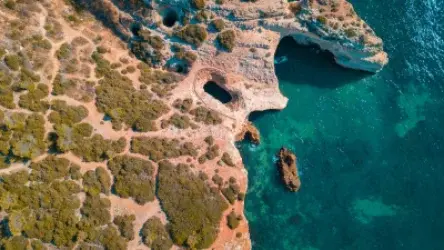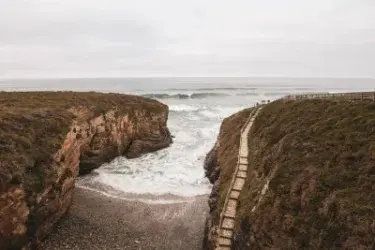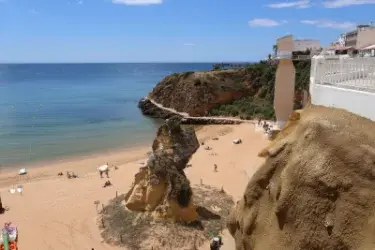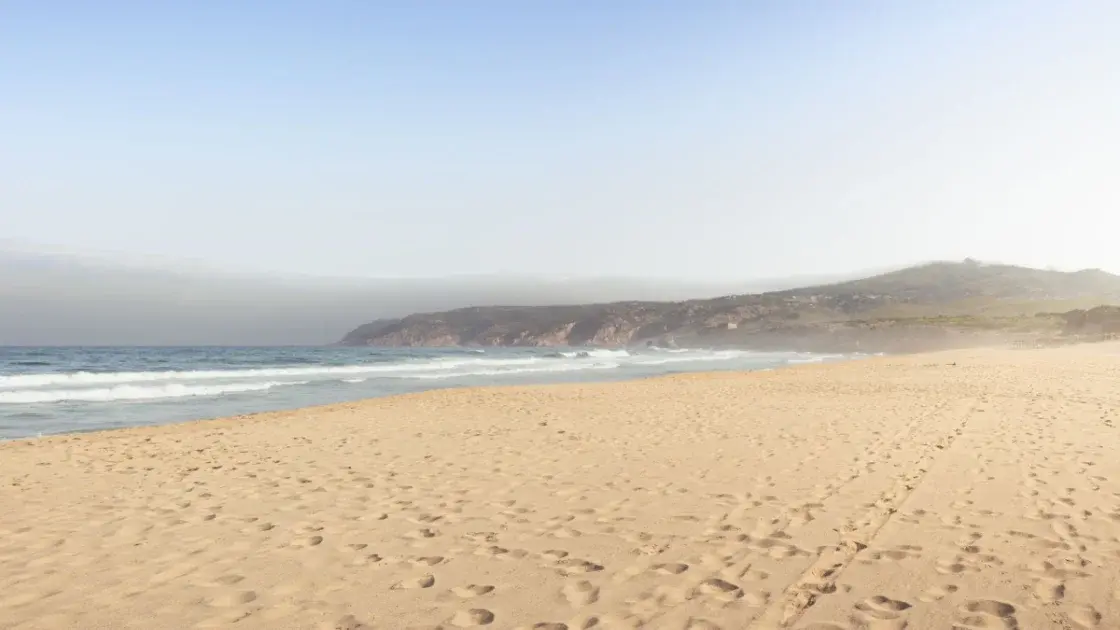
The Costa Vicentina stretches for over 120 kilometres of wild Atlantic coastline, from Sines on the Alentejo shore down to Cabo de São Vicente — the most south-westerly point of mainland Europe. It forms the beating heart of the Southwest Alentejo and Vicentine Coast Natural Park, a UNESCO Biosphere Reserve, and is widely regarded as the most ecologically intact coastline in all of Western Europe.
There are no high-rise hotels here, no motorways skirting the shore, no beach bars pumping commercial music. What you get instead are million-year-old black schist cliffs, dunes that roll endlessly to the sea, Atlantic winds that shape perfect waves, and a quality of silence that has become, in itself, something of a luxury. If you have never visited the Costa Vicentina, this guide will change that.
Quick summary: The Costa Vicentina holds Portugal's wildest beaches, some of Europe's best surf, and world-class walking routes. It is the perfect antidote to the mass tourism of the Algarve.
What Is the Costa Vicentina and Where Is It?
The Costa Vicentina spans two districts — Beja (Alentejo) and Faro (Algarve) — and three main municipalities: Odemira, Aljezur and Vila do Bispo. The area is protected by the Southwest Alentejo and Vicentine Coast Natural Park, established in 1995, which covers approximately 110,000 hectares of land and sea.
The Vicentine coast in the strict sense begins at Odeceixe (the Alentejo–Algarve border) and ends at Cabo de São Vicente in Sagres. North of Odeceixe, as far as Sines, the coastline is known as the Alentejo Coast — equally wild and frequently included in regional guides.
Getting there: From Lisbon, the southern Costa Vicentina (Aljezur/Sagres) is approximately 3 hours via the A2 motorway and EN120 road. The northern stretch (Vila Nova de Milfontes/Odemira) is around 2h30 on the A2. There is no direct train service — a car or motorbike is the most practical option.
The Best Beaches on the Costa Vicentina
Praia do Amado — the temple of surf
Praia do Amado, in Aljezur municipality, is arguably the most iconic beach on the Costa Vicentina. Stretching around 700 metres, it faces due west and picks up consistent swell year-round, making it one of Portugal's premier surf spots. It has beach facilities, a large car park and several surf schools operating from the beach. On summer days with a northerly breeze, its fine sand fills up with surfers, bodyboarders and families. It is also one of the finest places in the region to watch the sunset over the Atlantic.
Best for: surfing, bodyboarding, sunsets, families
Coordinates: 37.1677° N, 8.9117° W
Praia da Bordeira — the beach of monumental dunes
Praia da Bordeira, also in Aljezur, is one of the longest and most spectacular beaches in Portugal. Stretching over two kilometres, it is bounded to the north by towering dunes through which the Ribeira de Bordeira flows before meeting the sea. This river-meets-ocean confluence creates a shallow, calm water zone where young children and non-swimmers can safely paddle. The main access road is unpaved and can be challenging after rain, but the landscape justifies every effort.
Best for: families, kitesurfing, photography, surfing
Tip: visit in the late afternoon for golden light on the dunes — one of the most photogenic landscapes in Portugal
Praia da Arrifana — the perfect cove
Praia da Arrifana, sheltered between dark schist cliffs, is the most protected beach in the area and ideal on windier days. Its cove shape produces consistent, accessible surf conditions that work well for beginners. The village of Arrifana, perched on the clifftop above, has restaurants with spectacular views over the beach and the Atlantic. In summer, queues to descend to the beach can be long — arrive early or visit on a weekday.
Best for: beginner to intermediate surfing, clifftop restaurants, dramatic scenery
Access: paved road to the car park; then a 200m walk
Praia do Castelejo — for the adventurous
Praia do Castelejo, in Vila do Bispo, is one of the most remote and wild beaches on the Costa Vicentina. Access involves a winding 3 km dirt track, which keeps casual visitors away. The waves here are powerful and the sea can be treacherous — not suitable for inexperienced swimmers. The reward, however, is one of the country's most striking beaches: black cliffs, dark sand, seemingly endless waves and a horizon that stays with you long after you leave.
Best for: advanced surfing, photography, solitude
Warning: strong currents and powerful waves — not recommended for young children or inexperienced swimmers
Praia de Odeceixe — where the river meets the sea
Praia de Odeceixe is, for many visitors, the most perfect beach on the Costa Vicentina. It sits on the Alentejo–Algarve border, where the Ribeira de Seixe meets the Atlantic. The river side offers calm, shallow waters — ideal for families with young children — while the ocean side provides surf. The village of Odeceixe, just a few kilometres away, is one of the most charming spots in the region: whitewashed lanes, fresh-fish restaurants and an atmosphere that feels suspended in time.
Best for: families, surfing, romance
Tip: park in Odeceixe village and walk down (around 2 km) — avoids queues and illegal parking by the beach
Carrapateira — the surf capital of the Costa Vicentina
The village of Carrapateira is the gravitational centre of surfing on the Costa Vicentina. It sits between Praia do Amado (to the south) and Praia da Bordeira (to the north), both easily accessible from the village. This twin-beach location makes Carrapateira one of Portugal's finest surf destinations: when Amado is too windy or the sea too choppy, you switch to Bordeira, and vice versa. The village has surf camps, relaxed cafés and an international surfing community that winters here each year.
Vila Nova de Milfontes — the gateway town
At the northern edge of the Costa Vicentina (or southern edge of the Alentejo Coast, depending on your perspective), Vila Nova de Milfontes is the region's most developed coastal town. It has quality beaches — particularly Praia das Furnas and Praia do Farol — with beach facilities, good restaurants and accommodation for all budgets. It is the ideal entry point for first-time visitors who want to experience the region without sacrificing comfort.
Best for: first-time visitors, families with children, those who prefer infrastructure
Surfing the Costa Vicentina: What You Need to Know
The Costa Vicentina is a benchmark surf destination in Europe. Full Atlantic exposure — with no geographical barriers between here and North America — delivers consistent swell across all 12 months of the year. In terms of wave quality, the coast is comparable to the Canary Islands or the Basque Country, but with far fewer people in the water.
Best spots by level
- Beginners: Praia da Arrifana, the river mouth at Praia de Odeceixe
- Intermediate: Praia do Amado, Praia da Bordeira
- Advanced: Praia do Castelejo, Praia do Beliche (Sagres), Praia do Tonel (Sagres)
Best season for surfing
Autumn and winter (September to March) bring the best surf, with North Atlantic swells that can reach 3 to 5 metres. Summer delivers smaller, more regular waves — ideal for learning. Surf schools operate mainly from April to October.
Surf schools
Dozens of surf schools operate along the coast. The most established are based in Arrifana, on Amado and in Carrapateira. Most offer beginner lessons from around €35 per session, with week-long surf-and-accommodation packages also widely available.
The Fisherman's Trail: The Best Walk on the Costa Vicentina
The Fisherman's Trail (Trilho dos Pescadores) is one of Europe's most celebrated long-distance walks. It covers 226 km of coastline from Santiago do Cacém to Cabo de São Vicente, following historic paths once used by local fishermen. It can be walked in full over 9 to 12 days, or tackled as individual day sections.
The most spectacular stretches run through the Costa Vicentina itself, with constant Atlantic views, passages across deserted beaches and cliff after cliff of black schist. The section between Odeceixe and Aljezur is particularly breathtaking. Tour operators offer full logistical support (bag transfer, accommodation booking) for around €100–€150 per person per day.
When to Visit the Costa Vicentina
The Costa Vicentina behaves differently from the rest of the Portuguese coast. Summer — especially July and August — is the busiest period, but the heat is tempered by the northerly Nortada wind that blows frequently. This wind is excellent for kitesurfing and windsurfing, but can make sunbathing uncomfortable.
- May and June: excellent — stable weather, calm seas on windless days, quieter beaches, below-peak prices
- July and August: the busiest and hottest; book accommodation at least 2 to 3 months in advance
- September and October: the best time for surfers and walkers; temperatures drop, waves improve, beaches quieten down
- November to March: Atlantic winter with powerful surf; ideal for experienced surfers; many accommodations close or reduce capacity
Accommodation and Practical Tips
Accommodation on the Costa Vicentina ranges from authorised wild camping (within designated natural park areas) and rustic farmhouses to surf camps and boutique rural tourism units. You will not find international chain hotels here — and that is precisely what makes this coast so special.
Where to stay by area:
- Northern zone (Odemira/Milfontes): Vila Nova de Milfontes has the widest range; camping at Longueira
- Central zone (Aljezur/Carrapateira): surf camps and farmhouses; Aljezur has apartments and B&Bs
- Southern zone (Vila do Bispo/Sagres): Sagres has the broadest choice; good base for the southern tip of the coast
Food: cataplana fish stew, barnacles, clams and freshly grilled fish are the must-orders. The Costa Vicentina has some of the Algarve's finest fish restaurants, particularly in Sagres and Arrifana.
Practical advice:
- Bring water-resistant sunscreen — the wind can mask the intensity of the sun
- Parking at the most popular beaches (Amado, Arrifana) fills up early in July and August — arrive before 9:30am
- Natural park beaches have no commercial facilities — bring water and snacks
- Mobile signal can be weak in some areas — download offline maps before leaving
- Respect the natural park rules: wild camping outside designated areas, open fires and off-road driving are prohibited
FAQ — Frequently Asked Questions about the Costa Vicentina
Is the Costa Vicentina suitable for families with young children?
Yes, but you need to choose the right beach. Praia de Odeceixe (river side) and Praia das Furnas in Milfontes are the best options for young children, with calmer waters. Beaches like Castelejo and Amado have currents and waves that require careful supervision.
Can I visit the Costa Vicentina without a car?
It is difficult but not impossible. Bus services connect the main towns (Aljezur, Sagres, Vila Nova de Milfontes), but frequency is low and there are no direct bus routes to the beaches. Cycling is a popular alternative around Milfontes. For car-free options, see our guide on reaching Portugal's beaches without a car.
Which is the most beautiful beach on the Costa Vicentina?
It depends on what you value. For dramatic scenery: Praia do Castelejo. For vast sands and dunes: Praia da Bordeira. For the perfect balance of beauty and accessibility: Praia de Odeceixe. For surf atmosphere: Praia do Amado.
Are there lifeguards on Costa Vicentina beaches?
Yes, but only on beaches with facilities and only during the bathing season (generally June to September). More remote beaches like Castelejo may have no supervision. Always check the signage on site before entering the water.
Can I learn to surf on the Costa Vicentina with no experience?
Absolutely. Several surf schools in the region have certified instructors who teach complete beginners. Arrifana and Amado offer the best conditions for learners. We recommend booking a lesson before visiting, especially in July and August.
Conclusion
The Costa Vicentina is one of the last places in Western Europe where you can still find a truly wild coast — no concrete, no neon lights, no crowds. If you are looking for authenticity, raw nature and some of Europe's best waves, this is your destination.
Explore our interactive beach map to plan your Costa Vicentina visit in detail. Also read our article on the best surf beaches in Portugal and find the best coastal campsites to sleep just metres from the Atlantic.