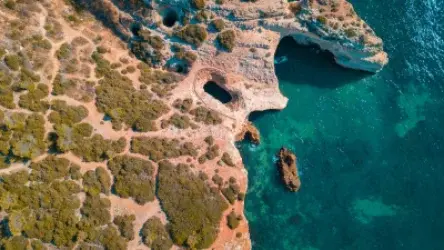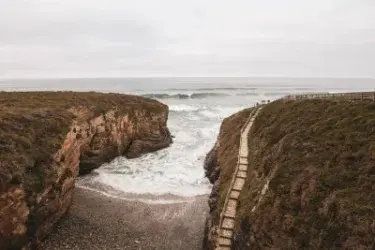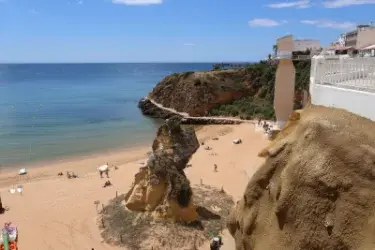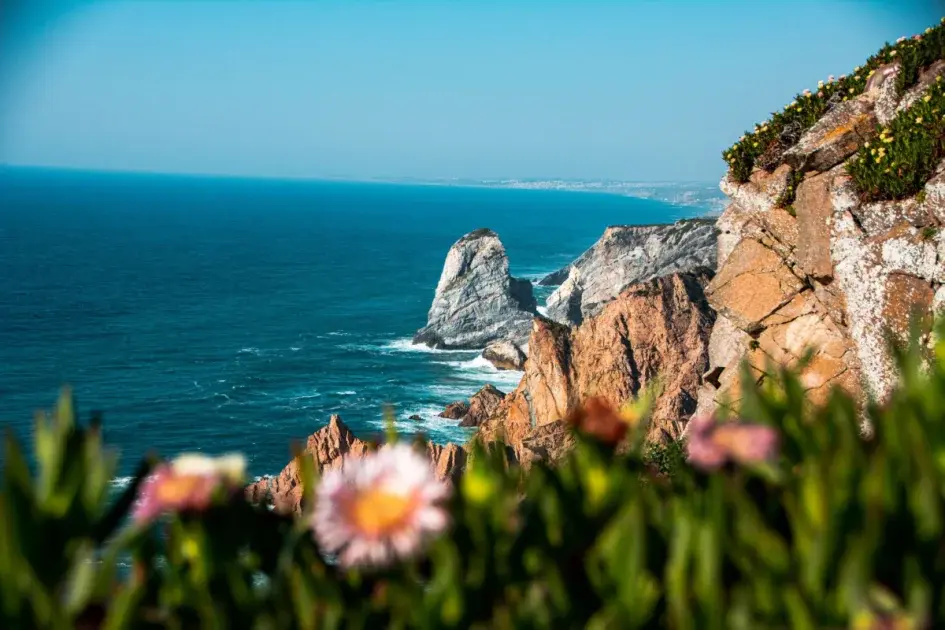
Some destinations work like a formula. The Algarve delivers sun, beach and restaurant with industrial consistency — and does it brilliantly. But Arrábida is something else entirely: a place where a white limestone mountain range plunges directly into the Atlantic, where the water has a transparency that makes you doubt the latitude, and where dolphins swim metres from wooden fishing boats on the Sado Estuary. With Setúbal as your base — a real city, with a dawn fish market, unpretentious seafood restaurants and a historic centre that escapes the rushed tourist trail — this is a destination that rewards those who give it two or three days.
In this complete 2026 guide, we cover everything: Arrábida's finest beaches with up-to-date access profiles, the Arrábida Sem Carros programme and how to use the shuttle bus lines, Sado dolphin tours, Setúbal gastronomy, and a comparison table to match the right beach to your profile.
Setúbal: The City That Makes the Base
Setúbal is the largest city on the Setúbal Peninsula, with around 115,000 inhabitants, and serves as the natural gateway to Arrábida. It sits 50 km from Lisbon via the Sado viaduct (A2+A12) — under 40 minutes by car in normal traffic — and offers accommodation that is significantly more affordable than anywhere inside the Natural Park.
The historic centre clusters around the pedestrian Rua do Bocage and the Igreja de Jesus (15th century, regarded as the first example of Manueline architecture in Portugal, classified a National Monument). The Mercado do Livramento, inaugurated in 1876, is one of Portugal's most beautiful covered markets: Art Nouveau azulejo tile panels depicting fishing scenes, stalls of fresh Sado fish and live shellfish that open at sunrise. Arriving at the Livramento before 8 am on a Friday is one of the most honest gastronomic experiences Portugal offers.
The city also has the Setúbal Museum (in the Convent of Jesus, Tue–Sun, ~€2), the Castelo de São Filipe with panoramic views over the Sado and Tróia (open daily, free entry), and the Água de Pau neighbourhood with whitewashed houses that evoke the Alentejo interior.
Getting to Setúbal
By car from Lisbon: A2 southbound, junction A12 (Setúbal), exit Setúbal East or Centre. Distance: ~50 km. Time: 35–45 min. Tolls A2+A12: ~€4.20 each way.
By train: Setúbal line from Lisbon Oriente or Entrecampos, with change at Pinhal Novo (direct trains at weekends). Total duration: 1h–1h20. Ticket: ~€4.35. The station is 1 km from the historic centre.
By bus: Rede Expressos runs a direct service from Lisbon Sete Rios to Setúbal (1h10–1h30; ~€8.50).
The "Arrábida Sem Carros" Programme — 2026 Access Rules
Since 2014, Parque Natural da Arrábida has enforced seasonal restrictions on vehicle access along the Estrada de Portinho (EN379-1), the main road serving the beaches between Setúbal and Sesimbra. The rules have been progressively strengthened and in 2026 operate as follows:
- Restriction period: 15 June to 15 September
- Restriction hours: 08:00 to 20:00
- Restricted section: From the Control Post (km 3.1) to Portinho da Arrábida
- Who may drive: Local residents (ICNF-issued card), boat owners with documentation, emergency and park service vehicles
- Visitors/Tourists: No access by car, no exceptions during restricted hours
- Fine for non-compliance: €120 to €600 (private vehicles)
- Outside restricted hours: Free access, but the Portinho car park has limited capacity (fills by 9 am in August)
The official solution is the shuttle bus service, operated by Transportes Sul do Tejo (TST) in partnership with ICNF. Buses depart from two main points: the EN10 car park (outside the restricted zone, with space for hundreds of vehicles) and the city of Setúbal itself. In August, it is common to wait for one or two buses before boarding — arriving at the departure point before 9 am is strongly recommended.
2026 Shuttle Bus Lines
| Line | Departure | Main stops | Frequency | Price (one way) |
|---|---|---|---|---|
| Line A | EN10 Car Park (Portinho) | Portinho da Arrábida, Galapinhos, Galapos | 30 min | €2.00 |
| Line B | Setúbal — Largo do Faralhão | Outão, Albarquel, Portinho | 60 min | €3.50 |
| Line C | Sesimbra — Terminal | Galapinhos, Portinho | 60 min | €3.00 |
Note: Schedules and prices based on 2025 operation; verify 2026 updates at tst.pt or ICNF. Tickets are purchased directly from the driver; no advance booking required.
Practical tip: If you travel by train to Setúbal, you can catch Line B directly from Largo do Faralhão (10 minutes walk from the station) and reach Portinho da Arrábida without a car at any point — a fully sustainable way to visit Arrábida.
Arrábida's Beaches: Detailed Profiles
Portinho da Arrábida — The Iconic Postcard Beach
Portinho da Arrábida (GPS: 38.4833, -8.9833) is the most emblematic and most photographed beach in Arrábida — the one that appears on magazine covers with turquoise-emerald water, white sand and fishing boats. It sits in a sheltered cove below the Serra, which means the north wind — which batters much of the Atlantic coast in summer — rarely arrives with full force here. Water temperature in July/August hovers around 20–22°C, exceptional for Portugal's western coast.
The beach measures around 250 metres and has full facilities: bar/restaurant, WC, showers and lifeguards from June to September (9 am–7 pm). The anchoring zone for small boats begins east of the beach and creates a typically Mediterranean visual that contrasts pleasantly with the usual Atlantic aesthetic. The former Navy Diving School is nearby — which signals the underwater quality: rocky bottoms, posidonia seagrass meadows and visibility of 10–15 metres make Portinho one of the best snorkelling spots in the country.
2026 access: 15 June to 15 September (8 am–8 pm), shuttle only. Car park at Portinho: ~80 spaces; free outside restricted season; paid in season (~€3/day). Outside restricted season, free access but parking fills rapidly at weekends.
Praia dos Galapinhos — Portugal's Most Beautiful Beach?
Praia dos Galapinhos (GPS: 38.4706, -8.9544) has been voted Portugal's most beautiful beach in several national rankings and is a strong contender for one of Europe's finest. What sets it apart: isolation. There is no beach bar, no showers, no dedicated car park — there is a 15-minute trail from the forest road that provides access, and at the end, a cove of very fine white sand enveloped by Mediterranean vegetation and limestone cliffs covered in mastic trees and junipers.
The water shifts between jade-green and cobalt-blue depending on the time of day and depth. The bottom is rocky at the edges (ideal for exploring fish and octopus) and sandy in the centre (safe for children). There is no permanent lifeguard — in recent summers ICNF has stationed environmental monitors in July and August, but this is not guaranteed for 2026: check icnf.pt before visiting with young children.
2026 access: Shuttle Lines A and C stop here. On foot from the EN10 car park: ~25 minutes via signed trail PR9 SET. Maximum capacity: 600 people (ICNF-monitored). In August, the shuttle to Galapinhos begins filling up around 10 am — aim to depart earlier.
What to bring: Water (no fountains), food (no bar), high-SPF sunscreen (sun reflects off white sand and limestone cliffs with above-average intensity). Water shoes recommended for entry at rocky edges.
Praia de Galapos — The Perfect Balance
Between Portinho and Galapinhos, Praia de Galapos (GPS: 38.4764, -8.9636) is the balanced option: it has basic facilities (WC, cold shower, seasonal beach bar), a lifeguard in July and August, and a 180-metre beach that rarely reaches capacity even at peak summer. The water is equally transparent — the same UNESCO Biosphere Reserve, the same rocky bottoms — but with a slightly different orientation that makes it more exposed to north wind on strong Nortada days.
Galapos is also the starting point of the Caminho do Baixo do Penhasco trail, a 3 km path running along the base of the cliffs between Galapos and Portinho with constant sea views — best walked in the early morning before the heat builds.
2026 access: Shuttle Line A stop. On foot from the EN10 car park: ~20 minutes.
Praia de Albarquel — Setúbal's Urban Beach
Praia de Albarquel (GPS: 38.5063, -8.9125) sits on the Sado Estuary bank just 4 km from Setúbal city centre, and is technically the city's "urban beach" — but with a crucial difference from typical urban beaches: water quality has been consistently rated "Excellent" by Portugal's Environmental Agency (APA) for the past five years. The 400-metre beach has dark estuary sand (a visual contrast to Arrábida's white), but the Sado water temperature in July is 2–3°C warmer than the ocean, making it particularly comfortable for children.
Albarquel has full infrastructure: lifeguards, WC, hot showers, bar, and accessibility ramp for reduced-mobility visitors. It is served by Shuttle Line B, making it a valid option for those who prefer to avoid the crowds at the ocean-facing beaches.
Praia do Outão — The Local Discovery
Praia do Outão (GPS: 38.4980, -8.9263) is well known to Setúbal locals but rarely appears in international travel guides. It sits sheltered by the Pedreira do Outão — a limestone quarry long exploited by cement manufacturer Secil — and has its own character: white sand, calm sheltered water and the 17th-century Forte do Outão dominating the view. The Secil factory operates a few kilometres away, which may seem incongruous in a nature context, but in practice does not affect water quality.
Access: Shuttle Line B, Outão stop. By car (outside restricted season): EN10 to Outão exit, free car park (~80 spaces). No dedicated access restriction — only the EN379-1 Portinho road is restricted.
Dolphin Watching on the Sado Estuary
The Sado Estuary is home to the largest resident colony of common bottlenose dolphins (Tursiops truncatus) on the Iberian Peninsula — approximately 30 individuals who live permanently in the estuary and rarely venture into the open ocean. This is one of Portugal's most remarkable ecological rarities: while most coastal dolphin groups are migratory, the Sado family is genuinely sedentary, meaning sighting rates are extremely high — licensed operators report over 95% success during summer months.
The dolphins have been individually catalogued by researcher Luís Freitas (SPVS — Sociedade Portuguesa de Vida Selvagem), who has been monitoring the colony since the 1980s. Some individuals are over 30 years old and are recognised by researchers from the pattern of marks on their dorsal fins. The colony uses the estuary primarily for feeding — the Sado's fish stocks support a food web that includes dolphins, otters, flamingos and grey herons.
Dolphin Tour Operators in Setúbal
| Operator | Vessel Type | Duration | Price approx. | Note |
|---|---|---|---|---|
| Vertigem Azul | Zodiac / RIB | 2h30 | €40–50/person | Includes Sado Nature Reserve |
| Sado Golfinhos | Catamaran | 3h | €35–45/person | More stable; recommended for children |
| Sal'si Mar | Sailboat | 3h–4h | €45–60/person | Most immersive; small group |
| Troiaresort Boat Tours | Covered launch | 2h | €30–40/person | Also departs from Tróia |
Booking: All operators accept online reservations. In July and August, book 3–5 days in advance. Most departures are in the morning (9–10 am) or late afternoon (5–6 pm) — the light is best for photography and dolphins are most active feeding at these hours.
Regulation: Dolphin watching tours on the Sado are subject to SPVS protocol and ICNF licensing. Licensed operators maintain a minimum 50-metre distance from the animals and prohibit swimming near the colony. Always verify that your operator holds a valid ICNF licence before booking.
Arrábida Underwater: Snorkelling and Diving
The Arrábida Partial Marine Nature Reserve covers 53 km² of seabed, making it one of the largest marine protection zones in mainland Portugal. Underwater, Arrábida is as impressive as above: sea caves, posidonia meadows, cold-water corals and a fish diversity rarely found in the Atlantic at this latitude.
The best snorkelling spots are accessible directly from the beaches:
- Portinho da Arrábida: The zone between moored boats and the eastern rocks. Octopus, white sea bream, sea bass and occasional moray eels in crevices at 2–4 metres depth.
- Galapinhos — western tip: Rocky bottom with red algae, sea urchins and squid in August/September.
- Lapa dos Pombos: A semi-submerged sea cave east of Portinho, accessible by swimming from the beach. Requires basic snorkelling ability and moderate fitness.
For scuba diving, Navisub (navisub.com) operates from Setúbal with regular dives to the reserve's main sites: the wreck of the Santon, Lapa dos Pombos cave, and Pedra da Anixa. Discover Scuba from €65; certified diver dives from €45.
Setúbal Gastronomy: The Sea on the Plate
Setúbal is a fishing city with a maritime food tradition that rivals any coastal destination in Portugal. The star product is unmistakably choco frito à setubalense — small cuttlefish from the local coast, coated in coarse cornmeal flour and fried in olive oil, served with lemon and salad. It is a dish that appears simple and, when well executed, is very hard to match. The key lies in freshness — the tascas near the Mercado do Livramento have same-day cuttlefish, caught in the Sado or adjacent coast.
Other specialities worth seeking:
- Grilled Sado sole: Whole sole on the grill, seasoned only with olive oil and garlic. Best from September to November.
- Caldeirada de Setúbal: A version of the classic fish stew with Sado fish (sea bass, gilt-head bream, red mullet) and sweet potato — slightly sweeter than the Algarve version.
- Fried eels: A Sado delicacy becoming increasingly rare — look for it in the tascas of the Bairro Piscatório (Fishermen's Quarter).
- Moscatel de Setúbal: The region's fortified sweet wine, produced from Moscatel grapes since the 18th century. Ideal as a dessert pairing or digestif. Visitable estates: José Maria da Fonseca (Azeitão, 15 km from Setúbal).
Where to Eat in Setúbal
Tasca do Chico (Rua Álvaro Castelões, centre): The choco frito reference; no reservations, queue common at lunch. Average €12–18/person.
O Beco (Travessa do Arco, near the Livramento Market): Traditional shellfish restaurant; octopus à lagareiro and Sado cockles. €20–30/person.
Dom Peixe (Avenida Luísa Todi, river front): More formal; daily catch and caldeiradas. €25–40/person. Reservation recommended in July/August.
Café Manteigaria (Rua do Bocage): Historic pastelaria; the best pastel de nata in the region, a Sunday morning institution.
Comparison Table: Arrábida and Setúbal Beaches
| Beach | 2026 Access | Facilities | Families | Snorkelling | Max capacity | Highlight |
|---|---|---|---|---|---|---|
| Portinho da Arrábida | Shuttle (season) / Car (off-season) | Full | Yes | Excellent | 1,500 | Turquoise water, boats |
| Galapinhos | Shuttle (season) / Trail only | None | Conditional | Very good | 600 | Wild beauty, isolation |
| Galapos | Shuttle (season) / Trail only | Basic | Yes | Good | 800 | Nature-services balance |
| Albarquel | Shuttle Line B / Car free | Full | Excellent | Fair | 2,000 | Estuary, warm water |
| Outão | Shuttle Line B / Car free | Basic | Yes | Good | 1,000 | Calm, less crowded |
Serra da Arrábida Hiking Trails
Arrábida is not only a beach destination. The Serra has a network of ICNF-certified trails crossing the limestone ridgeline with sweeping sea views — panoramas that, for a moment, make you forget Lisbon is thirty minutes away. The most popular trails:
- PR1 SET — Rota dos Moinhos (6 km, easy, 2h): Starts from Vila Nogueira de Azeitão, passes restored windmills, views of the Serra and the Sado. Suitable for all the family.
- PR3 SET — Serra da Arrábida (9.5 km, moderate, 3h30): The most complete trail, starting at Portinho and climbing to the ridge (212 m altitude). Views from Cabo Espichel to Lisbon on a clear day.
- PR9 SET — Galapinhos–Galapos (5 km, easy, 1h30): Links the two beaches via the cliff-base coastal trail. Starts and ends at shuttle stops — ideal for combining a hike and beach day.
For more coastal trails across Portugal, see our guide Coastal Hiking Trails in Portugal 2026.
When to Visit Setúbal and Arrábida
| Period | Air Temp | Water Temp | Shuttle Active | Crowds | Verdict |
|---|---|---|---|---|---|
| Jun 1–14 | 22–26°C | 17–19°C | No | Low | Excellent — best quality/peace ratio |
| Jun 15–30 / Jul | 25–30°C | 19–21°C | Yes | Medium-high | Very good — shuttle works smoothly |
| August | 27–33°C | 21–23°C | Yes | Maximum | Good but crowded — arrive before 9 am |
| Sep 1–15 | 24–28°C | 20–22°C | Yes | Medium | Excellent — summer warmth, less pressure |
| Sep 16–30 / Oct | 20–24°C | 19–21°C | No | Low | Excellent for snorkelling, hiking; swimming still possible |
| Nov–Mar | 12–18°C | 14–17°C | No | Minimal | Ideal for hiking, photography, dolphin watching |
2-Day Itinerary: Setúbal and Arrábida
Day 1 — Setúbal and the Sado
Morning: Arrive in Setúbal by train or car. Visit the Mercado do Livramento at 8:30 am (do not skip this experience). Walk the historic centre: Igreja de Jesus, Setúbal Museum, Castelo de São Filipe.
Afternoon: Dolphin tour on the Sado — 2:30 pm departure with any operator (2h30 duration). Dinner in the city with choco frito and Moscatel de Setúbal.
Night: Accommodation in Setúbal (more economical) or Azeitão (more bucolic).
Day 2 — Arrábida: Beach and Mountain
Morning: Shuttle Line A from 8:30 am to Galapinhos. Spend 2 hours at one of Portugal's most beautiful beaches. Walk trail PR9 SET to Galapos (1h30, bring hat and water).
Afternoon: Down to Portinho da Arrábida: snorkelling, lunch at the beach restaurant, a final swim. Shuttle back at 5:30 pm.
Evening: Visit Quinta José Maria da Fonseca in Azeitão (Moscatel tasting included in the guided tour; reserve at jmf.pt).
FAQ — Frequently Asked Questions About Setúbal and Arrábida
Can I drive to Arrábida beaches in summer?
No. Between 15 June and 15 September, from 8 am to 8 pm, vehicle access to the Estrada de Portinho (EN379-1) is prohibited for visitors. The only legal way to reach Portinho da Arrábida, Galapinhos and Galapos during this period is via the TST shuttle buses. Non-compliance fines range from €120 to €600.
Which is the best Arrábida beach for snorkelling?
Portinho da Arrábida is the best snorkelling spot for beginners, with accessible rocky bottom, good visibility (10–15 metres on calm days) and full support facilities. For more advanced snorkelling, the rocky tips of Galapinhos and the Lapa dos Pombos cave area east of Portinho offer greater species diversity but require experience and appropriate equipment.
Is the Sado dolphin watching tour worth doing?
Absolutely. The resident colony of ~30 bottlenose dolphins in the Sado Estuary is one of the most accessible in Europe, with sighting rates above 95% in summer. Tours run 2h30 to 3 hours, depart from Setúbal quay, and are regulated by ICNF for animal protection. It is a remarkable experience even for those who have seen dolphins elsewhere.
Can I visit Setúbal and Arrábida in one day from Lisbon?
Yes, but it requires organisation. The most practical approach: early morning train from Lisbon to Setúbal, shuttle to the beaches, return to Setúbal in the late afternoon, dinner in the city and an evening train back. The car alternative offers more flexibility but means leaving your vehicle at the EN10 car park during restriction periods. A two-day weekend allows for a much richer experience.
What is the difference between this guide and the existing Arrábida beaches guide?
Our Arrábida Beaches Guide focuses on the Natural Park and beaches themselves, with detailed beach profiles and the history of the UNESCO Biosphere Reserve. This guide complements that information by focusing on Setúbal as a city base, the updated 2026 Arrábida Sem Carros access rules, Sado dolphin watching, and city gastronomy — designed for those planning a 2–3 day stay in the region.
Conclusion: Setúbal and Arrábida Deserve More Than a Day Trip
The combination of Setúbal and Arrábida is one of Portugal's most complete offerings: an authentic city with exceptional gastronomy, world-class beaches, remarkable marine wildlife and a protected mountain range with trails for all levels. The car access restrictions, far from being an inconvenience, have radically improved the beach experience — fewer cars means more silence, less litter and an environmental quality that fully justifies the UNESCO Biosphere Reserve designation.
To complete the regional itinerary, we also recommend our guide to Tróia, Comporta and Melides — on the other side of the Sado, reachable by ferry from Setúbal in 25 minutes — and our guide to Sesimbra, 30 km to the west, with one of the finest marine reserves in the country.