What Makes Berlenga Island So Special
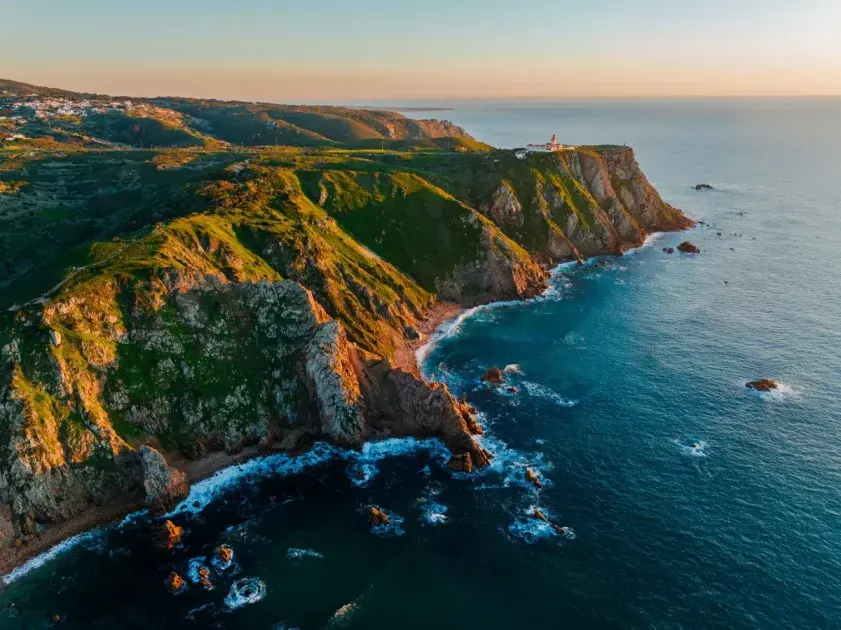
There are places in Portugal that surprise even those who know the country well. Berlenga Grande is one of them. Just 15 kilometres off the coast of Peniche — less than 40 minutes by boat — you find a world completely unlike the mainland: a granite island of raw beauty surrounded by water of extraordinary clarity, where silence is broken only by the sound of waves and the calls of seabirds.
The Berlengas are the only archipelago on the western Portuguese coast. The main island, Berlenga Grande, is just over 1.5 km long and about 800 metres wide, but it concentrates an exceptional marine and terrestrial biodiversity: it is a nesting habitat for threatened seabird species such as the Northern Gannet and the Common Tern, and the surrounding sea holds one of the richest communities of fish and invertebrates in mainland Portugal.
In 1984, the Berlengas were classified as a Nature Reserve. In 2011, UNESCO elevated the archipelago's status to a World Biosphere Reserve — a recognition placing Berlenga in the same protection category as unique natural destinations worldwide. Having spent considerable time documenting the beaches and coastal destinations of Portugal, we find that Berlenga Island is consistently described by visitors as one of the most memorable experiences they have had in Portugal — and having been there, we understand exactly why.
This guide covers everything you need to know to plan a visit to Berlenga in 2026: the mandatory ICNF Pass, ferry operators and prices, what to do on the island, where to stay overnight, the best times to visit, and the environmental rules every visitor must know.
The ICNF Berlengas Pass: The Mandatory Requirement in 2026
Before booking any ferry, you must obtain the Berlengas Pass through the ICNF (Institute for Nature Conservation and Forests). This requirement was introduced to control visitor numbers and protect the island's fragile ecosystem, and in 2026 it is absolutely mandatory — without the pass and its QR Code, you cannot board.
How to Get the Berlengas Pass
- Platform: berlengaspass.icnf.pt
- Cost: €3 per person per day (visitors aged 6–17 and over 65: €1.50)
- Daily limit: Maximum 550 simultaneous visitors on the island
- Validity: Specific to the chosen date — non-transferable
- Payment: Online by credit/debit card
- When to book: In July and August, passes sell out weeks in advance; in June and September, book at least 1–2 weeks ahead; in May and October, availability is usually more relaxed
The QR Code from your pass must be shown at embarkation in Peniche. Save it on your phone or print it. The control system at Peniche marina verifies the pass before allowing boarding.
How to Get to Berlenga Island from Peniche
The only access to Berlenga Grande is by boat from Peniche fishing harbour (Cais da Ribeira de Peniche). There is no public helicopter service, nor access from other coastal towns. The crossing takes between 30 and 45 minutes depending on sea conditions and the type of vessel.
Ferry Operators in 2026
| Operator | Service Type | Average Price (return) |
|---|---|---|
| Viamar | Regular ferry + tours | €22–€26 |
| Feeling Berlenga | Ferry + guided tours | €24–€28 |
| BerlengaTur | Tours, diving, cave visits | €29–€39 (with tour) |
| Berlengatur / Julius | Private and small groups | Variable |
Prices shown are for the return crossing. Packages that include a glass-bottom boat cave tour or guided diving cost more (€35–€45 per person). Always book in advance — departures in peak season sell out fast.
Schedules and Departures
In high season (July and August), there are generally 3 to 4 departures per day, with the first leaving around 9:00 and the last return from the island at 18:00–19:00. In mid-season (June, September, October), there are usually 1 to 2 daily crossings. The boat season runs from May to October; outside this window, access to the island is virtually impossible.
Arrive at the pier at least 20–30 minutes before departure for ICNF Pass validation and boarding.
How to Get to Peniche from Lisbon
Peniche is 90 km north-west of Lisbon. Transport options include:
- By car: A8 motorway direction Porto, exit Caldas da Rainha/Peniche. Time: 1h–1h15 in normal traffic. Free parking available near the harbour.
- By bus: Rede Expressos or Rodoviária do Oeste from Campo Grande or Sete Rios terminals. Duration: 1h30–1h45. Tickets from €8–€10 per person.
- Wavy Bus: Dedicated service for visitors and surfers, with stops in Peniche and Ericeira, operating from Lisbon.
For more details on surfing and other attractions in Peniche, see our complete Peniche guide.
What to Do on Berlenga Grande
Berlenga Grande measures just 1.5 km along its longest axis, but it concentrates a variety of experiences that fully justify the visit. A well-spent day on the island combines hiking, beach, snorkelling and a historical visit to the fort.
Fort of São João Baptista
The Fort of São João Baptista is the defining image of Berlenga: a 17th-century fortress built on a small rocky islet connected to the main island by a narrow bridge, rising from the sea like a medieval castle from an adventure story. The original construction dates to 1656 and was built to replace the old Franciscan convent destroyed by Algerian pirates in 1576. The fort later served as a prison and fishermen's accommodation before being restored.
In 2026, the fort operates as rustic accommodation — one of the most unique overnight experiences in Portugal. Bookings are made through Peniche Municipality well in advance. The cost is around €10 per person per night, but the conditions are truly austere: no hot shower, no Wi-Fi, no modern comforts. In return, waking up inside the only Portuguese fort on a rocky islet in the middle of the Atlantic, surrounded by the sound of the ocean, is an experience impossible to replicate anywhere.
For day visitors, the fort's exterior is freely accessible and the walk across to the islet is a compulsory part of any visit.
Praia da Berlenga and Snorkelling
Praia da Berlenga is the island's only sandy beach — a sheltered cove with water of extraordinary clarity. On calm days, underwater visibility reaches 15–20 metres, revealing a rocky seabed densely populated by fish, sea urchins, starfish and seaweeds of unusual variety.
Snorkelling at Berlenga ranks among the most impressive underwater experiences in mainland Portugal. Unlike many beaches on the Portuguese coast, the waters around Berlenga lack the turbidity typical of exposed Atlantic shores — the natural protection of the archipelago and the absence of permanent human activity keep the water clean and marine life abundant. Bring your own equipment or rent it from ferry operators in Peniche. The water temperature at Berlenga is slightly colder than on the coast (14–18°C depending on season), so a 3 mm wetsuit is recommended.
Beyond free snorkelling from the beach, several operators offer guided dives (with or without a diving licence) in the waters surrounding the island, where you can find sea bass, grouper, cuttlefish, octopus and rarer species such as seahorses.
Glass-Bottom Boat Cave Tour
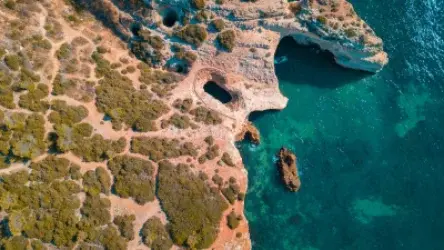
One of Berlenga's most popular attractions is the glass-bottom boat tour of the caves and rock formations along the coast. The most visited caves include the Blue Cave (Gruta Azul), the Dream Cave (Gruta do Sonho) and the Cave of São João Baptista — cavities carved by the ocean in the granite cliffs, with walls that reflect the light of the water and create surreal chromatic effects.
This guided tour (30–45 minutes) is available as a complementary package with the ferry ticket through BerlengaTur and other operators. Average additional cost: €15–€20 per person. Booking it together with the crossing is the most practical option.
Hiking Trails
The island has a network of short but panoramic trails crossing the highest points and most exposed coastlines. The highest point of Berlenga Grande (well under 100 metres) offers a 360-degree view of the ocean and the smaller islands of the archipelago (Farilhões and Estelas).
The trails through the island's interior cross low, resilient vegetation dominated by endemic species. During spring months (May–June), the island is covered in wildflowers that contrast with the grey granite and the intense blue of the Atlantic. Given the small size of the island, the main trails can be walked comfortably in 2–3 hours at a leisurely pace.
Important: do not leave the marked trails. Berlenga's vegetation is protected, and walking outside authorised paths is prohibited and subject to fines.
Birdwatching
Berlenga is one of the most important seabird nesting sites in mainland Portugal. Species present include the Gannet (Morus bassanus — regular passage), the Common Tern (Sterna hirundo), the Roseate Tern, the Balearic Shearwater, the European Shag and the Rock Dove. Birdwatchers from across Europe visit Berlenga specifically for bird observation, particularly in May–June (nesting season) and September–October (autumn migration). Bring binoculars and keep distance from nesting sites.
Where to Stay on Berlenga Island
Staying overnight on Berlenga is a rare and very limited-capacity experience. Two options exist:
Fort of São João Baptista (accommodation)
The fort offers extremely basic accommodation for a very small number of people. Bookings through Peniche Municipality, months in advance. Price: ~€10 per person per night. The experience is not justified by comfort but by exclusivity: sleeping in the only Portuguese fort on an Atlantic islet, without artificial light, with the sound of the ocean surrounding everything.
Berlenga Campsite
There is a very small campsite on the island with extremely limited capacity: 6 two-person tents, 16 three-person tents and 17 four-person tents. The price is around €8 per day. Reservations are made through Peniche Tourism Office or the Municipality. In July and August, the campsite books out many months in advance — early planning is essential. Facilities are basic (toilets, cold running water), with no hot showers or internet connection.
For day-trippers, logistics are simpler: most ferries allow a 4–6 hour stay on the island before the return. Bring food, water and sun protection — shops and services on the island are extremely limited.
Environmental Protection Rules
Berlenga is a protected nature reserve and visit rules are strict. Non-compliance is enforced and fines are real.
- Camping outside designated areas is prohibited
- Collecting or damaging flora and fauna is prohibited — including shells, stones and seaweed
- Lighting fires is prohibited under any circumstances
- Leaving rubbish is prohibited — all waste generated by visitors must leave with them
- Walking off marked trails in protected vegetation zones is prohibited
- Fishing in strict reserve zones is prohibited
- Dogs are not permitted on the island
- Drones are prohibited without prior ICNF authorisation
Berlenga operates on a simple principle: visitors arrive, enjoy and leave without a trace. This commitment to preservation is precisely what keeps the island in this state of grace after decades of human visits.
Best Time to Visit Berlenga Island
| Month | Conditions | Crowds | Ferries | Verdict |
|---|---|---|---|---|
| May | Spring, wildflowers, nesting birds, 14–16°C sea | Low | 1–2/day | Excellent for nature and tranquillity |
| June | Long days, warming water (16–18°C), nesting season | Medium | 2–3/day | Best balance of quality and visitor numbers |
| Jul–Aug | Max sun, water 18–20°C, pass sells out weeks ahead | High (max) | 3–4/day | Book 2–3 months ahead; avoid if possible |
| September | Quieter, water still warm (17–19°C), bird migration | Medium-low | 2–3/day | Best month for most visitors |
| October | Cooler, growing swell, last window of the season | Low | 1–2/day | Good for birdwatching and photography |
Our recommendation: June and September are the ideal months for most visitors — long days, swimmable water without a full wetsuit, manageable crowds and nature at its finest. July and August have the best sea conditions and most ferries but demand very careful advance planning.
What to Bring for Your Visit
- Water and food — services on the island are very limited; bring a full picnic
- Sun cream and hat — there is no shade on the trails
- Snorkelling equipment — can be rented in Peniche, but bring your own if you have it
- Swimwear + 3 mm wetsuit — the water is colder than on the mainland
- Hiking footwear with grip — trails have rocks and damp surfaces
- Camera and binoculars — the birds and landscape reward them
- ICNF Pass QR Code — never forget this
- Reusable bin bag — all rubbish returns with you
Frequently Asked Questions about Berlenga Island
Do I really need the ICNF Pass to visit Berlenga?
Yes, in 2026 the ICNF Berlengas Pass is mandatory for all visitors over 6 years old. Without the pass and its QR Code, you cannot board at Peniche. The pass costs €3 per adult (€1.50 for children aged 6–17 and over 65) and is obtained at berlengaspass.icnf.pt. Always secure your pass before buying a ferry ticket to confirm availability on your chosen date.
How many hours are enough on the island?
A full day (5–6 hours on the island) is ideal to see the fort, go snorkelling, walk the main trails and have a relaxed lunch. With 3 hours, a quick visit to the fort and the beach is possible but you will feel time was short. If you opt to stay overnight at the campsite or fort, two days allow you to explore the island at leisure and catch different light conditions for photography.
Is Berlenga Island suitable for children?
Yes, with some caveats. The boat crossing can be uncomfortable on days with stronger swell — children prone to motion sickness should take preventive medication. On the island, the beach and snorkelling are accessible activities from around age 7–8. The hiking trails are accessible but are not pushchair-friendly. There is no medical assistance on the island, so in an emergency evacuation is by boat or helicopter.
Can I snorkel and dive independently?
Free snorkelling is permitted at Praia da Berlenga and in coastal areas not classified as strict reserve zones. For scuba diving, the nature reserve zoning must be respected — some areas are restricted or prohibited. Operators such as BerlengaTur know the permitted zones and offer guided dives in full compliance with ICNF regulations. If going independently, check the prohibited zones before entering the water.
How does Berlenga compare to the Azores or Madeira?
The Berlengas are unique in the context of mainland Portugal — there is no other accessible archipelago off the western coast. The difference from the Atlantic islands (Azores and Madeira) lies in accessibility: the Berlengas are just 30–40 minutes by boat from Peniche, making a visit possible in a single day from Lisbon. Unlike the Azores and Madeira, the Berlengas are a day-trip destination, not a multi-day stay. For anyone wanting to combine quality continental beach with island nature in a single day, the Berlengas are unmatched.
Conclusion
Berlenga Grande is one of Portugal's worst-kept secrets — everyone who visits tells everyone they know. And rightly so: few experiences in mainland Portugal combine wild nature, history, diving and genuine isolation with the logistical accessibility of the Berlengas. Just 30 minutes by boat from Peniche and barely more than 90 minutes from Lisbon, Berlenga is one of the rare stops in Portugal where the modern world disappears completely.
The formula for a successful visit in 2026 is straightforward: book the ICNF Pass and your ferry well in advance (especially in July and August), bring enough food and water, and respect the environmental rules that keep the island in this exceptional state. Everything else takes care of itself.
To explore more of central Portugal's coast, see our complete Peniche guide and our central Portugal beaches guide. For the best snorkelling and diving spots across Portugal, see our complete snorkelling and diving guide.