Rock Pools in Portugal: The Complete Guide to Exploring Marine Life Safely
Every summer we get the same question from parents looking for something beyond the usual sandcastle: "are there places in Portugal where kids can get up close to crabs and small fish safely?" The answer is literally under our feet, along hundreds of stretches of rocky coastline from the north of the country to the south — rock pools, small natural pools trapped in the rock as the tide retreats, packing a surprising amount of biodiversity into a space the size of a bathtub.
As a team that regularly travels the length of Portugal's coastline for this blog, we've found rock pooling to be one of the most rewarding and most underused activities the coast has to offer: it's free, educational, works for any age group, and requires no gear beyond a pair of shoes with decent grip. It's also an activity with its own set of rules — safety around a rising tide, and respect for the marine life that calls these pools home. This guide explains what rock pools are, where to find the best ones in Portugal, which species to look out for, and how to explore them without putting yourself or the ecosystem at risk.
What Rock Pools Are and Why Portugal Has So Many of Them
Rock pools only form on rocky shorelines, never on loose sand: as the tide drops, seawater gets trapped in hollows, cracks and basins in the rock, creating small, isolated ecosystems until the tide comes back in. Portugal's coast is particularly rich in these formations because it combines long stretches of limestone and schist cliffs — especially in the central Algarve and along the Alentejo coast — with rocky shelf areas that are exposed at low tide, as seen at several points along the Costa Vicentina, Arrábida, and the coastline between Peniche and Ericeira.
Each pool works like its own micro-habitat: those closest to the sea are refreshed with every tidal cycle and have more stable temperature and salinity, while pools higher up the rock, only covered during spring tides, go through bigger swings in temperature and evaporation — which is why they tend to host hardier species, such as certain sea snails and barnacles. This variation in conditions, packed into just a few metres of rock, is what makes rock pooling such a rewarding activity from an educational point of view: in half an hour, you can observe several completely different "zones" of marine life.
Animals and Marine Life You'll Find in Portuguese Rock Pools
Life in a typical Portuguese rock pool is more diverse than most people expect. Near the seaward edge, it's common to find shore crabs and hermit crabs competing for space with sea anemones, which close up when touched but reopen within a few minutes. Under loose rocks — which should always be put back exactly where you found them after peeking underneath — you'll often find gobies (small bottom-dwelling fish) and translucent shrimp, and in deeper, well-oxygenated pools within protected areas like the Ria Formosa, juvenile seahorses have been recorded.
Common Species to Look Out For
| Species | Where to Look | How to Recognise It |
|---|---|---|
| Shore crab | Under rocks, shallow pools | Greenish shell, scuttles sideways quickly |
| Sea anemone | Submerged rock walls and crevices | Colourful tentacles, closes up when touched |
| Barnacle | Rocks in the upper tidal zone | Small white calcium cones fixed to the rock |
| Periwinkle and sea snails | Rocks and pools at any depth | Spiral shell, moves very slowly |
| Goby (bottom-dwelling fish) | Deeper, shadier pools | Small, grey/brown, sits still near the bottom |
| Starfish | Deep pools in less-disturbed areas | Five arms, grainy surface, variable colours |
In some protected areas, such as parts of Arrábida and the Ria Formosa, it's also possible to spot seahorses, one of the most sensitive and heavily protected species along the Portuguese coast — if you see one, the right thing to do is observe without touching and, if possible, report the sighting to citizen-science projects run by ICNF or local universities that monitor these populations.
The Best Beaches in Portugal for Rock Pooling
Not every stretch of Portuguese coast is equally good for rock pooling — the best spots combine an extensive rocky shelf, accessible low tide, and relatively clear water. Here are the stretches we recommend most confidently, from south to north:
Algarve
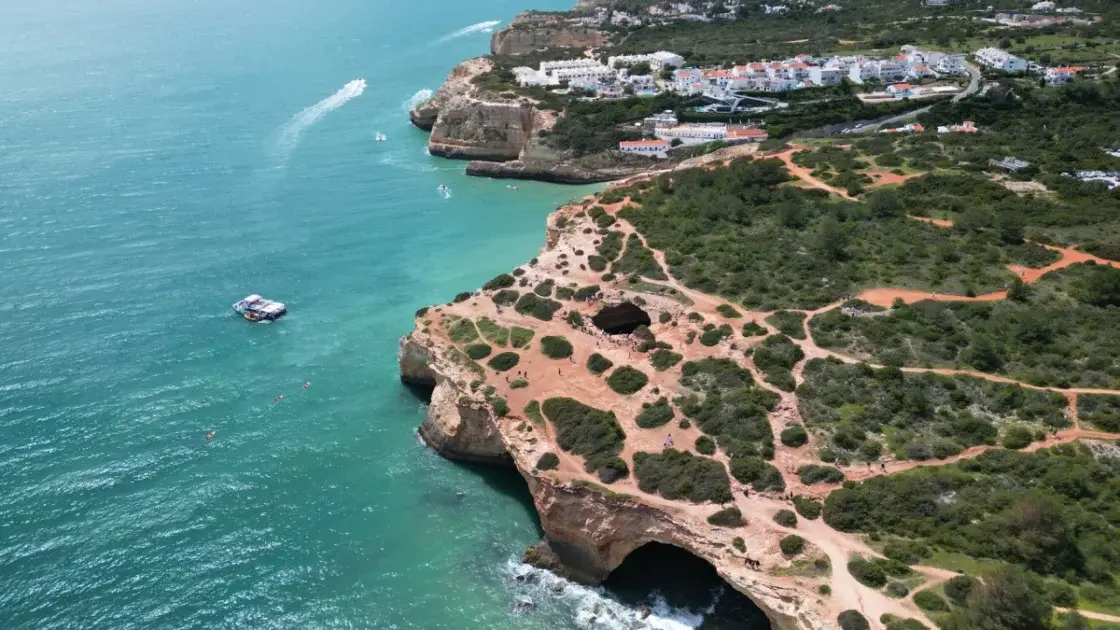
Praia da Marinha, near Benagil, is arguably the best rock pooling destination in the country: its limestone arches and caves create dozens of small basins at low tide, rich in anemones and crabs. Nearby Praia de Dona Ana, in Lagos, reveals colourful rock formations and shallow pools that are ideal for young children. Further east, near Albufeira, Praia da Oura and the cliffs between Carvoeiro and Alfanzina also form good pools during spring low tides.
Alentejo and Setúbal
Praia de São Torpes, inside the Southwest Alentejano and Costa Vicentina Nature Park, has an extensive, lightly-visited rocky shelf with deep pools and good visibility. In the Arrábida, a UNESCO biosphere reserve, several rocky coves between Portinho da Arrábida and Galapinhos offer exceptionally clear pools, thanks to the low water turbidity in this protected area.
Centre and North
Near Peniche and Baleal, the rocky shelf connecting the peninsula to the mainland forms pools that are accessible on foot and popular with families spending the whole day there. In Ericeira, inside Portugal's World Surfing Reserve, the reefs near São Sebastião and Ribeira d'Ilhas also expose good pools at low tide. Further north, the rocky coastline between Viana do Castelo and Caminha — less popular with tourists — rewards those willing to walk a little further from the main beach.
How to Explore Rock Pools Safely
Rock pooling is a safe activity when planned around the tide, but every year there are avoidable incidents involving people caught out by rising water on isolated rocky platforms. Before you leave, always check the tide table for the day and area you're visiting — our complete guide to tides in Portugal explains how to read the Portuguese Hydrographic Institute's tables and plan your visit around the local low tide.
The most important practical rule is to arrive about an hour before the exact time of low tide and leave the rocky area as soon as the water starts visibly rising — you don't need to wait for full high tide to be at risk; as little as 30 to 40 centimetres of water covering a passage is enough to cut someone off on a rocky platform. Never turn your back completely on the sea, especially on days with bigger swell, and avoid wet rock or areas covered in visible seaweed, which get extremely slippery — a pair of water shoes or old trainers with good grip makes a real difference.
With small children, keep them within direct eyesight at all times and explain beforehand that some species, such as certain anemones and sea urchins, can sting or irritate the skin on direct contact — looking is always safe, careful touching is fine with many species, but animals should never be taken out of the water or brought home.
Conservation Rules: What You Can and Can't Do
Rock pools are fragile ecosystems, and in several parts of the Portuguese coast they sit inside classified areas — Nature Parks, Nature Reserves or Sites of Community Importance managed by ICNF (Portugal's Institute for Nature Conservation and Forests) — where the protection of marine flora and fauna has a specific legal framework under Portugal's nature conservation and biodiversity law (Decreto-Lei n.º 142/2008).
In practice, this translates into simple rules worth following at any Portuguese rock pool, protected area or not:
- Always put rocks back exactly where you found them after peeking underneath — many animals live hidden and can die from exposure or predation if left uncovered.
- Don't remove animals, shells with living organisms, seaweed or rocks from the pool, even if they look plentiful — collecting marine species in protected areas can be an environmental offence, enforceable by GNR-SEPNA (the nature protection unit of Portugal's national police force, the GNR) and by ICNF.
- Handle any animal you want a closer look at gently and briefly, and always return it to the exact spot where you found it.
- Don't rinse sunscreen or insect repellent directly into the pool — chemical filters are toxic to marine invertebrates even at fairly low concentrations.
These rules aren't just a formality: rock pools recover slowly from repeated human disturbance, and the main reason beaches like Marinha or Arrábida still offer such rich sightings is precisely because most visitors already follow this "look, don't take" ethic.
Best Time of Year for Rock Pooling in Portugal
While it's possible to go rock pooling year-round, the bathing season between May and September offers the best conditions: long days, warmer water (which keeps more species active and visible), and frequent spring tides around the new and full moon, which expose a much larger area of rock than neap tides do. Always check the specific tide tables for the beach you plan to visit, since the tidal range and the exact time of low tide vary from day to day and from region to region along the Portuguese coast.
Outside the bathing season, winter brings stronger swell and more frequent nortada winds, which makes some rocky platforms more dangerous and means you should avoid exploring on days with a yellow or orange IPMA (Portuguese weather institute) warning for sea conditions. If you're visiting outside summer, always pick a day with calm seas and light wind.
Frequently Asked Questions
Is it safe to touch the animals I find in a rock pool? In most cases, yes, as long as the touch is brief and gentle — just avoid anemones that look stinging and any sea urchins. Never take animals out of the water or bring them home.
Do I need any special equipment for rock pooling? It's not required, but water shoes or old trainers with good grip prevent slips on wet rock, and a small clear bucket makes it easier to get a close look at an animal before returning it to the water.
Can I take crabs or shrimp home from a rock pool? No. Collecting marine species from rock pools, especially inside protected areas managed by ICNF, can be an environmental offence, and even outside those areas it goes against the conservation practices that keep these ecosystems rich.
What's the best time of day to see rock pools? The hour immediately before and during low tide, ideally checked against that day's tide table — arriving about an hour before low tide gives you time to explore safely before the water starts rising again.
Is rock pooling safe for young children? Yes, as long as they're closely supervised: choose shallow pools away from the surf line, explain the safety rules before you start, and avoid days with heavy swell or a rapidly rising tide.
Conclusion
Rock pools are one of the most accessible, completely free ways to get close to Portuguese marine life — no boat, no diving gear, no special equipment needed, just picking the right day, respecting the tide, and putting every rock and every animal back exactly where you found it. From Praia da Marinha in the Algarve to the rocky coves of Arrábida and the reefs of Peniche and Ericeira, there are quality rock pools scattered along nearly the entire Portuguese coast, waiting for the next low tide. Before you plan your visit, check our complete tide guide to pick the best day and time, see our guide to Praia da Marinha for the country's most rewarding destination, check our jellyfish and marine life safety guide for what to avoid touching, and explore the protected coastline in depth at the beaches of Arrábida.