Key Takeaway: Arrábida beaches rank among Europe's finest — turquoise water, white sand and green limestone cliffs inside a Natural Park officially designated a UNESCO Biosphere Reserve in 2025. This complete guide covers every beach, the 2026 access restrictions, and everything you need to plan the perfect visit just 40 minutes from Lisbon.
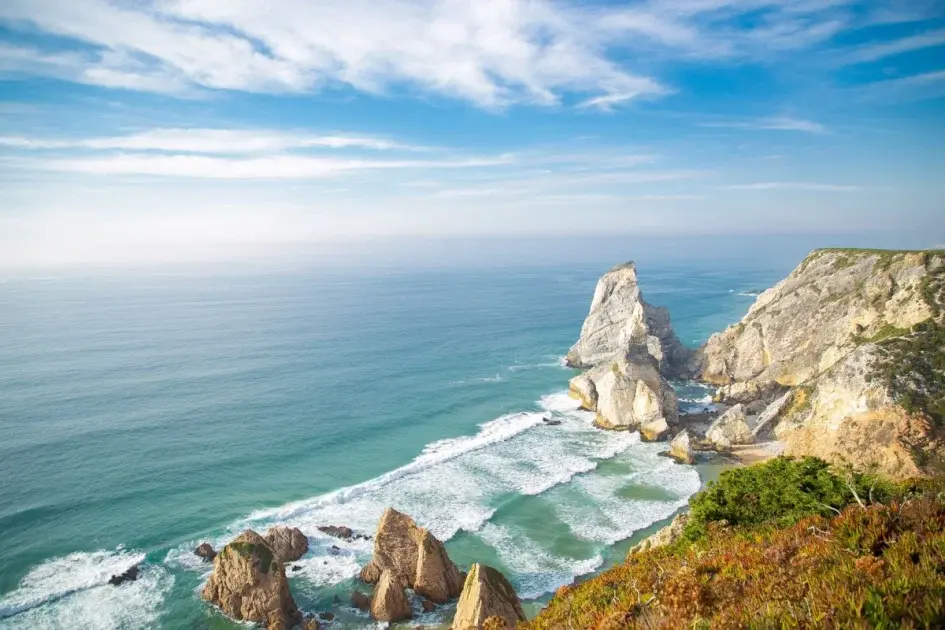
Some places earn the word "breathtaking" through hyperbole. The beaches of Arrábida earn it honestly. Turquoise water that rivals the Mediterranean, soft white sand, and behind it all the Serra da Arrábida — a ridge of dense Mediterranean scrubland tumbling down to the sea. In October 2025, UNESCO designated Arrábida Natural Park a Biosphere Reserve, making official what visitors have known for decades: this is one of the most extraordinary coastal environments in the world.
The extraordinary part? It sits just 40 minutes south of Lisbon by car. You don't need to fly anywhere or travel hundreds of kilometres to find crystalline water in Portugal — just cross the Tagus bridge and head south. This guide covers everything you need to know about the best beaches in Arrábida in 2026: which to choose for your travel style, how to navigate the new access restrictions, where to eat and sleep, and what not to miss.
Arrábida Natural Park: Protected Since 1976
Arrábida Natural Park was established in 1976 and covers 176 km², of which 53 km² form a marine reserve — one of the largest marine protected areas in mainland Portugal. The Serra da Arrábida is a limestone fold mountain range, which explains its pale colours and the thick Mediterranean vegetation that defines the landscape: lentisk, rosemary, juniper and kermes oak cloaking the south-facing slopes.
In September 2025, at the World Congress of Biosphere Reserves in Hangzhou, China, UNESCO classified Arrábida as a Biosphere Reserve — a status placing it among 785 of the world's most important territories for biodiversity conservation. The park shelters more than 1,400 plant species (around 40% of Portugal's entire flora) and a rich fauna including Bonelli's eagle and the common dolphin. The marine reserve protects rocky seabeds with cold-water corals and a fish diversity remarkable for the North Atlantic.
To plan your visit with an interactive map, explore our interactive beach map of Portugal.
The Best Arrábida Beaches in 2026
Arrábida Natural Park has more than a dozen beaches, but several stand out for their exceptional beauty. We've organised the main ones from west to east, starting near Sesimbra and ending close to Setúbal.
Praia de Galapinhos — Europe's Most Beautiful Beach
Praia de Galapinhos is widely considered the most beautiful beach not just in Portugal but in all of Europe. In 2017, European Best Destinations named it the continent's top beach, and anyone who visits understands why: soft white sand, turquoise water of extraordinary clarity, and the natural amphitheatre of the green limestone cliffs framing it all. There are no facilities whatsoever — no bar, no showers, no kiosks — which is exactly what protects the environment and delivers an experience of near-perfect isolation.
In 2026, access to Praia de Galapinhos is restricted during the summer months (June to September): the road is closed to private vehicles between 07:00 and 19:30, and access is on foot from the Creiro car park (approximately 30 minutes' walk) or via the free seasonal bus operated by Setúbal municipality, departing from the Secil factory car park.
- Best for: photography, snorkelling, wild beach experience
- 2026 access: on foot (~30 min) or free seasonal bus from the Secil car park
- Facilities: none — bring water and food
- Environmental note: Inside the Arrábida Natural Reserve; camping and fires strictly prohibited
Portinho da Arrábida — One of Portugal's Seven Natural Wonders
Portinho da Arrábida is probably the most famous cove in the park. Its sheltered position — surrounded by tall cliffs and Mediterranean scrubland — creates unique conditions: the water is typically calm, warm by Atlantic standards, and so transparent it regularly draws Mediterranean comparisons. It was voted one of Portugal's Seven Natural Wonders in the beaches and cliffs category — a recognition that surprises no one who has stood on its shores.
On the waterfront sits a small historic fishing harbour and a seventeenth-century fort (Forte de Nossa Senhora do Mar) attesting to this coast's historical richness. Portinho is also one of the best spots for snorkelling and diving in Portugal — the rocky seabed shelters an abundance of marine life including octopus, cuttlefish, sea bream, and occasional common dolphins spotted offshore.
- Best for: families, snorkelling, swimming in calm water
- 2026 access: road closed to private vehicles 07:00–19:00 in peak season; parking strictly controlled
- Facilities: restaurant, seasonal beach support, WC
- Distance from Lisbon: ~55 km (approximately 50 min by car outside rush hour)
Praia do Creiro — Wild Beauty with Basic Comfort
Praia do Creiro is often cited as Portugal's most beautiful beach by those who value the balance between wild scenery and basic amenity. The sand is white and fine, the water turquoise, the limestone cliff backdrop identical to the other Arrábida beaches — but here there is a car park (limited), WC, and two beachside restaurants serving decent food. It is one of the few beaches in the park with car access without the most severe restrictions, though capacity remains limited during peak months.
Practical tip: Creiro is the best starting point for the walk to Galapinhos. The coastal cliff path takes around 30 minutes and rewards you with panoramic views across the entire bay.
- Best for: families, full beach days, base for hiking
- Facilities: car park, WC, 2 restaurants, seasonal beach support
- Parking: ~€5/day; full before 10:00 in summer
Praia do Ribeiro do Cavalo — Arrábida's Best-Kept Secret
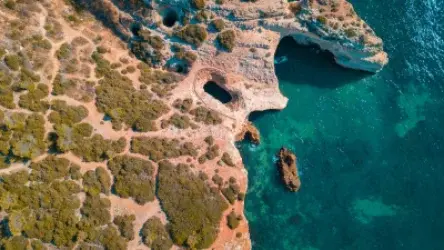
Praia do Ribeiro do Cavalo is the beach that locals have long kept to themselves, and that social media algorithms have steadily revealed to the world. Access is exclusively on foot via a steep 20-minute trail down the cliff face — the path includes loose rock sections and requires proper footwear. The reward is a small cove of white sand framed by a natural limestone arch, blue-green water of almost unreal clarity, and a sense of isolation rarely found this close to a major European capital.
On social media, Ribeiro do Cavalo has accumulated tens of thousands of posts — not hard to understand why. Be warned: the return climb is demanding, and on very hot days it can be gruelling. Go early, bring water and wear shoes with grip.
- Best for: adventurers, photography, snorkelling, couples
- Access: on foot only, ~20 min steep trail from road ER379-1
- Difficulty: Medium-High — not suitable for young children or those with limited mobility
- Facilities: none
Praia de Sesimbra — The Town Beach
Praia de Sesimbra sits technically outside the core park area but is the natural gateway to the region and one of the best-equipped beaches in the greater Lisbon area. The bay divides into two beaches — Praia do Ouro near the historic fishing harbour, and Praia da Califórnia to the east — both with calm water, golden sand and excellent infrastructure. The village of Sesimbra itself, with its Moorish castle perched above the ridge and fresh-fish restaurants along the harbour, is a destination in its own right.
- Best for: families, first-time visitors to the region, those who prefer easy access
- Facilities: full — showers, WC, lifeguard, bars, restaurants, car park
- Blue Flag: Yes — certified water quality
Praia da Figueirinha — Blue Flag Beach with Full Infrastructure
Praia da Figueirinha is the largest beach in Arrábida Natural Park and one of the few with a Blue Flag certification. Located on the eastern edge of the park, closest to Setúbal, it has relatively easy road access, a large car park, and the best facilities in the entire protected area. The water is calm and the beach extensive enough to absorb summer visitors without feeling crowded. Before your visit, check the status of Portugal's Blue Flag beaches for the current year.
- Best for: families, visitors with reduced mobility, first beach day in Arrábida
- Facilities: full — paid car park, showers, WC, restaurant, lifeguard
- How to get there: EN10 road, exit towards Azeitão/Arrábida — paved road all the way to the beach
How to Get to Arrábida Beaches in 2026
Access to the core Arrábida beaches — Portinho, Galapinhos, Creiro, Galapos — is subject to traffic restrictions during the bathing season (typically June to September). Setúbal municipality has implemented a traffic management system to protect the park ecosystem:
- Private vehicle restriction: between 07:00 and 19:30, the ER379-1 road section between Creiro and Portinho da Arrábida is closed to unauthorised vehicles
- Capacity-based closure: when car parks reach maximum capacity, access closes automatically — even for residents with permits
- Free seasonal bus: Setúbal municipality runs a free bus connecting the Secil factory car park (EN10) to the beaches of Creiro, Galapos and Galapinhos
- On foot or by bicycle: always permitted — the walk from the EN10 to Portinho da Arrábida takes approximately 45 minutes
Essential tip: Arrive at the Secil car park before 09:00 in summer. After that time, capacity runs out quickly on weekends and public holidays. Figueirinha and Sesimbra beaches have no such restrictions and are viable alternatives on the busiest days.
From Lisbon by Car
Take the A2 motorway (Autoestrada do Sul) and then the EN10 towards Setúbal/Azeitão. For Sesimbra, take the A33 exit. Journey time is 40–55 minutes without traffic. On summer weekends, allow an extra 30–45 minutes for congestion on the beach access roads.
By Public Transport
A seasonal ferry connection between Sesimbra and Lisbon is operated during the summer months. By train (Fertagus/CP) to Setúbal, then local bus or taxi to the beaches. For Galapinhos and Portinho da Arrábida, public transport is limited outside the free seasonal bus season — a car or bicycle is the most practical option.
Activities in Arrábida Beyond the Beach
Arrábida Natural Park offers far more than picture-postcard beaches. The combination of marine reserve, Mediterranean ridge and historic villages creates a range of activities for every type of visitor.
Diving and Snorkelling
The Arrábida Marine Natural Reserve (38 km of protected coastline) has some of the best underwater scenery in mainland Portugal. Visibility can reach 10–15 metres on calm days, and the marine diversity is exceptional for the North Atlantic: starfish, cuttlefish, sea bass, sea bream, and occasional common dolphins sighted offshore. Several diving and snorkelling companies operate from Portinho and Sesimbra. See our guide to snorkelling and diving in Portugal for more detail.
Dolphin and Wildlife Watching
In the Sado Estuary, just east of Arrábida, lives one of Europe's only resident populations of bottlenose dolphins — currently around 30 individuals. Several operators based in Setúbal and Sesimbra run dolphin-watching boat trips with specialist guides. The best season runs from April to October, with the highest sighting probability between June and September.
Hiking the Serra
The park has several marked hiking trails along the ridge of the Serra da Arrábida with panoramic views over the sea. The route to Alto do Formosinho (501 m, the highest point in the range) offers views across the Setúbal Peninsula, the Sado Estuary, and on clear days, the Serra de Sintra to the north. For walks that combine hiking with river swimming, our guide to trails with river beaches in Portugal offers further options.
Kayaking and Stand-Up Paddle
The calm coves of Portinho and Creiro are ideal for kayaking and SUP. Equipment rental is available seasonally on-site, or bring your own. Exploring the sea caves and natural arches of the limestone cliffs by kayak is one of the most memorable experiences the region has to offer.
Where to Eat near Arrábida
The Arrábida region has a quality food scene built on fresh Atlantic fish and shellfish and a proud winemaking tradition (Setúbal Moscatel and reds from Quinta de Bacalhôa and José Maria da Fonseca are national benchmarks).
- Portinho beach: the beachfront restaurant serves grilled fish on stone with a direct sea view — expect a 1–2 hour wait on summer weekends, worth every minute
- Creiro beach: two open-air restaurants alongside the beach, specialising in grilled fish and shellfish
- Sesimbra: dozens of tascas and seafood restaurants line the harbour — the caldeirada (fish stew) and fried cuttlefish are the village's signature dishes
- Azeitão: 15 minutes from the park, this town is famous for its fresh sheep's cheese (Azeitão DOP) and wine estates — excellent quality-to-price ratio
When to Visit Arrábida Beaches
Arrábida beaches are worth visiting almost year-round, but each season has its advantages:
- June and September: the sweet spot — pleasant water temperature (19–22°C), golden light, far fewer crowds than July and August; restaurants have shorter queues and parking is easier
- July and August: peak summer — busiest beaches, access restrictions in full force; the beauty is unchanged, but more logistics required
- April, May and October: transition season — ideal for hiking and wildlife; the sea is too cool for most swimmers but the park is green and almost empty of tourists
- Winter (November–March): not beach season, but the ridge walks are extraordinary; some beaches may be inaccessible due to erosion or maintenance
For a complete overview of the best time to visit beaches in each region of Portugal, see our guide to Lisbon-area beaches.
Where to Stay near Arrábida
Accommodation in the Arrábida area ranges from camping in nature to luxury hotels with saltwater pools. The main bases are:
- Sesimbra: greatest concentration of accommodation — hotels, apartments, holiday rentals; 15–20 minutes from the park beaches
- Setúbal: full city infrastructure — business and leisure hotels, restaurants, shops; good base for the eastern side of the park
- Azeitão: rural charm — quintas and country houses; 20–25 minutes from the beaches; ideal for those wanting quiet and a wine-country feel
- Camping: authorised campsites exist in and around the park — check our coastal camping guide for details
FAQ — Frequently Asked Questions about Arrábida Beaches
Which is the most beautiful beach in Arrábida?
Praia de Galapinhos is most often cited as the standout — it was named Europe's best beach by European Best Destinations in 2017. Praia do Ribeiro do Cavalo and Portinho da Arrábida are equally stunning and deserve equal mention.
Can I drive to Arrábida beaches in 2026?
It depends on the beach and the time of year. During the bathing season (June to September), the road to Galapinhos, Portinho and Galapos is closed to private vehicles between 07:00 and 19:30. Access is on foot or via the free municipal bus. Praia da Figueirinha and Praia do Creiro have car access with paid parking.
Is there an entrance fee for Arrábida Natural Park?
There is no entrance charge for Arrábida Natural Park. Parking in organised car parks typically costs €3–5 per day. The free seasonal municipal bus is operated by Setúbal municipality during the bathing season.
How warm is the water at Arrábida beaches?
Sea temperature averages 17–19°C in June, 20–23°C in July and August, and 19–21°C in September — slightly warmer than Portugal's west-facing Atlantic coast, owing to the sheltered coves and southern exposure.
Are Arrábida beaches suitable for children?
Most are excellent for families. Portinho da Arrábida, Creiro, Figueirinha and Sesimbra all have calm water and lifeguards. Praia do Ribeiro do Cavalo is not recommended for young children due to the steep cliff-path access.
Does Arrábida have Blue Flag beaches?
Praia da Figueirinha and Praia de Sesimbra hold Blue Flag status, certifying water quality and facilities. The wilder park beaches (Galapinhos, Portinho, Ribeiro do Cavalo) lack the infrastructure required for the certification process, but water quality is monitored and consistently excellent.
The beaches of Arrábida are, without question, one of Portugal's greatest natural treasures. With the 2025 UNESCO Biosphere Reserve designation cementing the commitment to preservation, this coastline will remain extraordinary for generations to come. Plan your visit in advance, respect the access rules, and leave Arrábida as beautiful as you found it. To discover beaches across the entire Portuguese coastline, use our interactive beach map.