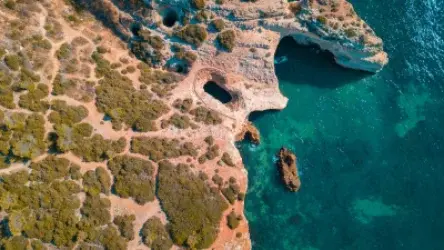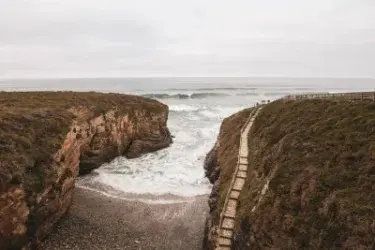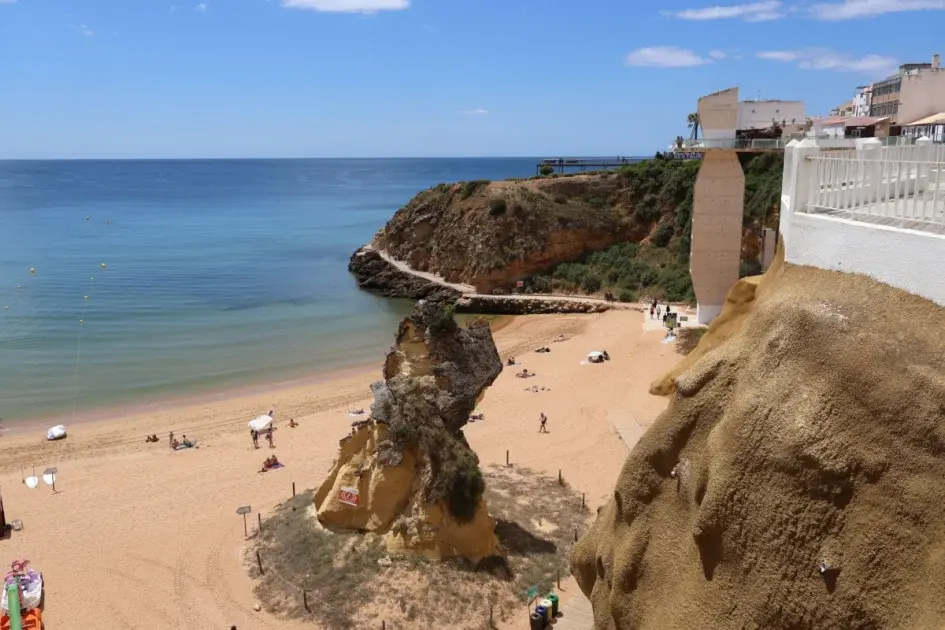
Vilamoura has a reputation as the Algarve's "glamour zone": superyachts catching the sun in the country's largest marina, championship golf courses, and a casino open into the early hours. But after several visits to this stretch of the Algarve coast, we've found that's only half the story. A short walk from the marina, Quarteira is still very much a working fishing town, where grilled fish costs a fraction of what you'll pay by the yachts, and the beach is every bit as wide and golden — minus the price tag of the glamour.
In this complete 2026 guide, we cover the essential beaches of Vilamoura and Quarteira, from the buzzing Marina Beach to the nearly secret Trafal cove, with a comparison table to help you pick the right beach for your trip, everything worth doing beyond the sand (marina, golf, casino), where to eat, how to get there, and the practical details you need to plan your visit.
The Beaches of Vilamoura and Quarteira: Overview
Vilamoura and Quarteira sit within the municipality of Loulé, right in the centre of the Algarve, sharing one of the region's longest unbroken stretches of golden sand — more than 15 km, interrupted only by the marina entrance and Quarteira's small fishing harbour. To the west, the sand continues into Falésia Beach, on the boundary with Albufeira; to the east, it runs through Quarteira and on to Trafal Beach and beyond.
- Vilamoura (marina area): Vilamoura Marina Beach (also called Praia de Vilamoura)
- Between Vilamoura and Quarteira: Trafal Beach (Praia do Loulé Velho)
- Quarteira: Quarteira Beach, running almost 3 km along the seafront promenade
- West of the marina: Falésia Beach, one of the most photographed beaches in Portugal
All the main beaches have lifeguards during the official bathing season (generally 15 June to 15 September), easy pedestrian access from the promenades, and beach bars with terraces.
The Must-Visit Beaches of Vilamoura and Quarteira
1. Vilamoura Marina Beach — The Resort's Showpiece
Right next to the marina, Marina Beach (also known as Praia de Vilamoura) is the most central and busiest beach in the area. It stretches for about 1 km before merging into Quarteira Beach, with wide golden sand and relatively calm water, sheltered by rock groynes at both ends. It flies a Blue Flag and has lifeguards, beach restaurants, showers, toilets, and sunbed and umbrella rental.
It's the natural choice if you're staying in one of the hotels or apartments near the marina, or if you want to combine a beach day with browsing the shops and restaurants on the quay. It fills up fast in July and August — arrive early for a spot near the water. Approximate GPS: 37.0736, -8.1155.
2. Quarteira Beach — The Fishing Town with a Sea View
East of the marina, Quarteira Beach follows almost 3 km of seafront promenade (Avenida Sá Carneiro) up to the old fishing harbour. It's a wide beach with a less manicured, more local feel than Vilamoura's — you'll still spot fishing nets drying and colourful boats moored by the jetty.
The recently upgraded promenade has beachfront cafés, outdoor gym equipment and a cycle path, making this a great pick if you want lifeguards and full beach facilities without Vilamoura's marina-side prices. Approximate GPS: 37.0713, -8.1023.
3. Trafal Beach (Praia do Loulé Velho) — The Hidden Cove
Tucked between Vilamoura and Quarteira and largely overlooked by day-trippers, Trafal Beach — also called Praia do Loulé Velho — is reached via a wooden footbridge crossing a small coastal lagoon, the Lagoa da Foz da Ribeira do Almargem. The result is a more secluded cove, flanked by low rock formations, with clear water good for snorkelling close to the rocks.
Traces of a Roman-era necropolis have been found in the cliff above the beach, evidence that this stretch of coast was already inhabited some two thousand years ago. There's a small bar at the entrance with toilets. It's the right pick if you want something quieter without leaving the Vilamoura area. Approximate GPS: 37.0700, -8.1090.
4. Falésia Beach — The Stunning Neighbour
Just west of the marina, Falésia Beach runs for several kilometres of ochre and red cliffs all the way to Olhos de Água, in neighbouring Albufeira. The stretch closest to Vilamoura is known as Praia da Rocha Baixinha Nascente, reachable on foot or by bike from the marina along the coastal path. By many international rankings, it's considered one of the most beautiful beaches in Europe. Read our complete Falésia Beach guide for every access point and highlight.
Comparison Table: Which Beach Is Right for You?
| Beach | Best For | Buzz | Prices | Facilities |
|---|---|---|---|---|
| Vilamoura Marina | Resort life, families, convenience | High | High | Full |
| Quarteira | Local feel, budget travellers | Medium-High | Affordable | Full |
| Trafal | Quiet, snorkelling | Low | Moderate | Basic |
| Falésia | Scenery, walking, photography | Medium | Moderate | Good |
Beyond the Beach: Marina, Golf and Casino
Vilamoura was planned in the 1970s and 80s as a purpose-built integrated resort, and it shows in everything beyond the sand. The Marina de Vilamoura is the largest in Portugal, with more than a thousand berths and a strip of restaurants, bars and shops along the quay — it's where locals and visitors alike head for dinner or an evening ice cream, even if they've never set foot on a boat.
The area is home to five internationally rated golf courses, including the Victoria Golf Course, designed by Arthur Hill and a regular host of the European Tour's Portugal Masters, and the historic Old Course (Dom Pedro Golf), one of the first courses built in the Algarve. Casino Vilamoura, right by the marina, has traditional gaming tables and hundreds of slot machines, and stays open into the small hours during high season.
If you're after watersports, the marina is also the departure point for boat trips, sport fishing and jet ski rental — check our guide to jet ski rules and prices in Portugal before you book.
Where to Eat in Vilamoura and Quarteira
The price gap between the two towns is probably the biggest surprise for anyone who visits both in the same day. In Vilamoura, the marina quay is lined with international and contemporary Portuguese restaurants, terraces overlooking the yachts — great for a special night out, but at clearly tourist-oriented prices. In Quarteira, a short walk away, seafood restaurants by the old fishing harbour serve grilled fish and cataplana at noticeably lower prices, with the catch arriving almost straight from the fish auction to the plate.
If you're after fresh shellfish — clams, goose barnacles, local prawns — head to the tascas in Quarteira's harbour district, away from the marina's tourist circuit. See also our guide to fish and seafood restaurants near Portugal's beaches for more recommendations along the coast.
How to Get to Vilamoura and Quarteira
By Air
Faro International Airport is just 25 km from Vilamoura, a 20-30 minute drive via the EN125 or the A22 motorway. It's by far the fastest and most convenient way in, with a private transfer or taxi costing between €35 and €50.
By Car
Vilamoura is about 275 km from Lisbon (via the A2, roughly 2h30) and about 550 km from Porto (via the A1 and A2, roughly 5 hours). The A22 exit for Vilamoura/Quarteira is well signposted from Loulé.
By Train and Bus
There's no train station in Vilamoura itself; the nearest is in Loulé, about 15 km away. The most practical public transport option is the Vamus bus, with regular services from Faro and Albufeira to Quarteira and Vilamoura, with fares from around €3.
Best Time to Visit
The official bathing season runs from 15 June to 15 September, with lifeguards and full beach services in place.
- June: A great option — fewer crowds than July/August, water around 20-21°C (68-70°F).
- July and August: Peak season — busy beaches, a lively marina at night, and accommodation prices at their highest.
- September: Arguably the best month — smaller crowds, warmer sea (up to 23°C/73°F), and milder temperatures for golf.
- Off-season (October to May): Golf and the marina stay active; the beaches are nearly empty, ideal for coastal walks.
See also our month-by-month guide to the best time to visit Portugal's beaches.
Beach Safety in Vilamoura and Quarteira
The beaches of Vilamoura and Quarteira are generally more sheltered than open ocean beaches thanks to the rock groynes near the marina, but the general beach safety rules for Portugal still apply:
- Only swim at lifeguarded beaches and follow the flags (green = safe; yellow = caution; red = swimming banned).
- Near Trafal Beach and Falésia, keep your distance from the cliffs — rockfalls are a real risk even on calm days.
- The marina area has boat traffic; respect the buoys marking the swimming zone and stay clear of navigation channels.
- Wear SPF 50+ sunscreen — sun exposure in the central Algarve is intense from June to September.
Read our complete guide to beach safety in Portugal for more on flags and emergency procedures.
Frequently Asked Questions about Vilamoura and Quarteira Beaches
Which is the best beach for families in Vilamoura? Vilamoura Marina Beach is the top pick for families, thanks to its proximity to hotels, calmer water near the rock groynes, and full facilities. Quarteira Beach, which is wider, is also a great alternative with more affordable dining nearby.
Are Vilamoura and Quarteira beaches the same beach? Not officially, but they're physically joined by one unbroken stretch of sand. Vilamoura Marina Beach merges seamlessly into Quarteira Beach, with the split being administrative and a matter of naming rather than any visible break.
How much does parking cost near the beach in Vilamoura? Near the marina, parking is mostly paid, in both covered car parks and surface lots. In Quarteira and near Trafal Beach there are free parking areas, though space gets tight in August.
Does Trafal Beach have lifeguards? Yes, during the official bathing season (15 June to 15 September), though the supervised perimeter is smaller than at the main beaches given its size.
How far is Vilamoura from Faro Airport? About 25 km, roughly a 20-30 minute drive via the A22 or EN125. A private transfer or taxi costs between €35 and €50.
Conclusion
Vilamoura and Quarteira show two sides of the same stretch of Algarve sand: the polished glamour of the marina, with world-class golf and sundowner restaurants overlooking the yachts, and the unpretentious authenticity of a town that's still, in part, a working fishing community. Between the two, Trafal Beach offers a quieter refuge for anyone who wants to step away from the buzz without going far.
To keep planning your trip to the central Algarve, check out our complete Albufeira guide, just a few minutes to the west, and see our roundup of the best family beaches in the Algarve.