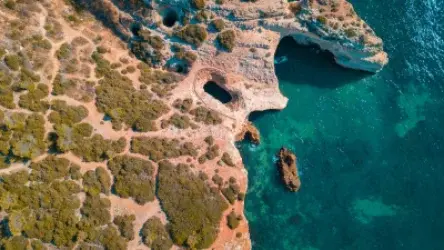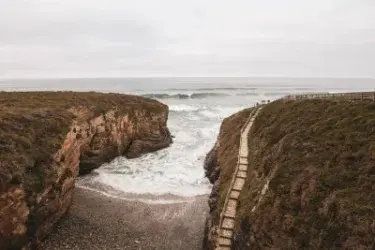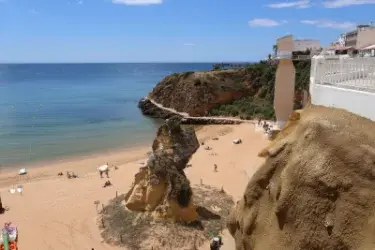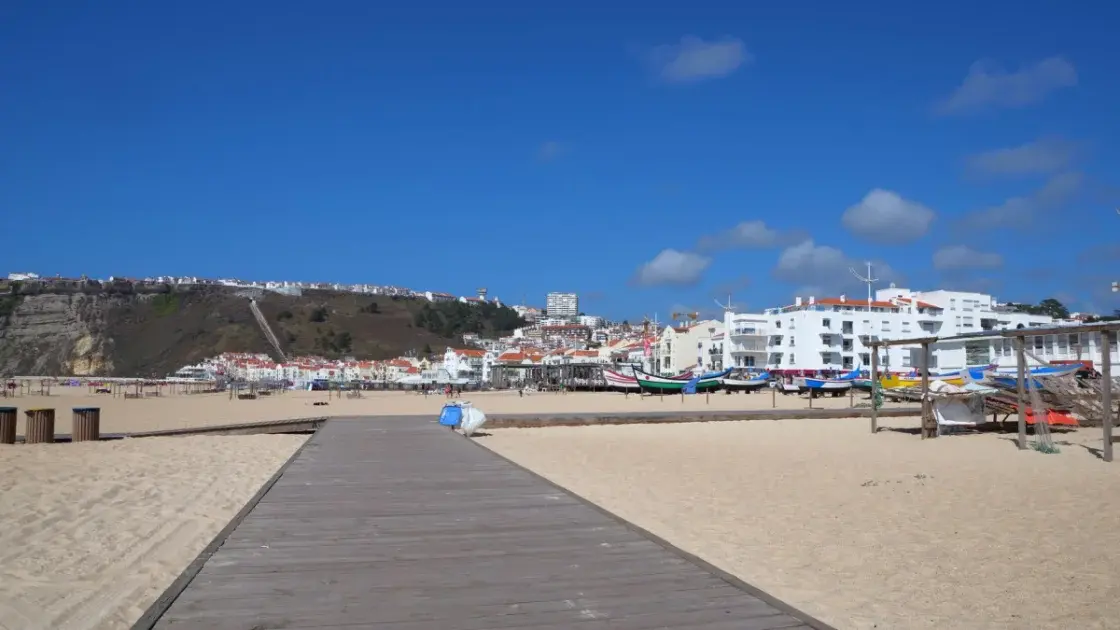
When people picture the Algarve, Albufeira is usually the first image that comes to mind. And for good reason: this former fishing village has become Portugal's most visited beach resort, welcoming millions of visitors every year from across Europe and beyond. But it would be a disservice to reduce Albufeira to pure mass tourism — over many years exploring this coastline, we've found that it conceals genuine gems, from wild coves requiring a short hike to full-service family beaches with Blue Flag certification.
In this complete 2026 guide, we profile the 8 essential beaches of Albufeira with detailed breakdowns, a comparison table to help you choose the right beach for your group, access tips, local gastronomy and all the practical information you need to make the most of your visit.
Albufeira's Beaches: An Overview
The municipality of Albufeira stretches across 30 km of coastline, from the Quarteira river estuary in the east to Praia da Galé in the west. Within this stretch lie more than 30 beaches, which we divide into four distinct geographic zones:
- Historic Centre Zone: Praia do Peneco (Tunnel Beach), Praia dos Pescadores, Praia do Inatel, Praia dos Alemães
- Oura Zone (The Strip): Praia da Oura, Praia da Oura Leste
- Eastern Zone (Olhos de Água to Falésia): Praia de Olhos de Água, Praia da Maria Luísa, Praia da Falésia
- Western Zone (São Rafael to Galé): Praia de São Rafael, Praia da Galé, Praia de Santa Eulália
All municipal beaches have lifeguards during the official bathing season (typically 15 June to 15 September), toilet facilities, and in most cases accessible beach wheelchairs (Tiralô amphibious chairs).
The 8 Essential Beaches of Albufeira
1. Praia do Peneco (Tunnel Beach) — The Old Town's Iconic Beach
Praia do Peneco is, for many visitors, the defining image of Albufeira. Located directly beneath the historic town centre, its most famous access point is a 20-metre tunnel bored through the cliff, connecting Rua 5 de Outubro to the sand. The alternative is the Peneco Elevator (Elevador do Peneco), inaugurated in 2008, standing 28 metres tall, carrying up to 13 people at a time and completely free to use — it also has an observation platform offering one of the best views of the coast.
The beach has fine golden sand, relatively calm water in its western section, and a lively atmosphere throughout the day. It's ideal for visitors who want to combine a beach day with the historic centre, restaurants and nightlife. GPS: 37.0852, -8.2519.
2. Praia dos Pescadores — The Heart of the Village
Immediately east of Peneco, Praia dos Pescadores is historically Albufeira's true beach heart. The name recalls the village's fishing past — for centuries, fishing boats left from here in the early hours. Today the beach retains an authentic charm, with colourful fishing boats anchored on the sand alongside sunloungers and beach bars.
It holds a Blue Flag certification, has full lifeguard coverage and an amphibious wheelchair for visitors with reduced mobility. Its central location makes it perfect for families staying in the historic centre. GPS: 37.0845, -8.2498.
3. Praia de Santa Eulália — The Complete Family Beach
About 4 km east of the centre, Santa Eulália is one of Albufeira's most well-rounded family beaches. Its gentle bay shape protects the water from stronger currents, the sand is fine and spacious, car access is easy with nearby parking, and the range of restaurants, bars and water sports rental shops rivals any Mediterranean resort.
The clear, relatively calm waters make Santa Eulália an excellent spot for surface snorkelling — the rocky formations at either end of the beach shelter octopus, bream and sea urchins. GPS: 37.0857, -8.2138. Access: Estrada de Santa Eulália, free car park 200 m from the beach.
4. Praia de Olhos de Água — The Freshwater Springs Beach
The name could not be more poetic: "olhos de água" means "eyes of water", referring to freshwater springs that bubble up through the sand at the water's edge during low tide — a rare natural phenomenon that fascinates children and adults alike. This beach, tucked between low cliffs, has a more local, authentic atmosphere with less tourist pressure than the central beaches.
Access via ramp and steps through the village of Olhos de Água. Free parking in the village. The beach has support services, a bar and lifeguards. GPS: 37.0889, -8.1845.
5. Praia da Maria Luísa — The Secret Cove
Praia da Maria Luísa is one of the most beautiful and least publicised beaches in Albufeira. Nestled between orange cliffs reaching up to 30 metres in height, it stretches only 200 metres and requires descending a steep stairway to reach the sand. That natural barrier keeps it relatively quiet even in the height of August.
The waters are crystal-clear and ideal for snorkelling along the cliff base. It is also one of the best photography spots on the Albufeira coast, particularly in the late afternoon when golden light catches the rock walls. No direct refreshment facilities. GPS: 37.0894, -8.1770.
6. Praia da Falésia — The Most Beautiful Beach in Albufeira
Stretching 6 km between Olhos de Água and Vilamoura, Praia da Falésia is widely considered Albufeira's most spectacular beach — and one of the most beautiful in the world. In 2026, TripAdvisor ranked it 5th globally. Its burnt-orange and ochre cliffs, contrasting with the deep blue of the Atlantic and the white-gold sand, create a landscape of extraordinary beauty.
The beach is so long that even in August it's possible to find a quiet stretch. There are three access sectors: Olhos de Água (west, ramp and steps), Falésia Central (centre, steps) and Falésia-Alfamar (east, near Hotel Alfamar). All sections have lifeguards and amphibious wheelchairs. Blue Flag certified. GPS: 37.0878, -8.1700. Read more in our complete Praia da Falésia guide.
7. Praia de São Rafael — The Golden Cove
West of the centre, São Rafael is an intimate 250-metre cove surrounded by rocky formations and small caves that give the landscape a character quite unlike anywhere else in the Algarve. The water is calm and translucent, perfect for families with young children. Access is via steps and a ramp from a minor road.
The adjacent caves and natural arches can be explored by swimming or kayak. The beach has support services, a bar and lifeguards during the bathing season. GPS: 37.0825, -8.2842.
8. Praia da Galé — The Sunset Beach
Praia da Galé, 8 km west of the centre, is the most tranquil of Albufeira's main beaches. Made up of two sections divided by rock formations (Galé Oeste and Galé Leste), it has a serene atmosphere naturally free of the bustle of the central beaches. It is recognised as one of the finest sunset-watching spots on the entire Algarve coast, with the rock formations creating breathtaking silhouettes at golden hour.
Ramp access. Large free car park. Lifeguards and amphibious wheelchair during the bathing season. GPS: 37.0790, -8.3152.
Comparison Table: Which Beach Is Right for You?
| Beach | Best For | Vibe | Access | Services |
|---|---|---|---|---|
| Peneco / Tunnel | Old town, nightlife | Busy | Tunnel / Lift | Full |
| Pescadores | Families, local feel | Busy | Town centre | Full |
| Santa Eulália | Families, snorkelling | Med-Busy | Car / easy ramp | Full |
| Olhos de Água | Nature, local feel | Relaxed | Village / ramp | Basic |
| Maria Luísa | Photography, peace | Quiet | Steep steps | Minimal |
| Falésia | Scenery, walking, photos | Moderate | Car / steps | Good |
| São Rafael | Young children, calm water | Moderate | Car / steps | Basic-good |
| Galé | Sunsets, tranquillity | Quiet | Car / ramp | Basic-good |
Albufeira's Historic Centre: Beyond the Beaches
Albufeira has one of the Algarve's liveliest historic town centres. Although most medieval monuments were destroyed in the 1755 earthquake, there is still plenty worth exploring:
- Rua 5 de Outubro: The main pedestrian street, lined with restaurants, craft shops and the entrance to the Tunnel. After dark it becomes one of the Algarve's most animated promenades.
- Largo Engenheiro Duarte Pacheco: The central square, with seafront terraces and views over the sea — a meeting point for locals and visitors alike.
- Municipal Archaeological Museum: Houses Roman, Islamic and medieval artefacts that tell Albufeira's story from its Arab era (the name "Albufeira" derives from the Arabic "Al-Buhera", meaning "the castle by the sea"). Free admission.
- Igreja Matriz de Sant'Ana: Rebuilt after the 1755 earthquake, one of the few surviving historic buildings in the old town.
Where to Eat: Albufeira's Best Restaurants
Albufeira's gastronomy is inseparably tied to the sea. After many visits to the Algarve, here are the restaurants that have never let us down:
- A Ruína — Housed inside the ruins of an 8th-century castle tower, this is the essential address for seafood cataplana and grilled fish, with dramatic views over Praia dos Pescadores. Booking essential in July and August.
- Os Arcos — An old town institution, celebrated for its monkfish and prawn kebab and its clam cataplanas.
- Casa del Mar — Adjacent to Tunnel Beach, in a 200-year-old building, serving generous cataplanas with fresh-caught fish of the day.
- Restaurante O Marinheiro — Awarded a Michelin Bib Gourmand, combining traditional Portuguese recipes with a contemporary touch. Reservation essential.
- The Staar — For a more refined experience: outstanding local tuna tartare and elevated bacalhau à Brás.
Grilled fish (sea bream, sea bass, sardines in July and August) is always a safe bet at any local tasca. For shellfish such as percebes (barnacles) and amêijoas (clams), head to the fishing harbour restaurants 2 km east of the centre. See also our guide to the best fish and seafood restaurants near Portugal's beaches.
How to Get to Albufeira
By Car
Albufeira is 250 km south of Lisbon (via A2, approx. 2h15) and 526 km from Porto (via A1+A2, approx. 4h45). The A22 (Via do Infante) exit for Albufeira is well signposted. Tolls from Lisbon total approximately €25.70.
By Train
The Alfa Pendular fast train connects Lisbon (Oriente) to Albufeira-Ferreiras station in 3h09, with tickets from €28.45. Important: Albufeira station is in Ferreiras, 7 km north of the town centre — you will need to complete the journey by Uber/Bolt (€6–9) or local bus (€1.70). Two to three direct daily services.
By Bus
Rede Expressos and FlixBus run regular Lisbon–Albufeira services departing from Sete Rios and Oriente, taking 3 to 4 hours. FlixBus tickets from €18.99. Albufeira's bus terminal is in the town centre.
From Faro Airport
Faro International Airport is just 40 km from Albufeira (30 min by car via A22). A private transfer or taxi costs €40–55. The Vamus bus (line 22) takes about 1 hour and costs €3.30.
Best Time to Visit Albufeira
The official bathing season runs 15 June to 15 September, when all beaches have lifeguards and full services. That said:
- June: Excellent — less crowded than July/August, water temperature ~21°C, long days. Recommended for families.
- July and August: Peak season — packed beaches (especially August), high prices, maximum nightlife. Hot evenings, full atmosphere.
- September: The best month — crowds drop sharply, water temperature reaches its peak (~23°C), prices fall. Highly recommended.
- May and October: Great for cliff walks, photography and cultural tourism. Near-empty beaches, cooler water (~18°C).
For a full breakdown, see our month-by-month guide to the best time to visit Portugal's beaches.
Beach Safety in Albufeira
Albufeira's beaches record a high number of rescue incidents each year due to tourist volumes and rip currents. Key safety advice:
- Only swim at supervised beaches (green flag = safe; yellow = caution; red = no swimming).
- On cliff beaches (Falésia, Maria Luísa), stay well away from cliff faces — rockfalls occur without warning.
- Rip currents are most common near rocky headlands. If caught in one, do not swim against it — swim parallel to the shore until clear.
- Use SPF 50+ sunscreen — solar intensity in the Algarve is very high from June to September.
Read our complete Portugal beach safety guide for more detail on flags, currents and emergency procedures.
Frequently Asked Questions about Albufeira's Beaches
Which Albufeira beach is best for young children?
Praia de São Rafael is the top recommendation for young children, with calm water sheltered by rocky formations. Santa Eulália is also excellent, with easy car access, a ramp and full services. For families staying in the town centre, Praia dos Pescadores has relatively calm water in the section closest to the rocks.
Which is the most beautiful beach in Albufeira?
Praia da Falésia is considered Albufeira's most spectacular beach and one of the most beautiful in the world, ranked 5th globally by TripAdvisor in 2026. Its 6 km of orange cliffs are genuinely unique. Praia da Maria Luísa is the most photogenic of the smaller coves.
Are Albufeira's beaches free to enter?
Yes, all public beaches in Albufeira are free to access. The Peneco Elevator, operated by the municipality, is also free. Parking is mostly free at beaches outside the historic centre; in the centre itself, paid car parks are available.
When are lifeguards on duty at Albufeira's beaches?
Lifeguards are on duty from 09:00 to 19:00, generally from 15 June to 15 September. Outside this period, beaches are unsupervised. Some beaches extend coverage to 30 September depending on demand.
How far is Faro Airport from Albufeira?
Faro International Airport is 40 km from Albufeira, approximately 30 minutes by car on the A22. A private taxi or transfer costs €40–55. The Vamus bus (line 22) takes approximately 1 hour and costs €3.30.
Conclusion
Albufeira earns its reputation as the Algarve's beach capital, but has far more to offer than its most crowded strips. From the intimate coves of São Rafael and Maria Luísa to the extraordinary cliffs of Falésia, and the historic charm of the tunnel beaches in the old town — there is a beach here for every type of visitor.
To plan your visit in more detail, explore our complete Algarve beach directory and our guides to neighbouring destinations: Carvoeiro and Lagoa, Portimão and the best family beaches in the Algarve.