The Nortada Wind at Portugal's Beaches: Why Afternoons Get So Windy (2026 Guide)
You arrive at the beach at 2pm, lay out your towel, and twenty minutes later you're eating sand with your snack. If that sounds familiar, it's not bad luck — it's the nortada, one of the most predictable, and most misunderstood, weather patterns of the Portuguese summer. Every year we get the same questions from visitors planning a coastal trip: "why does the wind always pick up mid-afternoon?" and "is there a beach where this doesn't happen?"
In this guide, based on coastal bulletins from Portugal's Institute for Sea and Atmosphere (IPMA), we explain why the nortada forms, which beaches feel it most, what the wind-related flag warnings actually mean, and how to plan your beach day so you're not fighting your umbrella all afternoon. This article draws on IPMA coastal data as well as first-hand accounts from lifeguards and kitesurf schools along the west coast.
What the Nortada Is and Why It Happens
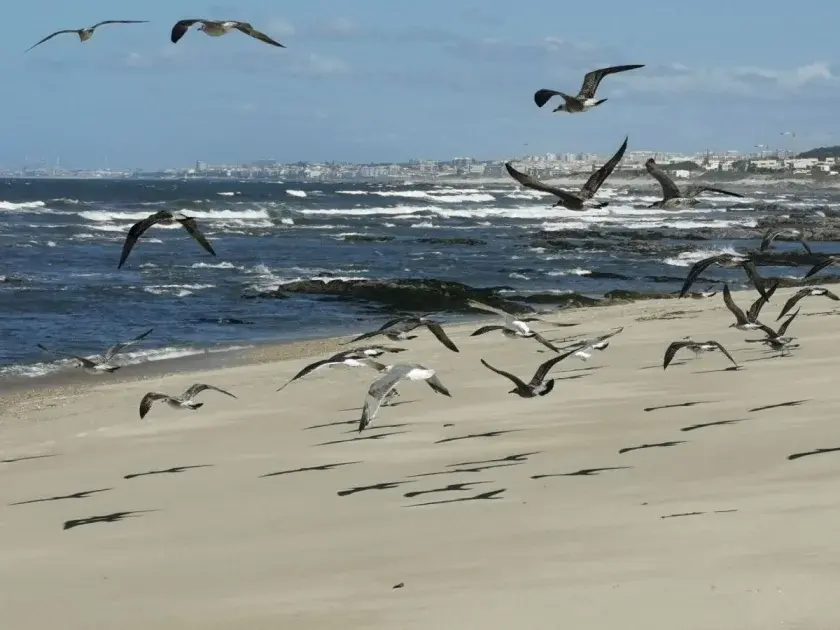
The nortada is a wind blowing from the north to northwest, typically at 7 metres per second or more (around 25 km/h / 15 mph), that hits Portugal's west coast with striking regularity through the summer months. The mechanism is straightforward: during the day, mainland Portugal heats up much faster than the Atlantic Ocean. That warm inland air rises, creating a zone of relatively lower pressure over land, which pulls the cooler, denser sea air toward the coast. That's why the wind is light in the morning, builds steadily through the day, and typically peaks between 3pm and 7pm, before easing off in the evening.
This cycle repeats so reliably between June and September that lifeguards along the west coast treat it as a near-daily certainty rather than the exception.
Nortada vs. Levante: Two Different Winds
Visitors often confuse the nortada with the "levante", but they're distinct phenomena. The nortada blows from the north/northwest and is linked to colder water thanks to coastal upwelling, which pulls cold, deep water up to the surface. The levante, by contrast, is a hot, dry easterly wind more common in the Algarve and around the Strait of Gibraltar, usually bringing higher temperatures and sometimes airborne dust. If you feel a hot, dry wind in the Algarve on an August afternoon, that's most likely the levante; if the sea feels surprisingly cold in Peniche or Nazaré along with a cool breeze, that's the nortada.
Where It Hits Hardest: West Coast, Algarve and the Islands
How strong the nortada feels depends heavily on the coastline's orientation and local geography. Not every Portuguese beach experiences the same wind on the same day.
| Region | Nortada Exposure | Representative Beaches |
|---|---|---|
| Costa Vicentina & Alentejo Coast | Very strong, near-daily in summer | Praia do Amado, Odeceixe, Zambujeira do Mar |
| Greater Lisbon & Silver Coast | Strong, especially from early afternoon | Guincho, Praia Grande (Sintra), Baleal, Foz do Arelho |
| Green Coast (North) | Moderate to strong | Ofir, Viana do Castelo, Póvoa de Varzim |
| Algarve — Barlavento (west) | Moderate, felt more in late afternoon | Praia do Amado, Sagres, Praia da Bordeira |
| Algarve — Sotavento (east, south-facing) | Weak, more sheltered coastline | Tavira, Culatra Island, Monte Gordo |
| Azores & Madeira | Different pattern, driven by trade winds and Atlantic systems | varies by island and exposure |
If you're genuinely trying to escape the wind, the Algarve's Sotavento beaches (south-facing and sheltered by the Ria Formosa's barrier islands) are generally the safest bet. We cover the differences between the Algarve's two coasts in more depth in our Barlavento vs. Sotavento comparison guide.
Beach Flags and Wind: How to Read Them
Portugal's lifeguard flag system, regulated by the Directorate-General for Natural Resources, Safety and Maritime Services (DGRM) and applied on the ground by lifeguards, doesn't only respond to big waves — strong wind is one of the factors that can raise the alert level.
- Green flag — calm sea, light to moderate wind, safe swimming conditions.
- Yellow flag — the lifeguard has identified strong wind, moderate currents, or irregular swell; swimming is allowed but with extra caution, especially for children and inexperienced swimmers.
- Red flag — no swimming; a dangerous combination of wind, waves and currents, typical of strong nortada days combined with ground swell.
- Red-and-yellow striped flag — marks the recommended swimming zone within a lifeguarded beach, repositioned by the lifeguard according to wind and current conditions.
Strong wind alone rarely triggers a red flag, but it's an aggravating factor when combined with swell. Always check the flag for the current day, not the one you remember from yesterday.
How to Handle It (or Make the Most of It)
The nortada isn't a reason to cancel your beach day — it just takes a bit of planning.
If You Want Sun and Calm
Arrive in the morning. Between roughly 9am and noon, wind is typically at its weakest across most of the west coast, making this the best window for families with young children or anyone who simply hates sand in their sandwich. Save the afternoon for shade, a long lunch, or a siesta away from the sand.
Anchor Your Umbrella Properly
Bury the umbrella pole at least 40–50 cm (16–20 in) into the sand, angle it slightly against the wind, and avoid opening it fully on strong nortada days — a poorly anchored umbrella turning into a projectile is one of the most common, and most preventable, causes of beach injuries. We go into more detail on this in our guide to beaches with natural shade, a good alternative on persistently windy days.
Don't Underestimate the Wind's Effect on Sunscreen
The nortada's cool breeze is deceptive — it lowers how hot you feel without lowering UV exposure, and it can speed up evaporation of sweat and sunscreen from your skin. Reapply SPF every two hours, as we recommend in our sun protection and UV index guide.
For Kitesurfers and Windsurfers
What's an annoyance for sunbathers is gold for wind-sport enthusiasts. The coastline between Peniche and Guincho is a European reference point for windsurfing and kitesurfing precisely because of how reliably the nortada arrives on summer afternoons, with local schools timing lessons deliberately for the strongest wind window, roughly 2pm to 6pm.
The Nortada's Role in the Marine Ecosystem
The nortada plays an important ecological role: by pushing surface water away from the coast, it triggers coastal upwelling, drawing colder, nutrient-rich water up from greater depths. That's one reason the sea along Portugal's west coast is noticeably colder than the Mediterranean even in the height of August, and it's also a factor behind the productivity of Portuguese fisheries.
Persistent nortada winds can also influence how marine organisms drift toward the shore, including jellyfish during certain periods — see our dedicated guide on how to identify and react to jellyfish on Portuguese beaches if you spot one on the sand or in the water.
Frequently Asked Questions
Does the nortada blow every single day in summer? Not every day, but it's the dominant pattern from June through September on the west coast, especially under clear skies and a strong temperature gap between inland areas and the sea.
What time of day is the wind usually strongest? Typically between 3pm and 7pm, with a clear lull in the morning and early evening.
Is the nortada dangerous for swimming? Not necessarily on its own, but combined with strong swell it can produce stronger rip currents. Always follow the flag at your lifeguarded beach.
Are there beaches in Portugal without the nortada? No beach is entirely immune, but the Algarve's Sotavento coast, more sheltered and south-facing, is consistently the least windy part of the country.
Why is the sea so cold even on hot days? That's coastal upwelling caused by the nortada, pulling cold water up from the depths — a phenomenon far more pronounced on the west coast than in the Algarve.
The nortada is as much a part of Portugal's coastal identity as sun and golden sand — understanding it is the difference between fighting the wind all afternoon and planning your day around it. For more practical tips before your trip, check our guide to Portugal's beach rules and fines.